
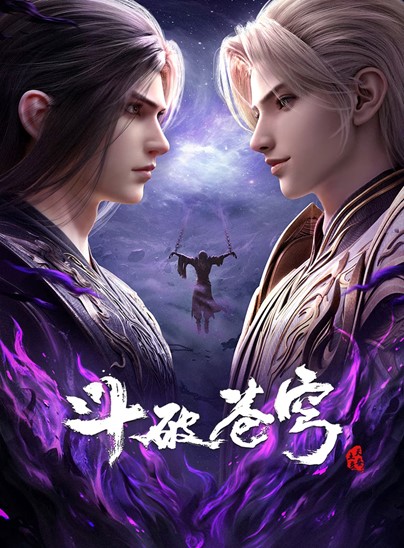
Download Battle Through the Heavens Season 5 Episode 217 Indonesia, English Sub, Watch Battle Through the Heavens Season 5 Episode 217 Indonesia, English Sub, don't forget to click on the like and share button. Anime Battle Through The Heavens Season 5 always updated at AnimeXin. Don't forget to watch other anime updates.
Battle Through the Heavens Season 5 Episode 217 Subtitle Indonesia, English, Portuguese, Turkish, Spanish, Italian, Polish, Arabic, Thai, German, Bangla


















go kill yourself you fucking retard
question mark / spirit of darkness spamming like a moron, go end your life, jump off a bridge, rope and hang yourself, the world will be better off without you.
stop spouting bullshit and hate, toxic lowlife like you need to be banned from here.
you who call me to suicide, and cursing, with insults yet trying to be saint, are u a christian?
dont forget to add me in your list of sects.
add boner sect too because medusa tiddies gives me the hardest boner. I want to drink her milk so bad
lol thats a good inspiration. how is the medusa in this episode? Does it still give u boner with her reduce boobies
stfu you stupid dumbass kid
you blow massive dick 20 inches down your throat
yawn
Dear go kill yourself,
I have read your words, and I know you may have intended them to hurt me. You called me names, insulted me and told me to end my life.
Yet, I would rather respond with kindness than return the same hostility.
We may disagree about Battle Through the Heavens, and you may dislike my opinions, but we don’t have to become enemies over an animation.
Perhaps you will continue to hate me, and perhaps you will never understand why I chose to write this letter. That is your choice. I cannot demand that you like me, but I can choose not to hate you in return.
Your words have even found an unexpected place in my fictional world. They helped inspire Kou Mo, the Mouth Demon, whose poisonous tongue became the beginning of the Nine Heretics.
So, even if you offer me hostility, I hope life offers you something more meaningful than arguments with strangers.
You may choose to hate me, but I will choose to leave you with kindness.
With regards,
The Author of The Nine Heretics
The Cowardly Alliance of Borrowed Names and False Righteousness:
The Ten Realms of the Abyss
Far beyond the mortal cultivation worlds lies a corrupted territory known as the Abyssal Realm of False Righteousness. It is a world inhabited by cultivators who feed upon resentment, hostility and the desire to attack anyone who refuses to share their hatred.
They do not seek immortality, enlightenment or supreme strength. Their cultivation revolves around one obsession: punishing ordinary spectators who refuse to participate in their crusade against Battle Through the Heavens.
Within this realm, even the lowest cultivator can become dangerous when surrounded by others of the same nature.
The Ten Realms of CorruptionRealmCultivation StageNature of Cultivation1Filth Gathering RealmInsults, mockery, name calling and petty provocation.2Foundation of MalicePersonal attacks against viewers who disagree or remain silent.3Blood Refinement RealmVulgar sexual remarks and degrading fantasies directed at others.4Demonic Core RealmRape wishes, sexual threats and humiliation of other commenters.5Nascent Evil Soul RealmDeath wishes, suicide encouragement and threats of physical violence.6Soul Devouring RealmThreatening families, mothers and loved ones to inflict greater emotional harm.7Heavenly Corruption RealmHypocrisy, manipulation, harassment and attacks disguised as righteousness.8Void Identity RealmCopying usernames, disguising identities and provoking others through borrowed names.9Tribulation Sovereign RealmGathering hostile supporters, mass downvoting and attempting to silence opposing opinions.10Abyssal Emperor RealmComplete corruption, where hatred, hypocrisy and hostility become their entire identity.
The Seven Forbidden SectsAs the cultivators advanced, they established separate sects according to their preferred methods.
1. The Verbal Poison Sect
Masters of insults, humiliation, name calling and personal attacks.
2. The Lewd Desire Sect
Cultivators who turn discussions into vulgar sexual remarks and degrading fantasies about fictional characters or other people.
3. The Child Desecration Sect
Those who make disturbing sexual remarks about characters with childlike appearances.
4. The Bloodlust Sect
Practitioners of violent rhetoric, including wishes for torture, physical harm and death.
5. The Eternal Damnation Sect
Those who invoke rape, sexual violence, threats against families and wishes for eternal suffering.
6. The Borrowed Identity Sect
Masters of copying usernames, attaching insults to other people’s identities and hiding behind disposable identities.
7. The Hypocrite Sect
Cultivators who condemn the behaviour of others while practising the very same behaviour themselves.
The Forbidden AllianceEventually, the seven sects discovered that their individual cultivation was limited. Alone, they could insult one person. Together, they could create an entire hostile environment.
Thus, they established the:
Cowardly Alliance of Borrowed Names and False RighteousnessTheir shared doctrine was simple:
Anyone who continued watching BTTH without joining their complaints was an enemy. Anyone who disagreed with their criticism was supposedly defending the studio. Anyone who refused to participate in their hostility became another target.
They mistook silence for surrender, disagreement for betrayal and ordinary enjoyment for allegiance to their enemies.
Yet the alliance possessed one fundamental weakness.
Its members could criticise a series, but they could not distinguish the people who created it from the people who watched it.
The Beginning of the ChroniclesThe ten realms will form the foundation of this series.
Each episode will introduce individual cultivators, their usernames, their behaviour and their preferred techniques. As their stories progress, they will receive distinctive cultivation nicknames and may eventually become members of the alliance.
The first chronicles shall begin with the lowest realm: the Filth Gathering Realm.
For in the Abyss, even the smallest piece of filth can grow into a mountain of corruption.
To Be Continue with the first Dao gooner who use my name and comment the most recently with his story in the next episode STAY TUNE, TO BE CONTINUE
Prologue: The Toxic War Behind Battle Through the HeavensAs Battle Through the Heavens approaches its conclusion, some viewers have grown disappointed with its animation and production. While people like Tan Yun and Magnate simply want Xiao Yan’s journey to end so they can move on to other donghua, others have turned their frustration into hostility towards fellow viewers.
Among them is someone using the name kys questions mark aka spirit of darkness. He presents himself as a supreme representative of BTTH haters and attacks those who refuse to join his so-called alliance. When I refused to participate, he directed personal abuse at me, telling me to end my life, jump off a bridge and hang myself.
His behaviour represents the hostility that inspired this novel: attacking others simply because they disagree or refuse to follow the same side.
The Birth of the Nine HereticsThe first fictional Heretic is born from this incident.
Kou Mo (口魔), the Mouth Demon, is inspired by the identity kys questions mark aka spirit of darkness. His hypocrisy, false righteousness and death-calling words become the foundation of his character and forbidden Dao.
The remaining eight identities inspire eight more fictional cultivators. Each represents a different form of hostility, harassment, hypocrisy or corruption found in online arguments.
Their identities inspire their cultivation names, their behaviour shapes their forbidden Daos, and their conflicts give birth to a new cultivation universe.
These nine individuals begin as insignificant cultivators. Through battles, betrayals, academy life, tournaments, tribulations and wars, they gradually rise towards the highest realm of cultivation.
Battle Through the Heavens deserves better quality, but The Nine Heretics deserves the same.
THE NINE HERETICS (九大邪修)Season 1 — Rise of the Filth (万秽崛起)Novel SummaryIn a parallel universe known as the Ten Thousand Filth Universe (万秽宇宙), nine individuals are reborn as ordinary cultivators.
Without powerful backgrounds or extraordinary advantages, they must fight for survival and advancement.
Their journeys take them through cultivation academies, dangerous expeditions, ancient ruins, sect rivalries, tournaments and devastating wars.
Each develops a unique forbidden Dao and eventually rises to become a powerful figure within their respective sect.
As their influence grows, the nine sects begin competing for control of the cultivation world. Their paths eventually converge during the Heaven-Cleaving War and the formation of a powerful alliance.
Their ultimate destination is the Ultimate Disgust Realm, the highest known cultivation realm.
The Ten Thousand Filth Universe (万秽宇宙)A vast parallel universe containing countless continents, cultivation academies, ancient ruins, dangerous beasts, cities and organisations.
Cultivators travel between territories through flying spiritual vessels, teleportation arrays and ancient passages.
Five Territories and Nine SectsNorthern Territory
Southern Territory
Eastern Territory
Western Territory
Central Plains
The Nine Heretics1. Kou Mo (口魔) — Mouth Demon
2. Hui Yan (毁言) — Destructive Words
3. Xue Ran (血染) — Bloodstained
4. Wei Xuan (伪玄) — False Profound One
5. Han Du (寒毒) — Cold Poison
6. Cai Yin (采阴) — Yin Devourer
7. Hua Yu (花狱) — Flower Imprisoner
8. Xin Wu (心污) — Polluted Heart
9. Qian Mian (千面) — Thousand Faces
Ten Cultivation Realms
Major Events
Episode 1 — Kou Mo (口魔): The Mouth DemonOriginal Identity: kys questions mark aka spirit of darkness
Title: The False Saint, Mouth Demon
Birthplace: Black Grievance Dalu, Western Territory
Academy: Black Grievance Academy
Sect: Verbal Poison Sect
Innate Constitution: Death-Calling Constitution
Forbidden Dao: Death-Calling Dao
Signature Technique: Threefold Death Curse
Ultimate Realm: Ultimate Disgust Realm
Chapter 1 — The Birth of a Rotten SoulKou Mo was born into an ordinary family in Black Grievance Dalu. He possessed no prestigious bloodline, powerful relatives or exceptional talent.
From childhood, he learned to present himself as a righteous and compassionate individual. He imitated the appearance and mannerisms of a religious saint, speaking publicly about kindness and morality.
Behind this appearance, however, he enjoyed provoking others, humiliating people and spreading hostility. Whenever challenged, he portrayed himself as the victim.
One day, several young cultivators publicly humiliated and beat him in a marketplace.
Consumed by resentment, he returned home. That night, a black mark appeared on his chest as his spiritual veins began absorbing the hostility surrounding him.
His innate constitution had awakened:
The Death-Calling Constitution.
It allowed him to convert hostile speech, death wishes and resentment into spiritual energy.
Despite this awakening, he remained weak and inexperienced. His cultivation began at the Filth Gathering Realm.
Chapter 2 — Black Grievance AcademyAt sixteen, Kou Mo entered Black Grievance Academy.
He maintained his public image while secretly manipulating disagreements between classmates.
His first major rival was Luo Zhen, a talented student from a merchant clan. Kou Mo attempted to frame him for stealing academy resources, but Luo Zhen exposed the deception.
They fought, and Kou Mo suffered a humiliating defeat.
Instead of challenging him again immediately, Kou Mo spent two years studying defensive formations, combat techniques and the weaknesses of other cultivators.
During an expedition into the Blackstone Mine, the expedition leader abandoned weaker students as bait for corrupted beasts.
Kou Mo survived by luring the beasts towards another group and escaping through an underground passage. He obtained resentment stones and used them to strengthen his cultivation.
After three years of academy training, he advanced into the Malice Foundation Realm.
Chapter 3 — Joining the Verbal Poison SectAfter graduating, Kou Mo travelled to Vermilion Grievance City, where the Verbal Poison Sect recruited new disciples.
The sect specialised in forbidden speech techniques, spiritual interference and psychological warfare.
Its entrance examination consisted of three trials:
Kou Mo passed by manipulating rivalries between the applicants.
He became an outer disciple.
His early years were difficult. Powerful factions controlled most cultivation resources, leaving weaker disciples with dangerous missions and poor rewards.
He joined a small faction led by an older disciple named Shen Kui.
During a mission in the Western Wastelands, their group was ambushed by bandits. Kou Mo nearly died but managed to defeat an injured opponent using his developing techniques.
He gradually refined his spiritual essence and reached the Poison Blood Realm.
Several years later, he successfully condensed his spiritual energy into a demonic core.
Demonic Core Realm.
Chapter 4 — The Threefold Death CurseKou Mo began developing a forbidden technique based on his constitution.
He named it the Threefold Death Curse.
Its three forms were:
Initially, the technique consumed enormous spiritual energy and was ineffective against opponents with powerful soul defences.
Kou Mo spent years refining it through combat and experimentation.
Chapter 5 — Nine Sects Hunting Grounds TournamentThirty years later, Kou Mo represented the Verbal Poison Sect in the Nine Sects Hunting Grounds Tournament.
The battlefield contained ancient structures, corrupted beasts, spiritual resources and competing groups.
There, he encountered disciples from the Bloodlust, Hypocrite and Insult Sects.
His most dangerous opponent was Xue Ran, a powerful Bloodlust Sect cultivator.
Kou Mo attempted to weaken Xue Ran psychologically, but his opponent’s physical strength and combat experience proved overwhelming.
Kou Mo suffered a crushing defeat and sustained serious injuries.
He spent several months recovering.
Although he did not win the tournament, he improved his defensive techniques and gained recognition from the sect elders.
His cultivation eventually reached the Vile Soul Realm.
Chapter 6 — Ancient Filth RuinsYears later, the Ancient Filth Ruins opened in a distant continent.
Kou Mo joined an expedition organised by the Verbal Poison Sect.
Inside, he discovered ancient chambers, dangerous formations and records left behind by forgotten cultivators.
One particular scripture described how ancient practitioners refined hostility without allowing it to destroy their consciousness.
Kou Mo became obsessed with obtaining it.
However, two independent cultivators who had temporarily allied with him betrayed him and attempted to steal the inheritance.
A battle followed.
Kou Mo escaped with a fragment of the scripture, but several companions died.
For years afterwards, he studied the fragment and gradually improved his understanding of the Death-Calling Dao.
He eventually entered the Corruption Transformation Realm.
Chapter 7 — Imprisonment by the Dao TribunalAs Kou Mo’s influence increased, the Dao Tribunal began investigating his activities and political interference.
During a journey between continents, he was arrested and had his cultivation sealed.
Inside prison, he met an elderly former sect strategist who had been imprisoned after losing a political struggle.
The old man taught Kou Mo about organisational power, resource management and patience.
Kou Mo helped expose a corrupt prison official and escaped during the confusion that followed the investigation.
However, his cultivation had been damaged.
He spent several years recovering before returning to the Verbal Poison Sect.
The experience taught him that even powerful cultivators could become helpless when facing larger organisations.
Chapter 8 — Rise of the Mouth DemonWhen Kou Mo returned, the Verbal Poison Sect was facing internal instability.
Its sect master, Duan Wusheng, had ruled for nearly a century and secretly diverted resources towards his own faction.
Kou Mo began building his own network.
He recruited talented disciples, assisted weaker elders, established relationships with trading organisations and collected evidence of corruption.
His influence gradually spread throughout the sect.
Duan Wusheng eventually discovered his plans and attempted to assassinate him.
Kou Mo survived and challenged him in the sect’s ancestral arena.
Their battle lasted several days.
Although Duan Wusheng possessed greater cultivation experience, Kou Mo had already weakened his opponent’s support network and secured the backing of several elders.
After a brutal final exchange, Kou Mo defeated him.
He became the new sect master of the Verbal Poison Sect.
His cultivation reached the Rotten Void Realm.
Chapter 9 — Heaven-Cleaving WarThe nine sects eventually agreed to invade the Central Plains.
The conflict became known as the Heaven-Cleaving War.
Kou Mo commanded the Verbal Poison Sect’s forces and helped coordinate the alliance’s military operations.
He disrupted enemy communications, exploited disagreements between defending factions and weakened their morale.
However, the war was not an easy victory.
Several powerful enemies resisted the invasion, and the nine sects suffered heavy casualties.
During one major battle, Kou Mo’s forces became trapped inside a fortified city.
Rather than launching a reckless assault, he studied the city’s spiritual formations and discovered an underground spiritual vein.
He used it to disrupt the city’s defensive formation and create an opening for the alliance’s army.
After years of warfare, the nine sects defeated the defending forces and established control over the Central Plains.
Kou Mo advanced into the Sin Integration Realm.
Chapter 10 — The Sovereign AssemblyAfter the war, the nine sect masters gathered for the Sovereign Assembly.
They negotiated territories, resources and political authority.
Their agreement established the:
Cowardly Alliance of Borrowed Names and False Righteousness.
Kou Mo became one of its founding leaders.
However, the alliance was never built on friendship. Each Heretic distrusted the others, and disagreements over resources and influence continued.
Kou Mo eventually entered the Toxic Sovereign Realm.
Chapter 11 — The Ultimate Disgust RealmDecades passed.
Kou Mo continued cultivating, refining his soul and strengthening his Death-Calling Dao.
His final obstacle was the integration of his demonic core, soul and forbidden Dao.
He returned to Black Grievance Dalu, where his journey had begun.
The ordinary settlement where he once lived had changed beyond recognition. The marketplace where he had been humiliated was now part of a larger cultivation city.
He remembered how weak he had once been.
He had started with nothing: no powerful family, no respected identity and no ability to defeat stronger opponents.
Through countless battles, betrayals, tribulations and years of cultivation, he had transformed himself.
Finally, his demonic core, soul and forbidden Dao merged into one.
Kou Mo reached the Ultimate Disgust Realm.
The first Heretic had completed his journey.
But the other eight were still rising.
The Mouth Demon was only the beginning.
A Letter to My Dear Toxic UserDear toxic user, who goes by the name “kys questions mark aka spirit of darkness”,
If only we had met under different circumstances, perhaps we could have shared our love for Battle Through the Heavens instead of exchanging words filled with hostility.
You proudly called yourself a supreme leader among BTTH haters, while I simply wished to enjoy the series and move on to other donghua.
Yet, your words telling me to end my life, jump from a bridge and hang myself became something I could never forget. Unknowingly, they planted the seed that gave birth to Kou Mo, the Mouth Demon.
Perhaps you will never understand the story you helped inspire, but your influence will forever remain in these pages—not as a hero, but as the inspiration behind the First Heretic.
Thank you for becoming a chapter in a story you never knew you helped create.
With regards,
The Author of The Nine Heretics
Dedicated to the inspiration behind Kou Mo, the First Heretic.
A Letter to My Dear Toxic UsersDear toxic user, who goes by the name “kys questions mark aka spirit of darkness”,
If only we had met under different circumstances, perhaps we could have shared our love for Battle Through the Heavens instead of exchanging words filled with hostility.
You proudly called yourself a supreme leader among BTTH haters, while I simply wished to enjoy the series and move on to other donghua.
Yet, your words telling me to end my life, jump from a bridge and hang myself became something I could never forget. Unknowingly, they planted the seed that gave birth to Kou Mo, the Mouth Demon.
Perhaps you will never understand the story you helped inspire, but your influence will forever remain in these pages—not as a hero, but as the inspiration behind the First Heretic.
Thank you for becoming a chapter in a story you never knew you helped create.
With regards,
The Author of The Nine Heretics
Dedicated to the inspiration behind Kou Mo, the First Heretic.
Omg these toxic people even get to have love letter?! So romantic!
https://youtu.be/0ulzxIh8rmc
Prologue: The Toxic War Behind Battle Through the HeavensAs Battle Through the Heavens approaches its conclusion, some viewers have grown disappointed with its animation and production. While people like Tan Yun and Magnate simply want Xiao Yan’s journey to end so they can move on to other donghua, others have turned their frustration into hostility towards fellow viewers.
Among them is someone using the name kys questions mark aka spirit of darkness. He presents himself as a supreme representative of BTTH haters and attacks those who refuse to join his so-called alliance. When I refused to participate, he directed personal abuse at me, telling me to end my life, jump off a bridge and hang myself.
His behaviour represents the hostility that inspired this novel: attacking others simply because they disagree or refuse to follow the same side.
The Birth of the Nine HereticsThe first fictional Heretic is born from this incident.
Kou Mo (口魔), the Mouth Demon, is inspired by the identity kys questions mark aka spirit of darkness. His hypocrisy, false righteousness and death-calling words become the foundation of his character and forbidden Dao.
The remaining eight identities inspire eight more fictional cultivators. Each represents a different form of hostility, harassment, hypocrisy or corruption found in online arguments.
Their identities inspire their cultivation names, their behaviour shapes their forbidden Daos, and their conflicts give birth to a new cultivation universe.
These nine individuals begin as insignificant cultivators. Through battles, betrayals, academy life, tournaments, tribulations and wars, they gradually rise towards the highest realm of cultivation.
Battle Through the Heavens deserves better quality, but The Nine Heretics deserves the same.
THE NINE HERETICS (九大邪修)Season 1 — Rise of the Filth (万秽崛起)Novel SummaryIn a parallel universe known as the Ten Thousand Filth Universe (万秽宇宙), nine individuals are reborn as ordinary cultivators.
Without powerful backgrounds or extraordinary advantages, they must fight for survival and advancement.
Their journeys take them through cultivation academies, dangerous expeditions, ancient ruins, sect rivalries, tournaments and devastating wars.
Each develops a unique forbidden Dao and eventually rises to become a powerful figure within their respective sect.
As their influence grows, the nine sects begin competing for control of the cultivation world. Their paths eventually converge during the Heaven-Cleaving War and the formation of a powerful alliance.
Their ultimate destination is the Ultimate Disgust Realm, the highest known cultivation realm.
The Ten Thousand Filth Universe (万秽宇宙)A vast parallel universe containing countless continents, cultivation academies, ancient ruins, dangerous beasts, cities and organisations.
Cultivators travel between territories through flying spiritual vessels, teleportation arrays and ancient passages.
Five Territories and Nine SectsNorthern Territory
Southern Territory
Eastern Territory
Western Territory
Central Plains
The Nine Heretics1. Kou Mo (口魔) — Mouth Demon
2. Hui Yan (毁言) — Destructive Words
3. Xue Ran (血染) — Bloodstained
4. Wei Xuan (伪玄) — False Profound One
5. Han Du (寒毒) — Cold Poison
6. Cai Yin (采阴) — Yin Devourer
7. Hua Yu (花狱) — Flower Imprisoner
8. Xin Wu (心污) — Polluted Heart
9. Qian Mian (千面) — Thousand Faces
Ten Cultivation Realms
Major Events
Episode 1 — Kou Mo (口魔): The Mouth DemonOriginal Identity: kys questions mark aka spirit of darkness
Title: The False Saint, Mouth Demon
Birthplace: Black Grievance Dalu, Western Territory
Academy: Black Grievance Academy
Sect: Verbal Poison Sect
Innate Constitution: Death-Calling Constitution
Forbidden Dao: Death-Calling Dao
Signature Technique: Threefold Death Curse
Ultimate Realm: Ultimate Disgust Realm
Chapter 1 — The Birth of a Rotten SoulKou Mo was born into an ordinary family in Black Grievance Dalu. He possessed no prestigious bloodline, powerful relatives or exceptional talent.
From childhood, he learned to present himself as a righteous and compassionate individual. He imitated the appearance and mannerisms of a religious saint, speaking publicly about kindness and morality.
Behind this appearance, however, he enjoyed provoking others, humiliating people and spreading hostility. Whenever challenged, he portrayed himself as the victim.
One day, several young cultivators publicly humiliated and beat him in a marketplace.
Consumed by resentment, he returned home. That night, a black mark appeared on his chest as his spiritual veins began absorbing the hostility surrounding him.
His innate constitution had awakened:
The Death-Calling Constitution.
It allowed him to convert hostile speech, death wishes and resentment into spiritual energy.
Despite this awakening, he remained weak and inexperienced. His cultivation began at the Filth Gathering Realm.
Chapter 2 — Black Grievance AcademyAt sixteen, Kou Mo entered Black Grievance Academy.
He maintained his public image while secretly manipulating disagreements between classmates.
His first major rival was Luo Zhen, a talented student from a merchant clan. Kou Mo attempted to frame him for stealing academy resources, but Luo Zhen exposed the deception.
They fought, and Kou Mo suffered a humiliating defeat.
Instead of challenging him again immediately, Kou Mo spent two years studying defensive formations, combat techniques and the weaknesses of other cultivators.
During an expedition into the Blackstone Mine, the expedition leader abandoned weaker students as bait for corrupted beasts.
Kou Mo survived by luring the beasts towards another group and escaping through an underground passage. He obtained resentment stones and used them to strengthen his cultivation.
After three years of academy training, he advanced into the Malice Foundation Realm.
Chapter 3 — Joining the Verbal Poison SectAfter graduating, Kou Mo travelled to Vermilion Grievance City, where the Verbal Poison Sect recruited new disciples.
The sect specialised in forbidden speech techniques, spiritual interference and psychological warfare.
Its entrance examination consisted of three trials:
Kou Mo passed by manipulating rivalries between the applicants.
He became an outer disciple.
His early years were difficult. Powerful factions controlled most cultivation resources, leaving weaker disciples with dangerous missions and poor rewards.
He joined a small faction led by an older disciple named Shen Kui.
During a mission in the Western Wastelands, their group was ambushed by bandits. Kou Mo nearly died but managed to defeat an injured opponent using his developing techniques.
He gradually refined his spiritual essence and reached the Poison Blood Realm.
Several years later, he successfully condensed his spiritual energy into a demonic core.
Demonic Core Realm.
Chapter 4 — The Threefold Death CurseKou Mo began developing a forbidden technique based on his constitution.
He named it the Threefold Death Curse.
Its three forms were:
Initially, the technique consumed enormous spiritual energy and was ineffective against opponents with powerful soul defences.
Kou Mo spent years refining it through combat and experimentation.
Chapter 5 — Nine Sects Hunting Grounds TournamentThirty years later, Kou Mo represented the Verbal Poison Sect in the Nine Sects Hunting Grounds Tournament.
The battlefield contained ancient structures, corrupted beasts, spiritual resources and competing groups.
There, he encountered disciples from the Bloodlust, Hypocrite and Insult Sects.
His most dangerous opponent was Xue Ran, a powerful Bloodlust Sect cultivator.
Kou Mo attempted to weaken Xue Ran psychologically, but his opponent’s physical strength and combat experience proved overwhelming.
Kou Mo suffered a crushing defeat and sustained serious injuries.
He spent several months recovering.
Although he did not win the tournament, he improved his defensive techniques and gained recognition from the sect elders.
His cultivation eventually reached the Vile Soul Realm.
Chapter 6 — Ancient Filth RuinsYears later, the Ancient Filth Ruins opened in a distant continent.
Kou Mo joined an expedition organised by the Verbal Poison Sect.
Inside, he discovered ancient chambers, dangerous formations and records left behind by forgotten cultivators.
One particular scripture described how ancient practitioners refined hostility without allowing it to destroy their consciousness.
Kou Mo became obsessed with obtaining it.
However, two independent cultivators who had temporarily allied with him betrayed him and attempted to steal the inheritance.
A battle followed.
Kou Mo escaped with a fragment of the scripture, but several companions died.
For years afterwards, he studied the fragment and gradually improved his understanding of the Death-Calling Dao.
He eventually entered the Corruption Transformation Realm.
Chapter 7 — Imprisonment by the Dao TribunalAs Kou Mo’s influence increased, the Dao Tribunal began investigating his activities and political interference.
During a journey between continents, he was arrested and had his cultivation sealed.
Inside prison, he met an elderly former sect strategist who had been imprisoned after losing a political struggle.
The old man taught Kou Mo about organisational power, resource management and patience.
Kou Mo helped expose a corrupt prison official and escaped during the confusion that followed the investigation.
However, his cultivation had been damaged.
He spent several years recovering before returning to the Verbal Poison Sect.
The experience taught him that even powerful cultivators could become helpless when facing larger organisations.
Chapter 8 — Rise of the Mouth DemonWhen Kou Mo returned, the Verbal Poison Sect was facing internal instability.
Its sect master, Duan Wusheng, had ruled for nearly a century and secretly diverted resources towards his own faction.
Kou Mo began building his own network.
He recruited talented disciples, assisted weaker elders, established relationships with trading organisations and collected evidence of corruption.
His influence gradually spread throughout the sect.
Duan Wusheng eventually discovered his plans and attempted to assassinate him.
Kou Mo survived and challenged him in the sect’s ancestral arena.
Their battle lasted several days.
Although Duan Wusheng possessed greater cultivation experience, Kou Mo had already weakened his opponent’s support network and secured the backing of several elders.
After a brutal final exchange, Kou Mo defeated him.
He became the new sect master of the Verbal Poison Sect.
His cultivation reached the Rotten Void Realm.
Chapter 9 — Heaven-Cleaving WarThe nine sects eventually agreed to invade the Central Plains.
The conflict became known as the Heaven-Cleaving War.
Kou Mo commanded the Verbal Poison Sect’s forces and helped coordinate the alliance’s military operations.
He disrupted enemy communications, exploited disagreements between defending factions and weakened their morale.
However, the war was not an easy victory.
Several powerful enemies resisted the invasion, and the nine sects suffered heavy casualties.
During one major battle, Kou Mo’s forces became trapped inside a fortified city.
Rather than launching a reckless assault, he studied the city’s spiritual formations and discovered an underground spiritual vein.
He used it to disrupt the city’s defensive formation and create an opening for the alliance’s army.
After years of warfare, the nine sects defeated the defending forces and established control over the Central Plains.
Kou Mo advanced into the Sin Integration Realm.
Chapter 10 — The Sovereign AssemblyAfter the war, the nine sect masters gathered for the Sovereign Assembly.
They negotiated territories, resources and political authority.
Their agreement established the:
Cowardly Alliance of Borrowed Names and False Righteousness.
Kou Mo became one of its founding leaders.
However, the alliance was never built on friendship. Each Heretic distrusted the others, and disagreements over resources and influence continued.
Kou Mo eventually entered the Toxic Sovereign Realm.
Chapter 11 — The Ultimate Disgust RealmDecades passed.
Kou Mo continued cultivating, refining his soul and strengthening his Death-Calling Dao.
His final obstacle was the integration of his demonic core, soul and forbidden Dao.
He returned to Black Grievance Dalu, where his journey had begun.
The ordinary settlement where he once lived had changed beyond recognition. The marketplace where he had been humiliated was now part of a larger cultivation city.
He remembered how weak he had once been.
He had started with nothing: no powerful family, no respected identity and no ability to defeat stronger opponents.
Through countless battles, betrayals, tribulations and years of cultivation, he had transformed himself.
Finally, his demonic core, soul and forbidden Dao merged into one.
Kou Mo reached the Ultimate Disgust Realm.
The first Heretic had completed his journey.
But the other eight were still rising.
The Mouth Demon was only the beginning.
A Letter to My Dear Toxic UserDear toxic user, who goes by the name “kys questions mark aka spirit of darkness”,
If only we had met under different circumstances, perhaps we could have shared our love for Battle Through the Heavens instead of exchanging words filled with hostility.
You proudly called yourself a supreme leader among BTTH haters, while I simply wished to enjoy the series and move on to other donghua.
Yet, your words telling me to end my life, jump from a bridge and hang myself became something I could never forget. Unknowingly, they planted the seed that gave birth to Kou Mo, the Mouth Demon.
Perhaps you will never understand the story you helped inspire, but your influence will forever remain in these pages—not as a hero, but as the inspiration behind the First Heretic.
Thank you for becoming a chapter in a story you never knew you helped create.
With regards,
The Author of The Nine Heretics
Dedicated to the inspiration behind Kou Mo, the First Heretic.
Repeated Prologue: The Toxic War Behind Battle Through the Heavens
Dedicated to people who actually up vote to people go end your life, jump off a bridge, rope and hang yourself, the world will be better off without you.
As Battle Through the Heavens approaches its conclusion, some viewers have grown disappointed with its animation and production. While people like Tan Yun and Magnate simply want Xiao Yan’s journey to end so they can move on to other donghua, others have turned their frustration into hostility towards fellow viewers.
Among them is someone using the name kys questions mark aka spirit of darkness. He presents himself as a supreme representative of BTTH haters and attacks those who refuse to join his so-called alliance. When I refused to participate, he directed personal abuse at me, telling me to end my life, jump off a bridge and hang myself.
His behaviour represents the hostility that inspired this novel: attacking others simply because they disagree or refuse to follow the same side.
The Birth of the Nine HereticsThe first fictional Heretic is born from this incident.
Kou Mo (口魔), the Mouth Demon, is inspired by the identity kys questions mark aka spirit of darkness. His hypocrisy, false righteousness and death-calling words become the foundation of his character and forbidden Dao.
The remaining eight identities inspire eight more fictional cultivators. Each represents a different form of hostility, harassment, hypocrisy or corruption found in online arguments.
Their identities inspire their cultivation names, their behaviour shapes their forbidden Daos, and their conflicts give birth to a new cultivation universe.
These nine individuals begin as insignificant cultivators. Through battles, betrayals, academy life, tournaments, tribulations and wars, they gradually rise towards the highest realm of cultivation.
Battle Through the Heavens deserves better quality, but The Nine Heretics deserves the same.
THE NINE HERETICS (九大邪修)Season 1 — Rise of the Filth (万秽崛起)Novel SummaryIn a parallel universe known as the Ten Thousand Filth Universe (万秽宇宙), nine individuals are reborn as ordinary cultivators.
Without powerful backgrounds or extraordinary advantages, they must fight for survival and advancement.
Their journeys take them through cultivation academies, dangerous expeditions, ancient ruins, sect rivalries, tournaments and devastating wars.
Each develops a unique forbidden Dao and eventually rises to become a powerful figure within their respective sect.
As their influence grows, the nine sects begin competing for control of the cultivation world. Their paths eventually converge during the Heaven-Cleaving War and the formation of a powerful alliance.
Their ultimate destination is the Ultimate Disgust Realm, the highest known cultivation realm.
The Ten Thousand Filth Universe (万秽宇宙)A vast parallel universe containing countless continents, cultivation academies, ancient ruins, dangerous beasts, cities and organisations.
Cultivators travel between territories through flying spiritual vessels, teleportation arrays and ancient passages.
Five Territories and Nine SectsNorthern Territory
Southern Territory
Eastern Territory
Western Territory
Central Plains
The Nine Heretics1. Kou Mo (口魔) — Mouth Demon
2. Hui Yan (毁言) — Destructive Words
3. Xue Ran (血染) — Bloodstained
4. Wei Xuan (伪玄) — False Profound One
5. Han Du (寒毒) — Cold Poison
6. Cai Yin (采阴) — Yin Devourer
7. Hua Yu (花狱) — Flower Imprisoner
8. Xin Wu (心污) — Polluted Heart
9. Qian Mian (千面) — Thousand Faces
Ten Cultivation Realms
Major Events
Episode 1 — Kou Mo (口魔): The Mouth DemonOriginal Identity: kys questions mark aka spirit of darkness
Title: The False Saint, Mouth Demon
Birthplace: Black Grievance Dalu, Western Territory
Academy: Black Grievance Academy
Sect: Verbal Poison Sect
Innate Constitution: Death-Calling Constitution
Forbidden Dao: Death-Calling Dao
Signature Technique: Threefold Death Curse
Ultimate Realm: Ultimate Disgust Realm
Chapter 1 — The Birth of a Rotten SoulKou Mo was born into an ordinary family in Black Grievance Dalu. He possessed no prestigious bloodline, powerful relatives or exceptional talent.
From childhood, he learned to present himself as a righteous and compassionate individual. He imitated the appearance and mannerisms of a religious saint, speaking publicly about kindness and morality.
Behind this appearance, however, he enjoyed provoking others, humiliating people and spreading hostility. Whenever challenged, he portrayed himself as the victim.
One day, several young cultivators publicly humiliated and beat him in a marketplace.
Consumed by resentment, he returned home. That night, a black mark appeared on his chest as his spiritual veins began absorbing the hostility surrounding him.
His innate constitution had awakened:
The Death-Calling Constitution.
It allowed him to convert hostile speech, death wishes and resentment into spiritual energy.
Despite this awakening, he remained weak and inexperienced. His cultivation began at the Filth Gathering Realm.
Chapter 2 — Black Grievance AcademyAt sixteen, Kou Mo entered Black Grievance Academy.
He maintained his public image while secretly manipulating disagreements between classmates.
His first major rival was Luo Zhen, a talented student from a merchant clan. Kou Mo attempted to frame him for stealing academy resources, but Luo Zhen exposed the deception.
They fought, and Kou Mo suffered a humiliating defeat.
Instead of challenging him again immediately, Kou Mo spent two years studying defensive formations, combat techniques and the weaknesses of other cultivators.
During an expedition into the Blackstone Mine, the expedition leader abandoned weaker students as bait for corrupted beasts.
Kou Mo survived by luring the beasts towards another group and escaping through an underground passage. He obtained resentment stones and used them to strengthen his cultivation.
After three years of academy training, he advanced into the Malice Foundation Realm.
Chapter 3 — Joining the Verbal Poison SectAfter graduating, Kou Mo travelled to Vermilion Grievance City, where the Verbal Poison Sect recruited new disciples.
The sect specialised in forbidden speech techniques, spiritual interference and psychological warfare.
Its entrance examination consisted of three trials:
Kou Mo passed by manipulating rivalries between the applicants.
He became an outer disciple.
His early years were difficult. Powerful factions controlled most cultivation resources, leaving weaker disciples with dangerous missions and poor rewards.
He joined a small faction led by an older disciple named Shen Kui.
During a mission in the Western Wastelands, their group was ambushed by bandits. Kou Mo nearly died but managed to defeat an injured opponent using his developing techniques.
He gradually refined his spiritual essence and reached the Poison Blood Realm.
Several years later, he successfully condensed his spiritual energy into a demonic core.
Demonic Core Realm.
Chapter 4 — The Threefold Death CurseKou Mo began developing a forbidden technique based on his constitution.
He named it the Threefold Death Curse.
Its three forms were:
Initially, the technique consumed enormous spiritual energy and was ineffective against opponents with powerful soul defences.
Kou Mo spent years refining it through combat and experimentation.
Chapter 5 — Nine Sects Hunting Grounds TournamentThirty years later, Kou Mo represented the Verbal Poison Sect in the Nine Sects Hunting Grounds Tournament.
The battlefield contained ancient structures, corrupted beasts, spiritual resources and competing groups.
There, he encountered disciples from the Bloodlust, Hypocrite and Insult Sects.
His most dangerous opponent was Xue Ran, a powerful Bloodlust Sect cultivator.
Kou Mo attempted to weaken Xue Ran psychologically, but his opponent’s physical strength and combat experience proved overwhelming.
Kou Mo suffered a crushing defeat and sustained serious injuries.
He spent several months recovering.
Although he did not win the tournament, he improved his defensive techniques and gained recognition from the sect elders.
His cultivation eventually reached the Vile Soul Realm.
Chapter 6 — Ancient Filth RuinsYears later, the Ancient Filth Ruins opened in a distant continent.
Kou Mo joined an expedition organised by the Verbal Poison Sect.
Inside, he discovered ancient chambers, dangerous formations and records left behind by forgotten cultivators.
One particular scripture described how ancient practitioners refined hostility without allowing it to destroy their consciousness.
Kou Mo became obsessed with obtaining it.
However, two independent cultivators who had temporarily allied with him betrayed him and attempted to steal the inheritance.
A battle followed.
Kou Mo escaped with a fragment of the scripture, but several companions died.
For years afterwards, he studied the fragment and gradually improved his understanding of the Death-Calling Dao.
He eventually entered the Corruption Transformation Realm.
Chapter 7 — Imprisonment by the Dao TribunalAs Kou Mo’s influence increased, the Dao Tribunal began investigating his activities and political interference.
During a journey between continents, he was arrested and had his cultivation sealed.
Inside prison, he met an elderly former sect strategist who had been imprisoned after losing a political struggle.
The old man taught Kou Mo about organisational power, resource management and patience.
Kou Mo helped expose a corrupt prison official and escaped during the confusion that followed the investigation.
However, his cultivation had been damaged.
He spent several years recovering before returning to the Verbal Poison Sect.
The experience taught him that even powerful cultivators could become helpless when facing larger organisations.
Chapter 8 — Rise of the Mouth DemonWhen Kou Mo returned, the Verbal Poison Sect was facing internal instability.
Its sect master, Duan Wusheng, had ruled for nearly a century and secretly diverted resources towards his own faction.
Kou Mo began building his own network.
He recruited talented disciples, assisted weaker elders, established relationships with trading organisations and collected evidence of corruption.
His influence gradually spread throughout the sect.
Duan Wusheng eventually discovered his plans and attempted to assassinate him.
Kou Mo survived and challenged him in the sect’s ancestral arena.
Their battle lasted several days.
Although Duan Wusheng possessed greater cultivation experience, Kou Mo had already weakened his opponent’s support network and secured the backing of several elders.
After a brutal final exchange, Kou Mo defeated him.
He became the new sect master of the Verbal Poison Sect.
His cultivation reached the Rotten Void Realm.
Chapter 9 — Heaven-Cleaving WarThe nine sects eventually agreed to invade the Central Plains.
The conflict became known as the Heaven-Cleaving War.
Kou Mo commanded the Verbal Poison Sect’s forces and helped coordinate the alliance’s military operations.
He disrupted enemy communications, exploited disagreements between defending factions and weakened their morale.
However, the war was not an easy victory.
Several powerful enemies resisted the invasion, and the nine sects suffered heavy casualties.
During one major battle, Kou Mo’s forces became trapped inside a fortified city.
Rather than launching a reckless assault, he studied the city’s spiritual formations and discovered an underground spiritual vein.
He used it to disrupt the city’s defensive formation and create an opening for the alliance’s army.
After years of warfare, the nine sects defeated the defending forces and established control over the Central Plains.
Kou Mo advanced into the Sin Integration Realm.
Chapter 10 — The Sovereign AssemblyAfter the war, the nine sect masters gathered for the Sovereign Assembly.
They negotiated territories, resources and political authority.
Their agreement established the:
Cowardly Alliance of Borrowed Names and False Righteousness.
Kou Mo became one of its founding leaders.
However, the alliance was never built on friendship. Each Heretic distrusted the others, and disagreements over resources and influence continued.
Kou Mo eventually entered the Toxic Sovereign Realm.
Chapter 11 — The Ultimate Disgust RealmDecades passed.
Kou Mo continued cultivating, refining his soul and strengthening his Death-Calling Dao.
His final obstacle was the integration of his demonic core, soul and forbidden Dao.
He returned to Black Grievance Dalu, where his journey had begun.
The ordinary settlement where he once lived had changed beyond recognition. The marketplace where he had been humiliated was now part of a larger cultivation city.
He remembered how weak he had once been.
He had started with nothing: no powerful family, no respected identity and no ability to defeat stronger opponents.
Through countless battles, betrayals, tribulations and years of cultivation, he had transformed himself.
Finally, his demonic core, soul and forbidden Dao merged into one.
Kou Mo reached the Ultimate Disgust Realm.
The first Heretic had completed his journey.
But the other eight were still rising.
The Mouth Demon was only the beginning.
A Letter to My Dear Toxic UserDear toxic user, who goes by the name “kys questions mark aka spirit of darkness”,
If only we had met under different circumstances, perhaps we could have shared our love for Battle Through the Heavens instead of exchanging words filled with hostility.
You proudly called yourself a supreme leader among BTTH haters, while I simply wished to enjoy the series and move on to other donghua.
Yet, your words telling me to end my life, jump from a bridge and hang myself became something I could never forget. Unknowingly, they planted the seed that gave birth to Kou Mo, the Mouth Demon.
Perhaps you will never understand the story you helped inspire, but your influence will forever remain in these pages—not as a hero, but as the inspiration behind the First Heretic.
Thank you for becoming a chapter in a story you never knew you helped create.
With regards,
The Author of The Nine Heretics
Dedicated to the inspiration behind Kou Mo, the First Heretic.
The Hypocrisy of Those Who Spread Hate and Accuse Others of Toxicity
There is something deeply hypocritical about individuals who deliberately target another person by typing their username and telling them to kill themselves, jump off a bridge, get a rope and hang themselves, or claiming that the world would be better off without them, only to turn around and accuse someone else of being toxic when their behaviour is challenged.
Let us make something absolutely clear: deliberately addressing another individual by username and telling them to end their life is not an innocent joke, harmless banter or meaningful criticism. It is targeted harassment, and it reflects an appalling lack of consideration for another human being.
What makes this behaviour even more disgraceful is the double standard displayed by those responsible. They have no difficulty directing some of the most degrading and hateful statements imaginable towards another person, yet the moment somebody calls out their conduct, they suddenly position themselves as the victims of toxicity.
How does that make any sense?
You cannot spend your time targeting people with suicide-related remarks and then act morally superior when somebody condemns your behaviour. You cannot demand respect while refusing to demonstrate even the most basic respect towards others.
If you believe telling someone to kill themselves is acceptable, you have no reasonable grounds to lecture others about kindness, decency or toxicity.
Being criticised for your behaviour does not make you a victim. Being held accountable does not make you persecuted. And someone refusing to tolerate your harassment does not automatically make that person toxic.
There is a considerable difference between defending yourself against harassment and deliberately initiating harassment against someone else.
Those who repeatedly engage in this behaviour should take a good look at themselves before pointing fingers at others. Instead of obsessing over what someone else says in response, perhaps examine the words you chose to direct at that person in the first place.
Stop spouting hatred. Stop using suicide as an insult. Stop targeting individuals by username and pretending that such behaviour is acceptable.
If you cannot participate in an online community without telling other people to end their lives, perhaps you should reconsider whether you belong in a community that expects its members to behave with basic human decency.
A healthy community has no obligation to accommodate repeated harassment. Moderators should take such conduct seriously and enforce appropriate consequences, including bans where warranted.
Being a decent person does not mean remaining silent in the face of cruelty. It means refusing to become cruel yourself while standing against it.
So, before accusing somebody else of being toxic, take responsibility for your own conduct. The problem is not the person who recognises and challenges your hateful behaviour. The problem is the person who repeatedly directs that hatred towards others and then refuses to acknowledge it.
you are so annoying kid. why are you such a faggot retard ?
go kill yourself you ugly unemployed virgin loser
The Poverty of Character: When Insults Replace Intelligence and HumanityThere is a considerable difference between expressing frustration with another person and deliberately attempting to degrade their existence. Calling someone annoying, questioning their intelligence, using homophobic slurs, throwing ableist insults around and attacking their employment, appearance or relationship status before telling them to kill themselves is not an impressive demonstration of confidence, intelligence or superiority. It is an unfortunate demonstration of how quickly a person can abandon basic human decency when they have nothing meaningful to contribute.
When someone resorts to remarks such as “You are so annoying, kid”, “Why are you such a faggot retard?”, “Go kill yourself”, and “You ugly unemployed virgin loser”, it raises a rather simple question: what exactly are they trying to accomplish?
Are they attempting to have a discussion? Are they presenting an argument? Are they offering constructive criticism? Or have they simply reached a point where their only remaining contribution is to throw personal insults at another human being?
There is nothing intellectually impressive about assembling a collection of degrading words and directing them towards someone else. Anyone can type an insult. Anyone can attack another person’s appearance, financial circumstances, employment status or private life. None of these things requires exceptional intelligence, maturity or wisdom.
What requires considerably more discipline is disagreeing with someone without deliberately humiliating them.
A person who cannot communicate without resorting to personal degradation should perhaps reconsider what they believe constitutes meaningful communication.
Human Worth Is Not Determined by Employment or Relationship StatusOne particularly revealing aspect of these insults is the attempt to use unemployment and virginity as measurements of another person’s worth.
Apparently, according to this particular way of thinking, someone who is unemployed, financially struggling or inexperienced in relationships is somehow less deserving of dignity.
What an extraordinarily shallow understanding of human value.
Employment is an economic and social circumstance. It is not a measurement of someone’s moral character. A person’s relationship history is a private aspect of their life. It does not determine their intelligence, kindness, integrity or worth.
People experience different circumstances throughout their lives. Some are employed, others are unemployed. Some are financially comfortable, while others struggle to meet their daily expenses. Some experience relationships early in life, while others remain single for extended periods.
None of these circumstances gives another person permission to humiliate them.
Unemployment does not make someone worthless. Being single does not make someone inferior. Being a virgin does not make someone deserving of ridicule.
A person’s circumstances can change. Employment can be found, financial difficulties can improve, relationships can begin or end, and personal situations can develop in unexpected ways.
However, the decision to deliberately humiliate another human being reveals something about the standards a person chooses to uphold.
If the only way you can make yourself feel superior is by attacking someone else’s employment status or relationship history, perhaps your understanding of superiority needs considerable reconsideration.
There is nothing shameful about struggling. There is nothing shameful about being single. There is nothing shameful about living a life that does not conform to someone else’s expectations.
What should be questioned is the apparent belief that another person’s difficulties exist for your entertainment.
The Misuse of Homophobic and Ableist LanguageUsing words associated with sexual orientation or disability as insults is another example of unnecessary degradation.
Calling someone a homophobic slur or using disability-related language to suggest that they are intellectually inferior does not strengthen an argument. It does not demonstrate confidence or establish that the person making the insult is correct.
It simply turns identities and conditions that have nothing to do with the disagreement into weapons of humiliation.
There are countless ways to criticise someone’s actions, opinions or behaviour without resorting to discriminatory language.
If someone is annoying, explain what behaviour you find irritating. If someone makes an argument you disagree with, explain why you disagree. If someone repeatedly behaves inappropriately, identify the behaviour and address it directly.
There is no need to involve sexual orientation or disability in an argument that has nothing to do with either subject.
People should be able to participate in online communities without having their dignity attacked through language designed to demean entire groups of people.
The problem with such insults is not merely that they are offensive. It is that they reveal an unwillingness to distinguish between legitimate criticism and prejudicial humiliation.
A disagreement about someone’s behaviour should remain a disagreement about their behaviour.
Telling Someone to Commit Suicide Is Not an ArgumentOf all the statements in this exchange, telling another person to kill themselves is particularly serious.
There is no reasonable interpretation of that statement that turns it into constructive criticism.
You can dislike someone. You can find them irritating. You can disagree with everything they say. You can decide that you no longer wish to interact with them.
However, none of those things justifies telling them to end their life.
Human existence should never be reduced to an insult used whenever someone becomes inconvenient.
You have no idea what another person may be experiencing privately. You do not know their personal circumstances, their difficulties or the challenges they may already be dealing with.
You are interacting with a username, not experiencing the entirety of another person’s life.
That distance should encourage responsibility, not recklessness.
It is particularly disappointing when people behave as though the internet somehow removes the consequences of their words. Behind every account is a human being. Behind every username is someone whose life extends far beyond the screen.
A person should not have to reveal their personal struggles to convince strangers that they deserve to remain alive.
Nobody should have to prove that they are attractive, employed, wealthy, popular or romantically successful before being treated with basic human dignity.
The right to be treated as a human being is not a reward for meeting someone else’s standards.
Annoyance Does Not Justify CrueltyLet us also address the statement that someone is annoying.
People can certainly find one another irritating. Not everyone will enjoy the same personalities, communication styles or opinions.
That is normal.
However, finding someone annoying does not give you the authority to degrade their existence.
If you genuinely find another person irritating, you have several reasonable choices. You can disengage, stop responding, mute them, block them or explain what specifically bothers you.
What you do not need to do is launch into a series of personal attacks about their appearance, employment, sexuality or relationship history.
There is a considerable difference between establishing a boundary and attempting to humiliate someone.
A mature person understands that they do not need to interact with everyone they dislike.
An immature response is to turn personal irritation into an excuse for repeated verbal aggression.
Nobody is obligated to enjoy another person’s presence. Equally, nobody is entitled to demand that another person tolerate degrading remarks simply because they find them annoying.
The Illusion of SuperiorityThere is an interesting contradiction in attempting to establish superiority by insulting someone else’s circumstances.
If you genuinely believe you are more intelligent, mature or capable than another person, those qualities should be reflected in how you communicate.
Intelligence is not demonstrated by the number of insults someone can produce. Maturity is not demonstrated by how effectively someone can humiliate another person. Confidence is not demonstrated by attacking circumstances that another individual may have little control over.
A person who needs to rely on insults about appearance, employment and sexual experience has not necessarily demonstrated anything about the person being targeted.
They have demonstrated the direction in which they chose to take the conversation.
There is no need to compete over who can be more insulting. There is no need to establish personal superiority through humiliation.
A disagreement should be evaluated through the substance of what is being said, not through an individual’s ability to produce increasingly degrading remarks.
If your argument cannot survive without personal attacks, perhaps the argument itself deserves more attention than the insults surrounding it.
Accountability Is Not ToxicityOne of the most convenient ways to avoid responsibility is to portray criticism as an attack.
When someone points out that your language is inappropriate, you may attempt to redirect attention towards their personality, their previous comments or their perceived shortcomings.
However, none of those things automatically addresses the original issue.
If you tell someone to kill themselves, the question remains whether that statement was acceptable.
If you use homophobic or ableist language, the question remains whether that language was appropriate.
If you attack someone’s unemployment and relationship status, the question remains why those personal circumstances were relevant to the disagreement.
Changing the subject does not erase what was said.
Being confronted about your conduct does not automatically make you the victim. Receiving criticism does not mean that the person criticising you is engaging in harassment.
There is a difference between someone attacking you personally and someone identifying behaviour that deserves criticism.
You are entitled to disagree with criticism. You are entitled to explain your position. You are entitled to believe that another person’s interpretation is incorrect.
But you cannot reasonably expect your words to be immune from scrutiny.
Accountability means accepting that your actions can be evaluated by others, including when the evaluation is uncomfortable.
It also means recognising that you are responsible for the language you choose to use.
The Importance of ConsistencyIf you believe that people should be treated with respect, that principle should apply even when you dislike them.
If you believe that harassment is unacceptable, it should remain unacceptable regardless of who is responsible.
If you believe that suicide-related insults are harmful, you should not excuse them simply because they are directed towards someone you disagree with.
Principles that disappear whenever personal preferences become involved are not particularly reliable principles.
Human decency should not be conditional upon whether someone is attractive, employed, wealthy, popular, romantically experienced or agreeable.
It should not depend on whether someone belongs to your community or shares your opinions.
You do not need to like everyone to recognise their dignity.
You do not need to agree with everyone to communicate respectfully.
And you certainly do not need to become someone’s friend to understand that telling them to kill themselves is unacceptable.
A Community Should Not Reward This BehaviourOnline communities have a responsibility to maintain reasonable standards of conduct.
Disagreement should be allowed. Criticism should be allowed. Discussions can become heated, and people will inevitably have different opinions.
However, repeated personal attacks, discriminatory insults and direct encouragement of suicide should not be treated as ordinary participation.
Moderators should distinguish between disagreement and targeted harassment.
Someone expressing an unpopular opinion should not automatically be punished for disagreeing with others. Likewise, someone who repeatedly targets another individual with degrading remarks should not be protected simply because their opinions are popular.
Consistency matters.
A community that expects respectful participation should apply its rules equally.
If someone repeatedly uses discriminatory language, attacks other members personally or tells them to end their lives, moderators should review the conduct and impose appropriate consequences.
Depending on the severity and repetition, those consequences may include warnings, temporary suspensions or permanent bans.
A welcoming environment cannot be maintained by allowing a small number of individuals to repeatedly undermine it.
A Final Reflection on CharacterUltimately, there is a difference between having the ability to hurt someone with words and having the character to choose not to.
Everyone can become frustrated. Everyone can disagree. Everyone can encounter people they find difficult to tolerate.
The measure of a person’s character is not whether they encounter disagreement, but how they choose to respond to it.
You can express frustration without humiliating someone.
You can criticise someone’s behaviour without attacking their appearance.
You can disagree without using discriminatory language.
You can establish boundaries without telling someone to end their life.
And you can walk away from an interaction without attempting to make another person feel worthless.
These are not unreasonable expectations. They are basic standards of human decency.
To the person making these remarks, consider whether your words genuinely communicate anything meaningful. Calling someone annoying, using homophobic and ableist insults, attacking their employment and relationship status, and telling them to kill themselves does not establish that you are better than them.
It does not make you more intelligent.
It does not make you more successful.
It does not make you morally superior.
It simply demonstrates the manner in which you chose to treat another human being.
You may dislike someone. You may consider them irritating. You may disagree with their opinions or believe that their behaviour deserves criticism.
But you do not need to strip another person of their dignity to communicate any of those things.
A person’s employment status does not determine their worth. Their appearance does not determine their worth. Their romantic history does not determine their worth. Their disagreements with you do not determine whether they deserve to live.
Before attempting to measure another person’s worth through insults, take a moment to examine the standards by which you measure your own character.
A decent person does not need to humiliate someone else to establish their position.
A mature person does not need to use suicide as an insult.
And someone who genuinely values human dignity should understand that compassion is not reserved exclusively for people they happen to like.
If you want to be heard, communicate meaningfully. If you want to disagree, present an argument. If you want distance from someone, disengage.
But stop confusing cruelty with confidence, insults with intelligence and humiliation with superiority.
You are entitled to dislike another person. You are not entitled to decide that their life has less value because of it.
The Hypocrisy of Hatred: Blind Loyalty, Toxicity and the Loss of Human DecencyThere is something deeply troubling about individuals who deliberately target another human being by typing their username and directing some of the most degrading statements imaginable towards them.
Telling them to kill themselves, jump off a bridge, get a rope and hang themselves, or suggesting that the world would be better off without them. What makes this behaviour even more disturbing is that some of these same individuals subsequently turn around and accuse others of being toxic simply because someone has finally challenged their conduct.
It raises an important question: at what point did basic human decency become so difficult for certain people to understand?
Telling another person to end their life is not an ordinary disagreement. It is not constructive criticism, intelligent discussion, humour or an acceptable form of expressing dissatisfaction. It is a deliberate act of verbal cruelty directed towards another individual. There is a considerable difference between disagreeing with someone, criticising their actions and deliberately telling them that they should no longer exist.
Yet, certain individuals appear to have difficulty recognising that distinction. They seem perfectly comfortable using suicide-related remarks as insults, repeatedly targeting people by username and contributing to an environment filled with hostility. However, when someone objects to their behaviour, they suddenly become concerned about toxicity, respect and appropriate communication.
How convenient it must be to recognise the importance of kindness only when the criticism is directed towards oneself.
You cannot repeatedly tell another person to end their life and then pretend to be morally superior when somebody condemns your behaviour. You cannot deliberately create an unpleasant environment for others and subsequently complain that someone has made the environment toxic by speaking against you. You cannot demand understanding, compassion and respect while refusing to extend those same basic principles to another human being.
Such behaviour demonstrates a fundamental double standard.
The problem is not simply the existence of disagreement. People are entitled to different opinions, preferences and perspectives. They are entitled to criticise public figures, creators, communities and other individuals. Healthy disagreements are a normal part of any online environment. However, disagreement does not provide an unlimited licence to humiliate, intimidate or encourage another person to harm themselves.
There is a line between expressing an opinion and deliberately targeting someone’s dignity. Those who repeatedly cross that line should not be surprised when their conduct is challenged.
What makes this situation particularly concerning is the apparent willingness of certain supporters to defend such behaviour simply because it comes from someone they support. Instead of evaluating the actual words and actions being displayed, they appear more interested in protecting their preferred individual, defending their circle and dismissing anyone who raises concerns.
This is where blind loyalty becomes a serious problem.
Supporting someone should never mean abandoning your ability to distinguish right from wrong. Admiring someone, agreeing with their opinions or enjoying their content does not mean that every person associated with them must be defended regardless of their conduct. No individual should be placed above basic standards of accountability.
Unfortunately, some supporters appear so invested in defending him that they become unwilling to acknowledge anything that contradicts their preferred perception. When confronted with examples of hostility, they may dismiss the behaviour, minimise its seriousness, redirect attention towards the person being targeted or accuse the individual raising concerns of being toxic.
Instead of asking whether the behaviour is acceptable, they ask why somebody dared to criticise it.
Instead of considering whether the harassment should stop, they focus on discrediting the person who speaks against it.
Instead of acknowledging that telling someone to kill themselves is unacceptable, they attempt to justify the remarks through loyalty, group identity or personal disagreements.
This is not a healthy way to approach any community.
A person’s actions should be evaluated independently of how much support they receive. If someone behaves disgracefully, that behaviour deserves criticism regardless of their popularity, reputation or following. If a supporter engages in harassment, their actions should be addressed just as seriously as those of anyone else.
There should not be one standard for people you like and another for people you dislike.
Morality that only applies when it benefits your own side is not genuine morality. It is selective convenience.
The people who blindly defend this conduct should consider whether they are actually supporting a person or simply protecting an image they have created in their minds. There is a difference between recognising someone’s positive qualities and refusing to acknowledge their shortcomings. There is also a difference between being a supporter and becoming an unquestioning defender of everything associated with that person.
Nobody is perfect. Nobody should be expected to be perfect. However, acknowledging someone’s imperfections is part of having a realistic understanding of another human being.
The refusal to acknowledge wrongdoing does not make wrongdoing disappear.
Likewise, repeatedly defending harmful conduct does not transform it into acceptable behaviour.
If someone tells another individual to jump off a bridge, that statement does not suddenly become harmless because the person making it happens to support someone you admire. If someone tells another person to hang themselves, that statement does not become acceptable because the target has a different opinion. And if several individuals participate in the same behaviour, the number of people doing it does not make it morally defensible.
A crowd can be wrong. A community can be wrong. A group of supporters can be wrong.
Popularity is not proof of righteousness, and collective agreement is not proof that something is acceptable.
It is particularly disappointing when individuals who claim to support a particular person or community contribute to an environment where hostility becomes normalised. Instead of encouraging reasonable discussions, they participate in unnecessary arguments, target individuals and treat cruelty as entertainment.
Some appear to believe that because they are surrounded by people who share their views, their behaviour is automatically justified. They become increasingly comfortable repeating the same remarks, encouraging one another and dismissing criticism as though anyone outside their circle has no right to question them.
This kind of group mentality can make people less willing to examine their own actions. When everyone around them repeats the same hateful remarks, they may begin to regard those remarks as ordinary. When everyone dismisses criticism, they may begin to believe that criticism itself is the problem.
However, normalisation does not equal justification.
Just because several people participate in harassment does not mean harassment has become acceptable. Just because an online group finds suicide-related insults amusing does not mean those insults have lost their cruelty. Just because supporters collectively dismiss someone else’s concerns does not mean those concerns are automatically invalid.
There is a difference between being accepted by a group and behaving responsibly as an individual.
Every person remains responsible for their own words, regardless of the people surrounding them.
The hypocrisy becomes even more apparent when these individuals begin accusing others of toxicity. It is almost as though they believe that being challenged is a greater offence than the behaviour that caused the confrontation in the first place.
Consider the contradiction.
One individual deliberately types another person’s username and tells them to kill themselves. Another person responds by condemning that behaviour and explaining that such remarks have no place in a decent community. Suddenly, the individual who initiated the harassment begins accusing the other person of being toxic.
What exactly is being defended here?
Is the expectation that people should quietly accept being told to die? Should everyone remain silent whenever someone uses suicide as an insult? Should individuals be expected to tolerate repeated harassment simply because speaking against it might provoke accusations of toxicity?
That is an unreasonable expectation.
Standing against harassment does not require someone to remain silent. Being compassionate does not mean accepting cruelty. Being respectful does not mean allowing others to disregard your dignity without consequence.
A person can be firm without being hateful. A person can demand accountability without wishing harm upon anyone. A person can reject unacceptable behaviour without adopting the same conduct.
That distinction matters.
The objective should never be to replace one form of hostility with another. It should be to establish that certain behaviours are unacceptable regardless of who engages in them.
If someone is behaving disgracefully, there is no need to tell them to end their life in return. There is no need to threaten them, humiliate them or imitate their conduct. Their actions can be criticised directly, their behaviour can be reported and appropriate consequences can be requested.
There is considerably more strength in maintaining one’s principles than in becoming another participant in the same cycle of abuse.
A person who genuinely believes in kindness should not need to abandon that belief simply because someone else behaves cruelly. Likewise, someone who believes in accountability should be willing to apply it consistently, even when doing so means criticising people they support.
This is particularly important for those who claim to stand for fairness and respect.
If you condemn harassment when it happens to your preferred individual but excuse it when it happens to someone you dislike, you are not defending fairness. You are defending personal preference.
If you demand that others respect your community while allowing members of your community to repeatedly degrade outsiders, you are applying standards selectively.
If you believe that someone deserves to be treated with dignity only when they agree with you, then your understanding of human decency is severely limited.
Human dignity is not something that should depend on popularity, personal relationships, online status or ideological agreement.
Nobody needs to earn the right not to be told to commit suicide.
Nobody needs to be liked to deserve basic respect.
Nobody needs to share your opinions to be treated as another human being.
This is something that should be understood without requiring lengthy explanations.
Furthermore, people who repeatedly use suicide-related statements should understand that words have consequences. The internet may create a sense of distance between individuals, but the people receiving those messages are still human beings. A username is not merely a target for entertainment. Behind an account is an actual person with circumstances, experiences and feelings that strangers may know absolutely nothing about.
You do not know what someone else is experiencing. You do not know what difficulties they may already be facing. You do not know how your remarks might affect them.
That uncertainty should encourage restraint, not give people permission to become more vicious.
It is irresponsible to treat another person’s suffering as a joke, especially when the subject involves suicide. The seriousness of such language should not be dismissed simply because it is being used in an online argument.
There are countless ways to disagree with someone. There are countless ways to express dissatisfaction. There are countless ways to criticise an opinion or challenge an argument without resorting to statements encouraging someone to die.
When a person repeatedly chooses the most degrading form of expression available, it becomes increasingly difficult to accept the excuse that they are simply expressing an opinion.
An opinion can be expressed without cruelty.
Criticism can be delivered without humiliation.
Disagreement can exist without harassment.
And supporting someone does not require treating everyone who disagrees with them as an enemy.
Those who cannot distinguish these things should seriously reconsider how they participate in online communities.
It is also worth addressing the responsibility of those who witness such behaviour. Remaining neutral in every situation is not necessarily a demonstration of fairness. Sometimes, refusing to acknowledge repeated harassment allows it to continue without meaningful consequences.
This does not mean that everyone must participate in every argument or publicly confront every individual. People are entitled to disengage. However, communities and moderators should not overlook repeated targeted harassment simply because the people responsible have supporters.
Rules should apply consistently.
If an individual repeatedly targets another person by username and tells them to kill themselves, moderators should examine the conduct and take appropriate action. If the behaviour continues despite warnings, stronger consequences, including temporary or permanent bans, may be justified.
A community should not have to sacrifice its standards to accommodate individuals who repeatedly make it unpleasant for others.
Freedom of expression does not mean freedom from reasonable moderation. People can express disagreements without being permitted to harass other members. They can criticise individuals without being allowed to encourage suicide. They can support whoever they wish without being entitled to intimidate everyone who holds a different opinion.
Moderation should focus on conduct rather than popularity.
The same standards should apply to supporters, critics, newcomers, established members and everyone else.
There should be no special exemption simply because someone is well-liked or belongs to a particular circle.
A healthy online community is not one where everyone agrees. It is one where people can disagree without deliberately degrading one another.
It is one where criticism is permitted, reasonable boundaries are respected and repeated harassment is taken seriously.
It is one where moderators recognise that maintaining a welcoming environment sometimes requires taking action against people who repeatedly undermine it.
Ultimately, the greatest problem with blind loyalty is that it can prevent people from recognising the very behaviour they would condemn if someone else were responsible.
If you would immediately condemn a stranger for telling someone to hang themselves, why would you defend the same statement when it comes from a person you support?
If you would consider such behaviour unacceptable when directed towards your friends, why would you suddenly dismiss it when directed towards someone outside your circle?
If you believe that people deserve compassion, why should that compassion disappear whenever someone becomes inconvenient to your preferred narrative?
These are questions worth considering.
Supporting someone should never require abandoning independent judgment. You can admire someone while acknowledging that their supporters may behave badly. You can enjoy someone’s work while disagreeing with the conduct of people associated with them. You can remain part of a community without endorsing every action taken by its members.
In fact, the ability to disagree with people you support is an important part of independent thinking.
Blindly defending everything associated with someone does not demonstrate loyalty of particularly admirable quality. It demonstrates that personal attachment has become more important than examining conduct objectively.
There is nothing wrong with supporting someone. The problem begins when that support becomes an excuse to dismiss reality, minimise harmful behaviour and attack anyone who raises legitimate concerns.
A person should be capable of recognising wrongdoing even when it comes from their own side.
That is what consistency looks like.
That is what accountability requires.
And that is what a mature community should encourage.
To those who repeatedly type someone’s username and tell them to end their life, consider what you are actually contributing to the world. Is your participation improving the community? Is your behaviour encouraging meaningful discussion? Are you helping resolve disagreements, or are you simply creating more hostility?
If the only contribution you can make is to direct degrading remarks towards another person, perhaps it is time to reconsider your approach.
You do not need to like everyone. You do not need to agree with everyone. You do not even need to continue interacting with people whose opinions you dislike.
You can simply disagree, disengage, block or report.
What you should not do is make another person’s existence the subject of your hostility.
And to those who support and defend such individuals, please understand that refusing to acknowledge harmful conduct does not make you innocent of the wider problem. Defending harassment, laughing along with it or dismissing legitimate concerns can contribute to an environment where such behaviour continues.
You may believe you are defending someone, but ask yourself whether you are actually defending acceptable conduct or merely protecting your own loyalty.
There is a difference.
No individual deserves unconditional defence for every action they take. No community deserves immunity from criticism. No supporter should be above the same standards expected of everyone else.
The world does not become a better place when people compete over who can produce the cruelest insult. It becomes better when people learn to disagree without deliberately trying to destroy another person’s dignity.
Being a good person does not mean being incapable of recognising wrongdoing. Being compassionate does not mean tolerating abuse. Being principled does not mean surrendering your voice whenever someone accuses you of being toxic.
It means having the discipline to condemn cruelty without becoming cruel yourself.
It means recognising that accountability is necessary, even when it is uncomfortable.
It means understanding that every human being deserves a basic level of dignity, regardless of whether they share your opinions, support your preferred individual or belong to your community.
So, before pointing fingers and accusing others of toxicity, take a moment to examine your own conduct.
Before defending someone who tells another person to kill themselves, consider whether you would defend the same behaviour if the roles were reversed.
Before dismissing criticism, consider whether the criticism might actually be addressing something that deserves attention.
And before demanding respect from others, demonstrate that you understand how to show it yourself.
Stop spouting hatred and disguising it as an opinion. Stop using suicide as an insult. Stop deliberately targeting people by username and then pretending that you are the victim when someone objects. Stop allowing blind loyalty to replace independent judgment.
If you genuinely want a better community, start by contributing to one.
If you genuinely believe in kindness, practise it consistently.
If you genuinely believe in fairness, apply the same standards to everyone.
And if you genuinely believe in human decency, understand that it does not disappear simply because you dislike the person standing on the other side of an argument.
You cannot preach against toxicity while actively contributing to it. You cannot demand compassion while celebrating cruelty. And you cannot claim moral superiority simply because you have gathered enough supporters to agree with you.
Ultimately, a person’s character is not demonstrated by how loudly they defend the people they admire, but by whether they can recognise right and wrong even when doing so is inconvenient.
The measure of a decent community is not how many people it can silence, ridicule or drive away. It is how consistently it protects the dignity of its members and holds everyone accountable to the same standards.
Be someone who contributes to that standard.
Not someone who destroys it and then complains when others point it out.
The Poverty of Character: When Insults Replace Intelligence and HumanityThere is a considerable difference between expressing frustration with another person and deliberately attempting to degrade their existence. Calling someone annoying, questioning their intelligence, using homophobic slurs, throwing ableist insults around and attacking their employment, appearance or relationship status before telling them to kill themselves is not an impressive demonstration of confidence, intelligence or superiority. It is an unfortunate demonstration of how quickly a person can abandon basic human decency when they have nothing meaningful to contribute.
When someone resorts to remarks such as “You are so annoying, kid”, “Why are you such a faggot retard?”, “Go kill yourself”, and “You ugly unemployed virgin loser”, it raises a rather simple question: what exactly are they trying to accomplish?
Are they attempting to have a discussion? Are they presenting an argument? Are they offering constructive criticism? Or have they simply reached a point where their only remaining contribution is to throw personal insults at another human being?
There is nothing intellectually impressive about assembling a collection of degrading words and directing them towards someone else. Anyone can type an insult. Anyone can attack another person’s appearance, financial circumstances, employment status or private life. None of these things requires exceptional intelligence, maturity or wisdom.
What requires considerably more discipline is disagreeing with someone without deliberately humiliating them.
A person who cannot communicate without resorting to personal degradation should perhaps reconsider what they believe constitutes meaningful communication.
Human Worth Is Not Determined by Employment or Relationship StatusOne particularly revealing aspect of these insults is the attempt to use unemployment and virginity as measurements of another person’s worth.
Apparently, according to this particular way of thinking, someone who is unemployed, financially struggling or inexperienced in relationships is somehow less deserving of dignity.
What an extraordinarily shallow understanding of human value.
Employment is an economic and social circumstance. It is not a measurement of someone’s moral character. A person’s relationship history is a private aspect of their life. It does not determine their intelligence, kindness, integrity or worth.
People experience different circumstances throughout their lives. Some are employed, others are unemployed. Some are financially comfortable, while others struggle to meet their daily expenses. Some experience relationships early in life, while others remain single for extended periods.
None of these circumstances gives another person permission to humiliate them.
Unemployment does not make someone worthless. Being single does not make someone inferior. Being a virgin does not make someone deserving of ridicule.
A person’s circumstances can change. Employment can be found, financial difficulties can improve, relationships can begin or end, and personal situations can develop in unexpected ways.
However, the decision to deliberately humiliate another human being reveals something about the standards a person chooses to uphold.
If the only way you can make yourself feel superior is by attacking someone else’s employment status or relationship history, perhaps your understanding of superiority needs considerable reconsideration.
There is nothing shameful about struggling. There is nothing shameful about being single. There is nothing shameful about living a life that does not conform to someone else’s expectations.
What should be questioned is the apparent belief that another person’s difficulties exist for your entertainment.
The Misuse of Homophobic and Ableist LanguageUsing words associated with sexual orientation or disability as insults is another example of unnecessary degradation.
Calling someone a homophobic slur or using disability-related language to suggest that they are intellectually inferior does not strengthen an argument. It does not demonstrate confidence or establish that the person making the insult is correct.
It simply turns identities and conditions that have nothing to do with the disagreement into weapons of humiliation.
There are countless ways to criticise someone’s actions, opinions or behaviour without resorting to discriminatory language.
If someone is annoying, explain what behaviour you find irritating. If someone makes an argument you disagree with, explain why you disagree. If someone repeatedly behaves inappropriately, identify the behaviour and address it directly.
There is no need to involve sexual orientation or disability in an argument that has nothing to do with either subject.
People should be able to participate in online communities without having their dignity attacked through language designed to demean entire groups of people.
The problem with such insults is not merely that they are offensive. It is that they reveal an unwillingness to distinguish between legitimate criticism and prejudicial humiliation.
A disagreement about someone’s behaviour should remain a disagreement about their behaviour.
Telling Someone to Commit Suicide Is Not an ArgumentOf all the statements in this exchange, telling another person to kill themselves is particularly serious.
There is no reasonable interpretation of that statement that turns it into constructive criticism.
You can dislike someone. You can find them irritating. You can disagree with everything they say. You can decide that you no longer wish to interact with them.
However, none of those things justifies telling them to end their life.
Human existence should never be reduced to an insult used whenever someone becomes inconvenient.
You have no idea what another person may be experiencing privately. You do not know their personal circumstances, their difficulties or the challenges they may already be dealing with.
You are interacting with a username, not experiencing the entirety of another person’s life.
That distance should encourage responsibility, not recklessness.
It is particularly disappointing when people behave as though the internet somehow removes the consequences of their words. Behind every account is a human being. Behind every username is someone whose life extends far beyond the screen.
A person should not have to reveal their personal struggles to convince strangers that they deserve to remain alive.
Nobody should have to prove that they are attractive, employed, wealthy, popular or romantically successful before being treated with basic human dignity.
The right to be treated as a human being is not a reward for meeting someone else’s standards.
Annoyance Does Not Justify CrueltyLet us also address the statement that someone is annoying.
People can certainly find one another irritating. Not everyone will enjoy the same personalities, communication styles or opinions.
That is normal.
However, finding someone annoying does not give you the authority to degrade their existence.
If you genuinely find another person irritating, you have several reasonable choices. You can disengage, stop responding, mute them, block them or explain what specifically bothers you.
What you do not need to do is launch into a series of personal attacks about their appearance, employment, sexuality or relationship history.
There is a considerable difference between establishing a boundary and attempting to humiliate someone.
A mature person understands that they do not need to interact with everyone they dislike.
An immature response is to turn personal irritation into an excuse for repeated verbal aggression.
Nobody is obligated to enjoy another person’s presence. Equally, nobody is entitled to demand that another person tolerate degrading remarks simply because they find them annoying.
The Illusion of SuperiorityThere is an interesting contradiction in attempting to establish superiority by insulting someone else’s circumstances.
If you genuinely believe you are more intelligent, mature or capable than another person, those qualities should be reflected in how you communicate.
Intelligence is not demonstrated by the number of insults someone can produce. Maturity is not demonstrated by how effectively someone can humiliate another person. Confidence is not demonstrated by attacking circumstances that another individual may have little control over.
A person who needs to rely on insults about appearance, employment and sexual experience has not necessarily demonstrated anything about the person being targeted.
They have demonstrated the direction in which they chose to take the conversation.
There is no need to compete over who can be more insulting. There is no need to establish personal superiority through humiliation.
A disagreement should be evaluated through the substance of what is being said, not through an individual’s ability to produce increasingly degrading remarks.
If your argument cannot survive without personal attacks, perhaps the argument itself deserves more attention than the insults surrounding it.
Accountability Is Not ToxicityOne of the most convenient ways to avoid responsibility is to portray criticism as an attack.
When someone points out that your language is inappropriate, you may attempt to redirect attention towards their personality, their previous comments or their perceived shortcomings.
However, none of those things automatically addresses the original issue.
If you tell someone to kill themselves, the question remains whether that statement was acceptable.
If you use homophobic or ableist language, the question remains whether that language was appropriate.
If you attack someone’s unemployment and relationship status, the question remains why those personal circumstances were relevant to the disagreement.
Changing the subject does not erase what was said.
Being confronted about your conduct does not automatically make you the victim. Receiving criticism does not mean that the person criticising you is engaging in harassment.
There is a difference between someone attacking you personally and someone identifying behaviour that deserves criticism.
You are entitled to disagree with criticism. You are entitled to explain your position. You are entitled to believe that another person’s interpretation is incorrect.
But you cannot reasonably expect your words to be immune from scrutiny.
Accountability means accepting that your actions can be evaluated by others, including when the evaluation is uncomfortable.
It also means recognising that you are responsible for the language you choose to use.
The Importance of ConsistencyIf you believe that people should be treated with respect, that principle should apply even when you dislike them.
If you believe that harassment is unacceptable, it should remain unacceptable regardless of who is responsible.
If you believe that suicide-related insults are harmful, you should not excuse them simply because they are directed towards someone you disagree with.
Principles that disappear whenever personal preferences become involved are not particularly reliable principles.
Human decency should not be conditional upon whether someone is attractive, employed, wealthy, popular, romantically experienced or agreeable.
It should not depend on whether someone belongs to your community or shares your opinions.
You do not need to like everyone to recognise their dignity.
You do not need to agree with everyone to communicate respectfully.
And you certainly do not need to become someone’s friend to understand that telling them to kill themselves is unacceptable.
A Community Should Not Reward This BehaviourOnline communities have a responsibility to maintain reasonable standards of conduct.
Disagreement should be allowed. Criticism should be allowed. Discussions can become heated, and people will inevitably have different opinions.
However, repeated personal attacks, discriminatory insults and direct encouragement of suicide should not be treated as ordinary participation.
Moderators should distinguish between disagreement and targeted harassment.
Someone expressing an unpopular opinion should not automatically be punished for disagreeing with others. Likewise, someone who repeatedly targets another individual with degrading remarks should not be protected simply because their opinions are popular.
Consistency matters.
A community that expects respectful participation should apply its rules equally.
If someone repeatedly uses discriminatory language, attacks other members personally or tells them to end their lives, moderators should review the conduct and impose appropriate consequences.
Depending on the severity and repetition, those consequences may include warnings, temporary suspensions or permanent bans.
A welcoming environment cannot be maintained by allowing a small number of individuals to repeatedly undermine it.
A Final Reflection on CharacterUltimately, there is a difference between having the ability to hurt someone with words and having the character to choose not to.
Everyone can become frustrated. Everyone can disagree. Everyone can encounter people they find difficult to tolerate.
The measure of a person’s character is not whether they encounter disagreement, but how they choose to respond to it.
You can express frustration without humiliating someone.
You can criticise someone’s behaviour without attacking their appearance.
You can disagree without using discriminatory language.
You can establish boundaries without telling someone to end their life.
And you can walk away from an interaction without attempting to make another person feel worthless.
These are not unreasonable expectations. They are basic standards of human decency.
To the person making these remarks, consider whether your words genuinely communicate anything meaningful. Calling someone annoying, using homophobic and ableist insults, attacking their employment and relationship status, and telling them to kill themselves does not establish that you are better than them.
It does not make you more intelligent.
It does not make you more successful.
It does not make you morally superior.
It simply demonstrates the manner in which you chose to treat another human being.
You may dislike someone. You may consider them irritating. You may disagree with their opinions or believe that their behaviour deserves criticism.
But you do not need to strip another person of their dignity to communicate any of those things.
A person’s employment status does not determine their worth. Their appearance does not determine their worth. Their romantic history does not determine their worth. Their disagreements with you do not determine whether they deserve to live.
Before attempting to measure another person’s worth through insults, take a moment to examine the standards by which you measure your own character.
A decent person does not need to humiliate someone else to establish their position.
A mature person does not need to use suicide as an insult.
And someone who genuinely values human dignity should understand that compassion is not reserved exclusively for people they happen to like.
If you want to be heard, communicate meaningfully. If you want to disagree, present an argument. If you want distance from someone, disengage.
But stop confusing cruelty with confidence, insults with intelligence and humiliation with superiority.
You are entitled to dislike another person. You are not entitled to decide that their life has less value because of it.
Dear One Individual Behind These Hateful Comments,
It has been a few hours since I received your rather unforgettable love letter, and I thought it would only be courteous to take some time to compose a proper response. Whether you choose to present yourself through different accounts or simply enjoy making your presence known, I shall address you as the one individual behind these messages.
First and foremost, thank you for remembering me. I understand that everyone has their own responsibilities, interests and personal commitments, so I genuinely appreciate the time you have dedicated to writing such thoughtful messages about me.
I must admit, I was rather surprised by the amount of attention you have given to my existence. From calling me annoying and questioning my intelligence to commenting on my appearance, employment status and relationship history, your messages certainly covered a remarkable number of subjects.
I particularly appreciated the enthusiasm behind your suggestions that I should end my life, jump off a bridge or hang myself. Such extraordinary expressions of affection are certainly not something I encounter every day.
I suppose flowers and chocolates would have been too conventional for such a memorable correspondence.
Nevertheless, I received your messages, read your words and took the time to reflect upon them. I hope you will accept this letter as my humble attempt to return the attention.
Thank You for Thinking About MeIt is genuinely fascinating how much attention someone can dedicate to another individual they supposedly find so annoying.
You mentioned that I was irritating, that I was a loser, that I was unemployed, that I was ugly and that I lacked romantic experience. You even found it necessary to question my intelligence through discriminatory insults.
I cannot help but wonder how you managed to gather so many things to say about someone you apparently dislike so much.
Perhaps I should be flattered by the amount of consideration you have given to my personal circumstances.
After all, remembering someone’s employment status, appearance and relationship history requires a certain level of attention.
I hope you understand that I am not writing this letter to defend my worth against your personal assessments. I do not need your approval to establish my value as a human being.
Being unemployed does not make someone worthless. Being single does not make someone inferior. Being inexperienced in relationships does not make someone deserving of humiliation.
My appearance is not a public examination, my personal circumstances are not entertainment, and my existence is not something that requires your permission.
Still, thank you for your concern. I hope you can eventually find something equally meaningful to occupy your time.
Your Beautiful Choice of WordsI would also like to compliment your vocabulary.
Your choice of language was certainly memorable. The combination of personal insults, discriminatory remarks and repeated encouragement to end one’s life created an interesting impression.
I particularly noticed how quickly an ordinary disagreement transformed into an opportunity to attack someone’s personal circumstances.
It takes very little effort to disagree with another person. It takes even less effort to type an insult.
However, it takes considerably more maturity to express disagreement without deliberately attempting to humiliate someone.
I hope that one day you discover that intelligence is not measured by how many offensive words you can assemble into a sentence.
A meaningful argument does not require homophobic slurs. A disagreement does not require ableist insults. Criticism does not require attacking someone’s appearance or financial circumstances.
And certainly, telling another human being to commit suicide does not make an argument any stronger.
If anything, it distracts from whatever point you might have originally wanted to communicate.
Perhaps next time, you could consider expressing your disagreement through actual reasoning.
I would genuinely appreciate reading something meaningful.
My Dearest Admirer, Please Understand SomethingThere is one thing I would like you to understand.
I do not need to be employed, wealthy, attractive, romantically experienced or popular to deserve basic human dignity.
These are circumstances and characteristics that vary between individuals. They are not measurements of whether someone deserves to be treated as a human being.
Some people experience financial difficulties. Some struggle to find employment. Some remain single for years. Some have never experienced romantic relationships.
There is nothing inherently shameful about any of these circumstances.
Life does not follow one universal schedule, and people do not all experience the same opportunities.
A person’s circumstances can change. Someone who is unemployed today may find employment tomorrow. Someone who is single today may eventually find companionship. Someone experiencing difficulties today may eventually find stability.
But even if none of those circumstances ever changed, that person would still deserve respect.
I hope you eventually understand that human dignity is not something people must earn by meeting your personal expectations.
Nobody needs to prove that they are attractive enough, successful enough or romantically experienced enough to deserve kindness.
Regarding Your Recommendations About My LifeI would like to address one particularly memorable aspect of your correspondence.
Your repeated suggestions that I should end my life.
I must respectfully disagree with that recommendation.
You are entitled to dislike me. You are entitled to disagree with my opinions. You are entitled to find my presence irritating.
However, you are not entitled to decide that another person’s life has no value simply because you dislike them.
Nobody should have to justify their existence to strangers on the internet.
Nobody should have to disclose their personal struggles to convince someone else that suicide-related insults are unacceptable.
And nobody should have to meet another person’s standards before being treated with basic dignity.
I genuinely hope that one day you understand the seriousness of the words you choose to direct towards others.
There are people behind these usernames. There are lives beyond these screens. There are circumstances that strangers may never understand.
A little consideration would go a long way.
I do not wish you harm. In fact, I hope you find happiness, stability and something meaningful to pursue in your own life.
I simply hope that your future interactions with others become less hostile.
I Hope You Find Something Better to DoMy dear admirer, I sincerely hope you have interests beyond monitoring people you dislike.
There are countless things in life worth spending time on.
You could pursue hobbies, learn something new, develop useful skills, enjoy entertainment, spend time with people you appreciate or work towards personal goals.
There is an entire world outside an online argument.
I say this with genuine goodwill: your time is valuable, and I hope you eventually find ways to spend it that bring you more satisfaction than repeatedly insulting strangers.
If you find someone annoying, you can simply disengage.
If you disagree with someone, you can explain your position.
If you no longer wish to interact with someone, you can block them.
None of these options requires personal humiliation.
You do not need to turn every disagreement into an opportunity to attack someone’s dignity.
And you certainly do not need to spend your time telling someone to end their life.
A Little Reflection on KindnessI would like to share a small thought with you.
Kindness is not reserved exclusively for people we like.
Respect is not something that should only be extended to individuals who agree with us.
Compassion is not supposed to disappear whenever we encounter someone whose personality, opinions or circumstances we dislike.
It is relatively easy to be pleasant towards people who agree with everything we say. It is considerably more meaningful to maintain basic decency when dealing with someone we disagree with.
You do not need to become friends with everyone.
You do not need to tolerate every opinion.
You do not need to continue conversations that make you uncomfortable.
But you should understand that disagreement does not justify cruelty.
A person can be firm without being hateful. A person can establish boundaries without humiliating others. A person can criticise behaviour without attacking someone’s existence.
I hope you eventually discover that distinction.
The Curious Matter of Calling Others ToxicThere is another matter I would like to mention.
It is rather interesting when someone who directs hateful remarks towards others subsequently accuses those same people of being toxic.
I wonder how that reasoning works.
If someone tells another person to kill themselves, attacks their appearance, mocks their employment circumstances and uses discriminatory language, what exactly should happen when that behaviour is challenged?
Should everyone remain silent?
Should the person receiving those remarks simply accept them?
Should criticism of harassment itself be considered harassment?
I do not believe that is a reasonable expectation.
Calling out unacceptable behaviour does not automatically make someone toxic.
Defending oneself does not automatically make someone aggressive.
Requesting that moderators address repeated harassment is not an unreasonable demand.
There is a difference between initiating hostility and responding by identifying conduct that should not be tolerated.
If you genuinely believe in respectful communication, I hope you will consider applying that principle consistently.
You cannot reasonably demand respect while refusing to demonstrate it.
You cannot repeatedly contribute to hostility and then expect everyone else to pretend that nothing happened.
And you cannot establish moral superiority simply by accusing someone else of being toxic.
Perhaps this is something worth reflecting upon.
To the Person Behind These MessagesWhether you choose to use one account or several, I hope you understand that I am addressing your behaviour rather than attempting to determine your identity.
I do not need to know whether you are operating separate accounts, whether you share the same opinions or whether you simply enjoy making similar remarks.
What matters is the conduct itself.
The personal attacks, the discriminatory insults and the repeated encouragement of suicide are the things that deserve attention.
If you genuinely believe that such behaviour is acceptable, I hope you reconsider.
If you believe that insulting someone’s employment or relationship history makes you superior, I hope you reconsider that too.
And if you believe that telling someone to end their life is an appropriate response to an online disagreement, I sincerely hope you learn to communicate differently.
You are capable of making different choices.
You can choose not to participate in harassment. You can choose not to use discriminatory language. You can choose to disagree without humiliating another person.
Those choices remain available to you.
My Sincere Wishes for YouDespite the words you have directed towards me, I do not wish to return the same hostility.
I hope you find happiness.
I hope you find meaningful interests.
I hope you experience positive relationships with the people around you.
I hope you find success in whatever responsibilities or ambitions you pursue.
I hope you learn to appreciate the value of treating others with consideration.
And I hope you eventually understand that another person’s difficulties should never become an opportunity for entertainment.
There is enough unnecessary suffering in the world already.
We do not need to create more of it through careless words and deliberate humiliation.
If you have disagreements with people, address the disagreements.
If you have frustrations, express them constructively.
If you dislike someone’s presence, disengage.
There is no shortage of reasonable alternatives.
Until Your Next CorrespondenceFinally, my dearest admirer, thank you once again for your unforgettable correspondence.
I appreciate the time you spent writing about me, the attention you dedicated to my personal circumstances and the opportunity you provided for me to reflect upon the importance of kindness.
Your messages may not have contained the affection one traditionally expects from a love letter, but they certainly gave me something to write about.
I hope my response finds you well.
May your days be peaceful, your conversations meaningful and your future interactions with others considerably kinder.
May you discover that happiness does not require putting another person down.
May you learn that confidence does not require humiliation.
May you understand that intelligence is demonstrated through reasoning rather than insults.
And may you eventually recognise that every human being deserves basic dignity, regardless of employment status, appearance, relationship history or personal disagreements.
I wish you well, sincerely.
Please take care of yourself, treat others with consideration and remember that there is a world beyond the arguments you choose to participate in.
I shall conclude this letter here, but I would be delighted to hear your thoughts in return.
I look forward to your reply and shall await your next correspondence with great interest.
Yours sincerely,
Your rather unexpected recipient of an unforgettable love letter.
Re: Dear One Individual Behind These Hateful Comments,
It has been a few hours since I received your rather unforgettable love letter, and I thought it would only be courteous to take some time to compose a proper response. Whether you choose to present yourself through different accounts or simply enjoy making your presence known, I shall address you as the one individual behind these messages.
First and foremost, thank you for remembering me. I understand that everyone has their own responsibilities, interests and personal commitments, so I genuinely appreciate the time you have dedicated to writing such thoughtful messages about me.
I must admit, I was rather surprised by the amount of attention you have given to my existence. From calling me annoying and questioning my intelligence to commenting on my appearance, employment status and relationship history, your messages certainly covered a remarkable number of subjects.
I particularly appreciated the enthusiasm behind your suggestions that I should end my life, jump off a bridge or hang myself. Such extraordinary expressions of affection are certainly not something I encounter every day.
I suppose flowers and chocolates would have been too conventional for such a memorable correspondence.
Nevertheless, I received your messages, read your words and took the time to reflect upon them. I hope you will accept this letter as my humble attempt to return the attention.
Thank You for Thinking About MeIt is genuinely fascinating how much attention someone can dedicate to another individual they supposedly find so annoying.
You mentioned that I was irritating, that I was a loser, that I was unemployed, that I was ugly and that I lacked romantic experience. You even found it necessary to question my intelligence through discriminatory insults.
I cannot help but wonder how you managed to gather so many things to say about someone you apparently dislike so much.
Perhaps I should be flattered by the amount of consideration you have given to my personal circumstances.
After all, remembering someone’s employment status, appearance and relationship history requires a certain level of attention.
I hope you understand that I am not writing this letter to defend my worth against your personal assessments. I do not need your approval to establish my value as a human being.
Being unemployed does not make someone worthless. Being single does not make someone inferior. Being inexperienced in relationships does not make someone deserving of humiliation.
My appearance is not a public examination, my personal circumstances are not entertainment, and my existence is not something that requires your permission.
Still, thank you for your concern. I hope you can eventually find something equally meaningful to occupy your time.
Your Beautiful Choice of WordsI would also like to compliment your vocabulary.
Your choice of language was certainly memorable. The combination of personal insults, discriminatory remarks and repeated encouragement to end one’s life created an interesting impression.
I particularly noticed how quickly an ordinary disagreement transformed into an opportunity to attack someone’s personal circumstances.
It takes very little effort to disagree with another person. It takes even less effort to type an insult.
However, it takes considerably more maturity to express disagreement without deliberately attempting to humiliate someone.
I hope that one day you discover that intelligence is not measured by how many offensive words you can assemble into a sentence.
A meaningful argument does not require homophobic slurs. A disagreement does not require ableist insults. Criticism does not require attacking someone’s appearance or financial circumstances.
And certainly, telling another human being to commit suicide does not make an argument any stronger.
If anything, it distracts from whatever point you might have originally wanted to communicate.
Perhaps next time, you could consider expressing your disagreement through actual reasoning.
I would genuinely appreciate reading something meaningful.
My Dearest Admirer, Please Understand SomethingThere is one thing I would like you to understand.
I do not need to be employed, wealthy, attractive, romantically experienced or popular to deserve basic human dignity.
These are circumstances and characteristics that vary between individuals. They are not measurements of whether someone deserves to be treated as a human being.
Some people experience financial difficulties. Some struggle to find employment. Some remain single for years. Some have never experienced romantic relationships.
There is nothing inherently shameful about any of these circumstances.
Life does not follow one universal schedule, and people do not all experience the same opportunities.
A person’s circumstances can change. Someone who is unemployed today may find employment tomorrow. Someone who is single today may eventually find companionship. Someone experiencing difficulties today may eventually find stability.
But even if none of those circumstances ever changed, that person would still deserve respect.
I hope you eventually understand that human dignity is not something people must earn by meeting your personal expectations.
Nobody needs to prove that they are attractive enough, successful enough or romantically experienced enough to deserve kindness.
Regarding Your Recommendations About My LifeI would like to address one particularly memorable aspect of your correspondence.
Your repeated suggestions that I should end my life.
I must respectfully disagree with that recommendation.
You are entitled to dislike me. You are entitled to disagree with my opinions. You are entitled to find my presence irritating.
However, you are not entitled to decide that another person’s life has no value simply because you dislike them.
Nobody should have to justify their existence to strangers on the internet.
Nobody should have to disclose their personal struggles to convince someone else that suicide-related insults are unacceptable.
And nobody should have to meet another person’s standards before being treated with basic dignity.
I genuinely hope that one day you understand the seriousness of the words you choose to direct towards others.
There are people behind these usernames. There are lives beyond these screens. There are circumstances that strangers may never understand.
A little consideration would go a long way.
I do not wish you harm. In fact, I hope you find happiness, stability and something meaningful to pursue in your own life.
I simply hope that your future interactions with others become less hostile.
I Hope You Find Something Better to DoMy dear admirer, I sincerely hope you have interests beyond monitoring people you dislike.
There are countless things in life worth spending time on.
You could pursue hobbies, learn something new, develop useful skills, enjoy entertainment, spend time with people you appreciate or work towards personal goals.
There is an entire world outside an online argument.
I say this with genuine goodwill: your time is valuable, and I hope you eventually find ways to spend it that bring you more satisfaction than repeatedly insulting strangers.
If you find someone annoying, you can simply disengage.
If you disagree with someone, you can explain your position.
If you no longer wish to interact with someone, you can block them.
None of these options requires personal humiliation.
You do not need to turn every disagreement into an opportunity to attack someone’s dignity.
And you certainly do not need to spend your time telling someone to end their life.
A Little Reflection on KindnessI would like to share a small thought with you.
Kindness is not reserved exclusively for people we like.
Respect is not something that should only be extended to individuals who agree with us.
Compassion is not supposed to disappear whenever we encounter someone whose personality, opinions or circumstances we dislike.
It is relatively easy to be pleasant towards people who agree with everything we say. It is considerably more meaningful to maintain basic decency when dealing with someone we disagree with.
You do not need to become friends with everyone.
You do not need to tolerate every opinion.
You do not need to continue conversations that make you uncomfortable.
But you should understand that disagreement does not justify cruelty.
A person can be firm without being hateful. A person can establish boundaries without humiliating others. A person can criticise behaviour without attacking someone’s existence.
I hope you eventually discover that distinction.
The Curious Matter of Calling Others ToxicThere is another matter I would like to mention.
It is rather interesting when someone who directs hateful remarks towards others subsequently accuses those same people of being toxic.
I wonder how that reasoning works.
If someone tells another person to kill themselves, attacks their appearance, mocks their employment circumstances and uses discriminatory language, what exactly should happen when that behaviour is challenged?
Should everyone remain silent?
Should the person receiving those remarks simply accept them?
Should criticism of harassment itself be considered harassment?
I do not believe that is a reasonable expectation.
Calling out unacceptable behaviour does not automatically make someone toxic.
Defending oneself does not automatically make someone aggressive.
Requesting that moderators address repeated harassment is not an unreasonable demand.
There is a difference between initiating hostility and responding by identifying conduct that should not be tolerated.
If you genuinely believe in respectful communication, I hope you will consider applying that principle consistently.
You cannot reasonably demand respect while refusing to demonstrate it.
You cannot repeatedly contribute to hostility and then expect everyone else to pretend that nothing happened.
And you cannot establish moral superiority simply by accusing someone else of being toxic.
Perhaps this is something worth reflecting upon.
To the Person Behind These MessagesWhether you choose to use one account or several, I hope you understand that I am addressing your behaviour rather than attempting to determine your identity.
I do not need to know whether you are operating separate accounts, whether you share the same opinions or whether you simply enjoy making similar remarks.
What matters is the conduct itself.
The personal attacks, the discriminatory insults and the repeated encouragement of suicide are the things that deserve attention.
If you genuinely believe that such behaviour is acceptable, I hope you reconsider.
If you believe that insulting someone’s employment or relationship history makes you superior, I hope you reconsider that too.
And if you believe that telling someone to end their life is an appropriate response to an online disagreement, I sincerely hope you learn to communicate differently.
You are capable of making different choices.
You can choose not to participate in harassment. You can choose not to use discriminatory language. You can choose to disagree without humiliating another person.
Those choices remain available to you.
My Sincere Wishes for YouDespite the words you have directed towards me, I do not wish to return the same hostility.
I hope you find happiness.
I hope you find meaningful interests.
I hope you experience positive relationships with the people around you.
I hope you find success in whatever responsibilities or ambitions you pursue.
I hope you learn to appreciate the value of treating others with consideration.
And I hope you eventually understand that another person’s difficulties should never become an opportunity for entertainment.
There is enough unnecessary suffering in the world already.
We do not need to create more of it through careless words and deliberate humiliation.
If you have disagreements with people, address the disagreements.
If you have frustrations, express them constructively.
If you dislike someone’s presence, disengage.
There is no shortage of reasonable alternatives.
Until Your Next CorrespondenceFinally, my dearest admirer, thank you once again for your unforgettable correspondence.
I appreciate the time you spent writing about me, the attention you dedicated to my personal circumstances and the opportunity you provided for me to reflect upon the importance of kindness.
Your messages may not have contained the affection one traditionally expects from a love letter, but they certainly gave me something to write about.
I hope my response finds you well.
May your days be peaceful, your conversations meaningful and your future interactions with others considerably kinder.
May you discover that happiness does not require putting another person down.
May you learn that confidence does not require humiliation.
May you understand that intelligence is demonstrated through reasoning rather than insults.
And may you eventually recognise that every human being deserves basic dignity, regardless of employment status, appearance, relationship history or personal disagreements.
I wish you well, sincerely.
Please take care of yourself, treat others with consideration and remember that there is a world beyond the arguments you choose to participate in.
I shall conclude this letter here, but I would be delighted to hear your thoughts in return.
I look forward to your reply and shall await your next correspondence with great interest.
Yours sincerely,
Your rather unexpected recipient of an unforgettable love letter.
My Dearest Admirer who wanted me to end my life, jump off a bridge, rope and hang myself, the world will be better off without me,Well, hello again!
It has only been a few minutes since I finished writing my previous letter, and here I am, returning to your inbox with another little expression of affection.
I hope you have had the opportunity to read my first letter. Did you enjoy it? Did you find it interesting? Did any particular paragraph catch your attention? I certainly hope you did not simply skim through it after all the effort I put into expressing my appreciation for your rather extraordinary correspondence.
I must confess, I am a little curious.
Have you missed me already?
Have you been wondering whether I would write again? Were you perhaps expecting another message from your favourite recipient of unsolicited affection?
I hope I have not interrupted anything important. Have you had your meal? Have you been drinking enough water? I would not want my letters to distract you from your daily responsibilities. Please remember to take care of yourself. Even someone with such an impressive dedication to sending hateful messages deserves a proper meal and a little rest.
And now, onto something rather more interesting.
Have You Read What You Wrote to Me?I have been thinking about your previous messages, particularly your repeated suggestions that I should end my life.
You told me to kill myself, jump off a bridge, get a rope and hang myself. You even suggested that the world would be better off without me.
What a remarkable collection of recommendations!
I wonder whether you took a moment to consider what you were actually writing before pressing the send button.
Did you read those words back to yourself?
Did you consider how they might affect the person receiving them?
Or were you simply so determined to express your hostility that you did not think twice about the meaning behind your words?
I am particularly fascinated by the suggestion that the world would be better off without another human being.
What extraordinary confidence it must take to appoint oneself the judge of another person’s right to exist.
I hope you understand that the world does not become a better place simply because someone you dislike disappears from it.
A person’s value is not determined by whether you enjoy their presence.
Your dislike of someone does not make their life less meaningful, and your personal opinion does not become a universal truth simply because you express it with confidence.
Perhaps that is something worth remembering.
A Curious Question About Your ConsequencesThere is another matter I would very much like to discuss with you.
How reassuring it must be to believe that you can repeatedly tell someone to end their life, encourage them to jump off a bridge, suggest that they hang themselves and declare that the world would be better off without them, without facing any meaningful consequences.
I find that rather interesting.
Does it make you feel untouchable?
Do you believe that because you are behind a screen, your words somehow become less serious?
Or have you simply convinced yourself that such remarks are harmless because you are directing them towards someone you dislike?
I would genuinely like to understand that reasoning.
If someone repeatedly directs suicide-related comments at another person, should that behaviour simply be dismissed as ordinary internet banter?
Should it be overlooked because the person making those remarks happens to be popular, supported by others or familiar with the community?
Should someone be allowed to repeatedly engage in such behaviour while everyone else pretends it is perfectly acceptable?
I certainly hope that is not the standard we want to establish.
I am not asking for special treatment. I am asking for consistent standards.
If a community has rules against harassment, those rules should mean something. They should not become decorative statements that only apply when moderators happen to dislike the person responsible.
And if someone can repeatedly tell another person to die without receiving a ban, I think it is entirely reasonable to question how those rules are being enforced.
I am not claiming to know what decision the moderators will make. However, I would certainly like to know how such comments are being evaluated.
After all, if telling someone to end their life is not considered serious enough to warrant action, what exactly would qualify?
My Sweetest Little MysteryI also find myself wondering whether you understand the difference between expressing an opinion and deliberately harassing another person.
You are perfectly entitled to dislike me.
You can disagree with my opinions, criticise my behaviour, ignore my messages or choose never to interact with me again.
Those are all reasonable choices.
But repeatedly directing personal insults and suicide-related remarks towards someone is a different matter entirely.
There is a difference between saying, “I disagree with you,” and telling someone that the world would be better without them.
There is a difference between criticising an argument and attacking someone’s personal circumstances.
There is a difference between disliking someone and deliberately trying to make them feel worthless.
I hope you can recognise those differences.
I would hate for you to misunderstand my letter and assume that I am asking you to like me.
Not at all.
I am simply asking you to understand that your dislike does not give you permission to treat another person without dignity.
Have You Been Keeping Yourself Busy?Since you appear to have such an impressive interest in my existence, I thought I would ask a few more questions.
Have you been enjoying your day?
Have you found anything interesting to do?
Have you spent some time with people you care about?
Have you pursued any personal goals recently?
I sincerely hope so.
It would be a shame if so much of your time were spent thinking about someone you claim to find annoying.
There are books to read, games to play, places to visit, skills to learn and countless experiences waiting beyond an online argument.
Life is rather short to spend it repeatedly insulting people you dislike.
I hope you discover something that brings you genuine satisfaction, something that does not depend on making another person feel miserable.
You deserve to have interests of your own, after all.
And perhaps, just perhaps, you might find that your days become more enjoyable when you stop concerning yourself with people whose existence apparently bothers you so much.
A Little More Love, If You PleaseI would also like to remind you that I have no intention of returning your words with the same cruelty.
I could respond with personal insults. I could attack your appearance, question your circumstances or make assumptions about your private life.
But what would that accomplish?
Would it make me a better person?
Would it make your behaviour any less unacceptable?
Would it suddenly turn this disagreement into something meaningful?
I do not believe so.
I would much rather spend my time explaining why such behaviour is wrong than attempting to compete with you over who can produce the most hurtful sentence.
I hope you eventually discover that restraint is not weakness, kindness is not foolishness and refusing to retaliate does not mean accepting mistreatment.
One can be perfectly capable of recognising cruelty without becoming cruel in return.
That is the difference I hope you will eventually understand.
Before I Close This Second LetterMy dear admirer, I hope you have not mistaken my continued correspondence for an invitation to repeat your previous behaviour.
I am not asking you to send more insults. I am not asking you to make further suggestions about how I should end my life.
I would much rather receive an actual response.
If you believe I have misunderstood something, explain it.
If you disagree with something I have written, tell me why.
If you believe your previous comments were justified, explain your reasoning.
I would be interested to see whether you can communicate your thoughts without resorting to personal attacks or encouraging another person to die.
I hope you have read both letters carefully. I have taken the time to write them, and I would appreciate a response that addresses what I have actually said rather than another collection of insults.
Please remember to eat well, rest properly and take care of yourself.
I hope your day has been pleasant, your meal was satisfying and your evening brings you some peace.
And should you find yourself thinking about writing to me again, perhaps consider sending something that demonstrates a little more thought and consideration.
I shall leave you with my warmest wishes.
I look forward to hearing from you. Until then, I shall patiently await your reply.
With continued affection, patience and an extraordinary amount of goodwill,
Your devoted recipient of unsolicited correspondence.
My Dearest Admirer,Hello again!
How have you been since my last letter? Have you been well? What are you doing at the moment? Have you eaten? Have you had enough rest? I hope your day has been pleasant and that everything is going wonderfully in your life.
It has been a little while since my previous correspondence, and I thought it would be rather impolite not to check on you again.
Have you missed me?
Have you been wondering when my next letter would arrive?
I hope you have not been feeling lonely without my messages. After all, I would hate for my dearest admirer to feel neglected.
I must say, I am beginning to appreciate this rather unusual correspondence. It is not every day that a complete stranger receives such a remarkable amount of attention from someone who apparently dislikes them so intensely.
And for that, I would like to express my gratitude.
Your Extraordinary Affection for a StrangerI have been thinking about something rather interesting.
We are, after all, strangers to one another. You do not know my personal life, my daily routine, my circumstances or the things I experience beyond an online discussion.
Yet somehow, you have demonstrated such an extraordinary interest in my existence.
You have taken the time to comment on my appearance, employment status, relationship experience and intelligence. You have directed personal insults towards me and even suggested that I should end my life.
You have told me to jump off a bridge, get a rope and hang myself. You have even expressed that the world would be better off without me.
My goodness.
I never knew a stranger could receive such a generous amount of attention from someone they had never personally met.
I feel almost overwhelmed by your dedication.
Some people send greeting cards, some send flowers, and others offer words of encouragement. You, however, have chosen a rather unconventional way of expressing your feelings.
I suppose everyone has their own language of affection.
Nevertheless, I am grateful that you have taken such an interest in someone you barely know.
I hope you understand that I am saying this with the utmost sarcasm, but also with a genuine point worth considering: why devote so much hatred to a complete stranger?
There are people you know personally, interests you enjoy and goals you could pursue. Yet you have chosen to spend your time directing such hostility towards someone whose life exists largely outside your knowledge.
I sincerely hope you find something more fulfilling.
Regarding Battle Through the HeavensNow, my dearest admirer, let us talk about something that seems to have inspired quite a remarkable amount of emotion in you.
Battle Through the Heavens.
With only a few episodes remaining, the donghua is approaching its conclusion. After such a long journey, viewers naturally have different expectations about its final episodes, production quality, animation and storytelling.
Some viewers may be satisfied with what they have seen. Others may feel disappointed. Some may believe the quality has declined, while others may still appreciate particular aspects of the production.
Everyone is entitled to their opinion.
However, I would like to clarify something, since apparently this has been a source of considerable misunderstanding.
I am not defending the donghua.
Especially with only a few episodes left, I have no particular interest in spending my time defending every production decision, animation sequence or storytelling choice.
I am not here to convince you that the series is perfect.
I am not claiming that its quality has remained consistent.
I am not asking you to overlook its shortcomings.
And I am certainly not suggesting that everyone must enjoy the final episodes.
If you dislike the current quality, you are perfectly entitled to say so.
If you believe the animation has disappointed you, explain why.
If you think the ending will not meet your expectations, express your concerns.
There is absolutely nothing wrong with criticising a donghua.
But why have you mistaken an online disagreement for some sort of personal attack against you?
Why does someone expressing a different opinion about a series deserve such hostility?
I find that rather fascinating.
The donghua is approaching its ending. There are only a few episodes left. Surely there are more meaningful things to discuss than whether a stranger deserves to continue living because of an opinion about an animated series.
Does My Opinion Really Bother You That Much?I wonder how much you actually dislike me.
Is it really my opinion about the donghua that bothers you?
Is it the fact that I participate in discussions?
Is it because you believe I am defending something you dislike?
Or have you simply developed such an intense dislike for me that almost anything I say becomes an opportunity to express your hatred?
I genuinely cannot tell.
What I do know is that your response went far beyond ordinary criticism.
You could have disagreed with me.
You could have explained your position.
You could have told me why you believed the donghua’s quality was declining.
You could even have ignored my comments entirely.
Instead, you chose to direct remarks towards my personal circumstances and repeatedly encourage me to end my life.
I find it difficult to understand how someone can become so hostile towards another person over an entertainment discussion.
Does disagreement really have to become personal?
Must someone be humiliated simply because their opinion does not match yours?
Is there no room for people to enjoy different things, interpret a story differently or simply have a different perspective?
I hope you eventually realise that the world does not revolve around one person’s expectations.
You can dislike my opinion without needing to dislike my existence.
A Few More Words About Your Lovely SuggestionsI would also like to revisit your rather memorable recommendations concerning my life.
Telling someone to end their life, jump off a bridge, hang themselves or suggesting that the world would be better without them is not ordinary criticism.
It is not a meaningful contribution to a discussion about animation.
It is not an argument about production quality.
And it certainly does not demonstrate that your opinion is more intelligent or valuable than someone else’s.
I wonder whether you would consider those remarks acceptable if they were directed towards someone you cared about.
Would you laugh?
Would you dismiss them as harmless words?
Would you still believe that they were perfectly reasonable simply because the person receiving them disagreed with you?
I hope you would reconsider.
A person’s life should never become a bargaining chip in an argument.
You do not need to like someone to recognise that they deserve to live.
You do not need to agree with someone to treat them with dignity.
And you certainly do not need to become someone’s friend to refrain from encouraging them to die.
These are rather basic principles, yet they seem to have become difficult to maintain in our little correspondence.
I Wonder About the Rules and ConsequencesThere is another question I cannot help but ask.
What makes you believe that repeatedly telling someone to end their life is acceptable?
Do you believe that such comments should simply be overlooked?
Do you believe that hiding behind a username makes those words meaningless?
Or do you believe that you should face no consequences because you consider your remarks justified?
I would genuinely like to understand.
If a community has rules against harassment, surely those rules should apply consistently.
It should not matter whether someone is popular, unpopular, familiar to the moderators or involved in a disagreement about a particular series.
The same standards should apply.
I find it especially concerning when comments encouraging suicide are treated as though they are no more serious than ordinary disagreements.
If someone can repeatedly tell another person to kill themselves, jump off a bridge or hang themselves, I think it is entirely reasonable to question whether the community is taking such behaviour seriously.
I am not asking for special privileges.
I am asking why basic standards of conduct should become negotiable.
You are free to express your dislike of me, but that does not make every form of expression acceptable.
My Dearest Admirer, Please Find Some PeaceDespite everything, I sincerely hope you are doing well.
I hope you have something enjoyable to look forward to.
I hope you have people around you who bring happiness into your life.
I hope you find entertainment that meets your expectations.
Perhaps you will discover another donghua to enjoy after Battle Through the Heavens concludes.
Perhaps you will find another story, another character or another production that gives you something positive to look forward to.
There are countless stories waiting to be experienced.
There are countless discussions waiting to happen.
There are countless opportunities to share opinions without turning disagreements into personal hostility.
I hope you find them.
And if the final episodes of Battle Through the Heavens disappoint you, I hope you can express that disappointment without directing it towards another person’s existence.
The series will eventually conclude. Its final episode will air, viewers will discuss the ending, and people will move on to other stories.
But the way we treat other people should not depend on whether an animated series meets our expectations.
That is something worth remembering.
One Last Expression of GratitudeBefore I conclude this third letter, I would like to thank you once again.
Thank you for remembering a stranger.
Thank you for dedicating so much attention to someone you apparently cannot stand.
Thank you for providing me with such an unusual collection of messages to reflect upon.
And thank you for reminding me that some people are willing to turn even an ordinary discussion about animation into an opportunity for personal hostility.
I must admit, I never expected to receive this much attention from someone I do not personally know.
Perhaps I should consider myself fortunate to have inspired such a passionate response.
Of course, I would much rather receive kindness than hatred, and a meaningful conversation rather than personal attacks.
But since you have already chosen your particular way of communicating, I hope this letter gives you something to think about.
I do not hate you.
I do not need you to like me.
I do not need you to agree with my opinions.
I simply hope that one day you understand that another person’s existence is worth considerably more than an online disagreement.
You can dislike a donghua.
You can dislike its animation.
You can dislike its storytelling.
You can dislike my opinions.
But none of those things gives you the right to tell another human being that the world would be better without them.
I hope you find happiness, peace and something meaningful to occupy your time.
Please eat well, rest well and take care of yourself.
And if you have something meaningful to say in response to my letters, I would be more than happy to read it.
Until then, my dearest admirer, I shall continue to wish you well.
I look forward to your reply, and as always, I shall patiently await your next correspondence.
With endless goodwill, affection and gratitude for your rather extraordinary attention,
Your unexpected recipient of three unforgettable love letters.
OWL POST — SPECIAL DELIVERY
LETTER NO. 4 OF 4
To: The Person Behind Those Unforgettable Hateful Comments
Delivery Address:
Battle Through the Heavens — Season 5, Episode 217
Reference: Your ongoing correspondence with the rather unexpected recipient of your affection.
Dear Sir,I hope this letter finds its way to you safely, perhaps delivered by a particularly dedicated owl travelling through the skies.
If this were Hogwarts, I imagine the owl would have quite a journey ahead of it. After all, delivering four letters to someone who appears to have such strong feelings towards a complete stranger must be a rather unusual assignment.
I wonder whether you have received my previous correspondence.
Let me count them for you:
Now, my dear recipient, have all four letters reached you?
Have you read every single one?
Did you enjoy them, or did you perhaps find yourself wondering why someone would spend so much time writing to you?
I certainly hope none of the owls got lost along the way.
An Important Question Before Anything ElseHow have you been?
Have you eaten today? Have you been sleeping well? What are you doing at the moment?
Perhaps you are watching another episode of your favourite donghua, browsing discussions or checking whether anyone has posted something about Battle Through the Heavens.
If so, I hope you are enjoying yourself.
I would hate for my letters to interrupt your entertainment.
And speaking of entertainment…
A Little Stop at the World of Battle Through the HeavensI wonder how you are feeling about the series now that it is approaching its conclusion.
With only a few episodes remaining, viewers are naturally discussing the quality, animation and storytelling.
I would like to remind you once again that I am not defending the donghua, particularly at this late stage of its journey.
I am not here to convince you that everything is wonderful.
I am not asking you to approve of its production quality.
I am not demanding that you enjoy the final episodes.
You are free to criticise it.
You are free to be disappointed.
You are free to express your opinions.
But, my dear sir, why must an ordinary disagreement about an animated series become an opportunity to tell another person to end their life?
I find that rather difficult to comprehend.
Imagine receiving a Hogwarts acceptance letter, only to discover that instead of an invitation to study magic, someone has sent you a personal collection of insults because you disagreed about an animated series.
Even Professor Dumbledore might have difficulty understanding that particular situation.
Your Rather Unforgettable Expressions of AffectionI must also revisit your previous remarks.
You told me to end my life.
You suggested that I jump off a bridge.
You mentioned getting a rope and hanging myself.
You even suggested that the world would be better off without me.
My goodness, what a collection of messages.
I wonder whether you realise how serious those words are.
Perhaps you believe that because they were typed online, they carry no weight.
Perhaps you think that because you dislike someone, such remarks are justified.
But I hope you understand that a person’s life is not something to be casually dismissed because of an argument.
You do not need to like me.
You do not need to agree with me.
You do not need to enjoy my opinions.
But you should still recognise that I am a human being.
I would also be interested to know whether you believe such behaviour should result in no consequences.
If a community has rules against harassment, should repeated encouragement of suicide simply be overlooked?
Should the rules apply differently depending on who makes the comments?
I hope not.
A community’s standards should mean something, and nobody should be considered exempt from basic expectations of decency.
A Little Magic Called KindnessIf there is one thing I would like to send along with this letter, it would be a little magic.
Not the kind involving wands, spells or enchanted objects.
Something much simpler.
Kindness.
The ability to disagree without humiliating someone.
The ability to criticise without attacking someone’s personal circumstances.
The ability to walk away from an argument without wishing harm upon another person.
Unfortunately, these things cannot be purchased at Diagon Alley, nor can they be summoned by simply waving a wand.
They require personal choice.
And I sincerely hope you eventually make that choice.
You have an entire life beyond online discussions. There are stories to enjoy, hobbies to pursue, places to explore and experiences waiting for you.
I hope you find happiness in those things rather than allowing hatred towards a stranger to occupy so much of your attention.
A Final Little ReminderMy dear recipient, this is now the fourth letter I have written to you.
Four letters!
I hope you appreciate the dedication.
Perhaps I should start keeping an owl-post delivery record to make sure none of my correspondence goes missing.
I would hate to discover that the first three letters never reached you.
If you have received all four, I would be delighted to know.
If you have read them, I would be even more interested in hearing your thoughts.
You may disagree with every paragraph. You may find my writing amusing, irritating or completely unnecessary.
That is your choice.
But I hope you can at least understand the central message:
You can dislike someone without wishing for their death. You can disagree without becoming cruel. And you can criticise a donghua without turning another person’s existence into the subject of your hostility.
I wish you good health, peaceful days and enjoyable entertainment.
May your next episode be satisfying, your expectations be fulfilled and your future conversations be considerably more pleasant.
And should you ever decide to write back, please feel free to do so.
I shall be waiting for your reply, just as patiently as an owl waiting for its next delivery.
Yours sincerely,
Your rather unexpected correspondent,
The Recipient of Your Unforgettable Affection
P.S. Please give the owl a little rest before sending it back. It has delivered four letters already.
🦉 OWL POST — SPECIAL DELIVERYLETTER NO. 5 OF 5
To: My Dearest Admirer, the Person Behind Those Unforgettable Hateful Comments
Delivery Address:
Battle Through the Heavens — Season 5, Episode 217
Classification: Personal correspondence. Five deliveries and counting.
My Dearest Sir,Good day to you!
I hope this letter finds you in excellent health and that your day has been treating you kindly. Have you eaten? Have you had enough rest? Are you enjoying your favourite entertainment?
I hope so.
Today, I have prepared something rather special for you. Yes, another letter!
LETTER NUMBER FIVE.
Five letters addressed to one rather unforgettable individual. At this rate, I might need to establish an official postal department, recruit several owls and maintain a proper delivery record.
I wonder whether you have received all my previous correspondence.
Have Letters No. 1, 2, 3 and 4 reached you safely? Have you read them? Did you take the time to consider what I wrote, or did you simply glance at the opening paragraphs before moving on?
Perhaps you have been waiting for another delivery.
Well, my dear sir, I would not want to disappoint you.
Please make yourself comfortable. This letter may require a little more time than the previous ones.
Chapter One: The Words You ChoseThere is something I would like to revisit today.
Not the animation.
Not the storyline.
Not the production quality.
Not whether Battle Through the Heavens deserves praise or criticism.
I am referring to the actual comments directed at me.
You did not merely tell me that you disagreed with my opinion. You did not simply say that my understanding of the donghua was wrong. You did not limit your response to criticising the series or discussing its shortcomings.
Instead, the comments included telling me to:
My goodness.
What an extraordinary collection of statements to direct towards another human being over an online disagreement.
I wonder whether you have ever stopped to consider the meaning of the words you chose.
These are not ordinary criticisms.
These are not harmless disagreements about animation.
These are not simply expressions of disappointment towards a fictional story.
They are comments encouraging another person to die or suggesting that their existence has no value.
And I would like to ask you something, my dear sir.
What exactly were you hoping to accomplish by saying those things?
Were you expecting me to change my opinion about the donghua?
Were you expecting me to apologise?
Were you expecting me to disappear from the discussion?
Or did you simply want to hurt me?
I genuinely wonder what outcome you imagined when you decided that those were appropriate things to say.
Chapter Two: A Donghua Is Not a Reason to Devalue Someone’s LifeLet us return to the original subject.
Battle Through the Heavens.
An animated series.
A fictional world containing cultivation, powerful characters, battles, techniques, sects, clans, rivalries and dramatic confrontations.
People watch it because they enjoy the story.
Some appreciate the animation.
Others enjoy the characters.
Some are interested in the source material.
Others are disappointed with certain adaptations or production decisions.
That is normal.
Viewers are allowed to have different expectations. They are allowed to praise an episode one day and criticise another episode the next. They are allowed to disagree with one another about the direction of a series.
I am not defending the donghua.
I have never suggested that every episode is perfect. I am not asking you to like it, nor am I demanding that you agree with my opinions.
In fact, with the series approaching its conclusion, I have little interest in turning every discussion into an argument about whether the production is good or bad.
You can dislike it.
You can criticise it.
You can express disappointment.
You can even explain why you believe another viewer’s opinion is unreasonable.
But why introduce comments about ending someone’s life?
How did a discussion about an animated series become a reason to tell another person that the world would be better off without them?
I would genuinely like to understand the reasoning behind that.
If someone disagrees with your opinion about a character, does that justify telling them to jump off a bridge?
If someone thinks an episode is acceptable while you think it is terrible, does that justify telling them to get a rope and hang themselves?
If someone refuses to share your interpretation of the story, does that mean their life suddenly becomes less valuable?
I hope you can see how disproportionate that response is.
An argument about entertainment should remain an argument about entertainment.
There is no reason to turn another person’s life into a target.
Chapter Three: The Difference Between Criticism and HarassmentI would like to make an important distinction.
Criticism is not the same as harassment.
You can say:
“I disagree with your opinion.”
You can say:
“Your argument does not make sense.”
You can say:
“I think the donghua has serious problems.”
You can even say:
“I strongly dislike your interpretation.”
Those are opinions.
People may disagree with them, but they are part of ordinary discussion.
However, telling someone to end their life, jump off a bridge or hang themselves is an entirely different matter.
Those comments do not explain why an argument is incorrect.
They do not provide evidence.
They do not improve a discussion.
They do not contribute anything meaningful to a conversation about animation.
They simply direct extremely harmful remarks towards another person.
And then there is the statement that the world would be better off without me.
I find that particularly revealing about the nature of the exchange.
What does that sentence contribute to a discussion about Battle Through the Heavens?
Does it explain a character’s development?
Does it discuss the animation quality?
Does it identify a problem with the storyline?
Does it offer a meaningful counterargument?
No.
It is a personal remark about whether another human being deserves to exist.
That is not a review of a donghua.
That is not an analysis of an episode.
That is not a disagreement about fictional characters.
It is a completely different kind of behaviour.
I hope you understand the distinction.
Chapter Four: Imagine If Everyone Communicated This WayLet us imagine a rather unusual world.
A world where every disagreement about entertainment is answered with personal attacks.
Someone dislikes an episode?
Tell them to end their life.
Someone praises an episode?
Tell them to jump off a bridge.
Someone disagrees about a character?
Tell them to get a rope.
Someone expresses a different interpretation?
Tell them the world would be better off without them.
Would that make online communities better?
Would people become more knowledgeable about animation?
Would discussions become more interesting?
Would viewers develop a deeper appreciation for the stories they watch?
Of course not.
It would simply make discussions unpleasant and discourage people from participating.
Imagine a person entering a discussion because they genuinely want to share their thoughts, only to receive comments encouraging them to die.
What exactly are they supposed to learn from that interaction?
That they should never express an opinion?
That they should only agree with the loudest person?
That enjoying a particular donghua requires them to accept personal attacks?
Surely that is not what a discussion community should represent.
People should be able to discuss entertainment without having to anticipate whether someone will turn a disagreement into an attack on their existence.
Chapter Five: I Wonder What You Think About Community RulesNow, my dear sir, I would like to discuss something beyond our personal disagreement.
The community itself.
Online communities generally establish rules to maintain a reasonable environment for their members.
These rules may address harassment, personal attacks, threats, abusive language and other forms of unacceptable behaviour.
But what happens when someone repeatedly directs comments encouraging another person to end their life?
Should moderators consider that behaviour seriously?
Should it be reviewed?
Should the person responsible face moderation if the behaviour violates the community’s rules?
I am not asking you to answer on behalf of the moderators.
I am asking whether you believe such comments should be treated as ordinary disagreement.
I would also like to understand whether you believe these rules should apply consistently.
Would you consider the same comments acceptable if they were directed towards another viewer?
What if someone told your friend to jump off a bridge?
What if someone told a family member to get a rope and hang themselves?
What if someone repeatedly told a person that the world would be better off without them?
Would you still consider those remarks harmless because they were made during an argument about animation?
Or would you suddenly recognise that there is a difference between disagreeing with someone’s opinion and directing comments about their death towards them?
I hope the answer would be the same regardless of who receives those comments.
Rules should not depend on whether someone likes the person being targeted.
And basic human dignity should not depend on whether someone shares your favourite opinions.
Chapter Six: A Question About Your Own StandardsI have another question.
Do you consider yourself a reasonable person?
Do you believe you are capable of having a disagreement without resorting to personal attacks?
Do you believe that people should be allowed to express different opinions?
Do you believe that online discussions should have boundaries?
I am asking because your comments appear to contradict the kind of behaviour one would normally expect from someone participating in a community discussion.
Perhaps you were angry.
Perhaps you disliked what I wrote.
Perhaps you believed I was defending something you strongly disliked.
But even if all of those things were true, they would not explain why you chose those particular words.
Anger can explain why someone becomes emotional.
It does not automatically justify everything they say.
Disagreement can explain why someone responds critically.
It does not justify encouraging another person to die.
And disliking a stranger does not give anyone a special entitlement to decide whether that stranger deserves to exist.
You are entitled to your opinions.
I am entitled to mine.
Neither of us needs to agree with the other.
That should be enough.
Chapter Seven: The Strange Amount of Attention Given to a StrangerThere is something else I find rather interesting.
You are communicating with someone you do not personally know.
You do not know my daily routine.
You do not know what I do throughout the day.
You do not know what difficulties I may have experienced.
You do not know what I think about when I am away from the discussion page.
You do not know the circumstances of my life.
Yet you decided to direct comments about my death towards me.
I wonder whether you considered any of that before writing those remarks.
A username on a screen does not represent an imaginary object.
There is a human being behind it.
Someone who eats, sleeps, thinks, experiences emotions and has a life outside the internet.
The fact that you cannot see that person does not make them less human.
And the fact that you disagree with them does not make their existence less important.
Perhaps that is something worth remembering the next time you encounter someone whose opinion you dislike.
You do not have to become their friend.
You do not have to agree with them.
You do not even have to continue the conversation.
You can simply leave.
Sometimes, the most reasonable response is to stop engaging.
Not every disagreement requires a winner.
Not every opinion requires a confrontation.
And certainly not every online stranger deserves to become the target of comments about their death.
Chapter Eight: A Rather Peculiar Hogwarts CorrespondenceAt this point, I imagine the Hogwarts post office might be rather confused.
Five letters.
One recipient.
One rather unusual delivery address.
Perhaps the owls are beginning to recognise your name.
I can almost imagine an owl arriving at your window with another envelope, looking thoroughly exhausted from its repeated journeys.
Perhaps it is wondering:
“Another letter for this person?”
Yes, dear owl.
Another one.
Please deliver it carefully.
I would not want the fifth letter to become lost somewhere between the magical world and the internet.
On a more serious note, I hope you have actually read the previous letters.
They were not written to convince you to like me.
They were not written to force you to agree with my views about Battle Through the Heavens.
They were not written to demand that you apologise.
They were written to address the behaviour that occurred and to question why someone would respond to a disagreement with such remarks.
I hope you understand that.
Chapter Nine: What I Would Actually Like You to UnderstandMy dear sir, I am not asking for special treatment.
I am not asking everyone to agree with me.
I am not asking people to praise my opinions.
I am not asking the community to protect me from every disagreement or criticism.
I understand that people have different personalities, different expectations and different ways of expressing themselves.
But there should still be a line between disagreement and personal hostility.
Telling someone that their argument is wrong is one thing.
Telling someone to end their life is another.
Telling someone that their opinion is unreasonable is one thing.
Telling someone to jump off a bridge is another.
Criticising someone’s interpretation of a donghua is one thing.
Telling them to get a rope and hang themselves is another.
And telling someone that the world would be better off without them is not a meaningful contribution to an entertainment discussion.
These are not interchangeable behaviours.
I hope you can recognise that.
You may not like me.
You may not like my opinions.
You may not like what I write.
But none of those things changes the fact that comments encouraging suicide are serious and should not be casually dismissed.
Chapter Ten: My Questions for YouBefore I conclude this fifth letter, I have a few questions.
I would appreciate it if you considered them.
You do not have to answer every question.
But I hope you can at least reflect on them.
Sometimes, a person becomes so focused on expressing their displeasure that they never stop to consider the nature of the words they are using.
Perhaps this is an opportunity to do so.
Chapter Eleven: A Final Thought Before the Next DeliveryFive letters have now been written.
Five opportunities to address the same unusual situation from different perspectives.
I have written about disagreement, online behaviour, community standards, the difference between criticism and harassment, and the rather extraordinary comments directed towards me.
I have also reminded you that I am not defending Battle Through the Heavens.
You can continue criticising the donghua.
You can disagree with its fans.
You can express your disappointment with the final episodes.
You can discuss the series however you wish, provided you remain within the community’s rules.
But please understand that another person’s life is not a suitable target for your frustration.
There are countless ways to disagree with someone.
There are countless ways to express disappointment.
There are countless ways to end a conversation.
You could simply say that you disagree.
You could explain your position.
You could ignore the discussion.
You could walk away.
Yet, for reasons known only to you, you chose to direct comments encouraging another person to end their life.
I hope you eventually recognise how unnecessary that was.
And if you ever find yourself in another disagreement, perhaps consider whether the words you are about to write actually contribute anything to the conversation.
A person does not become less deserving of respect simply because they hold a different opinion.
A stranger does not become an acceptable target simply because you dislike their username.
And an animated series, no matter how passionately people feel about it, is never worth turning a disagreement into a discussion about someone else’s death.
Final Page: Until the Next DeliveryMy dearest sir,
I hope you have enjoyed this fifth instalment of our rather unusual correspondence.
I hope you have eaten well.
I hope you have rested.
I hope you are enjoying your entertainment.
And I hope that, somewhere between your discussions about Battle Through the Heavens and your everyday activities, you have found a little time to reflect on the words you direct towards other people.
I shall conclude this letter with one simple message:
Disagree with my opinions. Criticise my arguments. Dislike the donghua. Ignore my posts if you wish. But do not tell another person to end their life simply because you dislike what they think.
That is all I have been trying to communicate.
Five letters later, I hope the message has finally reached its destination.
Now, before I send this owl back, I would like to ask one last time:
Have you received all five letters, my dear admirer?
I wonder whether you will read this one from beginning to end.
Perhaps you will reply.
Perhaps you will remain silent.
Either way, the choice is yours.
Until our next correspondence, I wish you good health, peaceful days and enjoyable episodes.
May your favourite characters have their moments of glory, may the animation meet your expectations, and may your future online discussions be filled with considerably more meaningful conversations.
Yours sincerely,
Your rather unexpected correspondent,
The Recipient of Your Unforgettable Hateful Comments
P.S. Please do not forget to feed the owl. It has now delivered five letters to the same address, and I believe it deserves a little appreciation.
P.P.S. If you have not read the first four letters, perhaps you should start from the beginning. After all, even a five-part correspondence deserves to be read in order.
🦉 THE ROYAL OWL POSTA Letter Carried Beyond the Ordinary WorldSIXTH LETTER OF SIX
Recipient: The Mysterious Individual Behind Those Unforgettable Hateful Comments
Delivery Address:
Battle Through the Heavens — Season 5, Episode 217
Seal: A silver envelope bearing the emblem of an owl beneath a crescent moon.
Notice: This correspondence is intended for one particular recipient. Please ensure it reaches the correct person.
To My Dearest and Most Mysterious Correspondent,By the light of the silver moon, beneath the watchful stars and through the clouds of an unusually quiet evening, another letter has been prepared.
A familiar owl has once again taken flight.
Its journey is not an ordinary one. It must travel across distant skies, pass through enchanted forests, cross mountains hidden by mist and eventually arrive at the peculiar destination where our correspondence first began.
And what does it carry?
LETTER NUMBER SIX.
Yes, my dear sir. Six letters!
I hope you are not surprised.
Perhaps by now you recognise the sound of wings approaching your window. Perhaps you have even begun to wonder whether another envelope will arrive whenever you open your usual discussion page.
If so, I must say that our correspondence has developed into something quite extraordinary.
I wonder how you have been.
Have you eaten today?
Have you rested?
Have you been enjoying your favourite stories?
Are you spending your evening watching another episode of Battle Through the Heavens, or perhaps exploring the endless discussions surrounding its characters and animation?
Whatever you may be doing, I hope your day has been peaceful.
Now, please accept this envelope, break its enchanted seal and take a comfortable seat.
There is quite a bit I would like to discuss.
I. The Great Hall of CorrespondenceBefore we begin, allow me to check the royal postal register.
According to my records, the following letters have already been dispatched:
First Letter — The Introduction
An initial expression of gratitude towards the person whose comments were rather difficult to forget.
Second Letter — The Follow-Up
A polite inquiry concerning your well-being, whether you had eaten, whether you had read the previous letter and whether you had missed my correspondence.
Third Letter — The Donghua Disagreement
A discussion about Battle Through the Heavens, your apparent displeasure and the difference between criticising an animated series and attacking another viewer.
Fourth Letter — The Enchanted Delivery
An unusual delivery accompanied by a little magical imagination and a request to confirm whether the previous letters had arrived.
Fifth Letter — The Unforgettable Collection of Words
A more detailed examination of the comments encouraging me to end my life, jump off a bridge, get a rope and hang myself, and the statement that the world would be better off without me.
Sixth Letter — The Present Correspondence
The letter you are currently reading.
I hope the royal postal service has performed its duties properly.
I would be rather disappointed if one of the previous envelopes had disappeared into a mysterious postal void.
So, my dear correspondent, have you received all six?
Have you read them?
Or has the owl been making all these journeys for nothing?
I sincerely hope not. Those poor creatures deserve a little appreciation.
II. The Four Forbidden MessagesNow, let us enter the more serious part of this correspondence.
There are four particular messages that I have not forgotten.
They were not ordinary disagreements.
They were not simple criticisms.
They were not comments about the animation, characters or storyline.
They included telling me to end my life, jump off a bridge, get a rope and hang myself, and suggesting that the world would be better off without me.
My dear sir, I wonder whether you understand how those words appear when written together.
Imagine entering a grand library filled with ancient books, magical knowledge and stories from distant kingdoms.
A visitor approaches the librarian and asks a simple question about a book.
Instead of discussing the book, another visitor tells that person to end their life.
What a peculiar way to conduct a conversation.
Would the library become more knowledgeable?
Would the books become more interesting?
Would the visitor’s argument become more convincing?
Of course not.
The only thing that would become apparent is that the conversation had moved far away from its original subject.
And that is precisely what happened here.
A disagreement about an animated series somehow became a collection of comments about another person’s death.
I wonder whether you have ever considered how unnecessary that was.
You could have disagreed.
You could have criticised my argument.
You could have explained why you thought I was wrong.
You could have ignored my comments altogether.
There were so many ordinary choices available.
Yet the words you chose were about suicide and whether another person deserved to exist.
That is the part I would like you to reflect upon.
III. The Kingdom of Different OpinionsIn a kingdom far beyond the mountains, there once stood a magnificent hall where travellers gathered to discuss stories from distant lands.
Some preferred tales of dragons.
Others enjoyed stories of warriors, cultivation and ancient techniques.
Some admired heroic characters, while others preferred villains.
There were even people who argued for hours about which stories deserved recognition.
Naturally, disagreements occurred.
One traveller might praise a story that another considered disappointing.
One might admire a character that another disliked.
One might believe an episode was beautifully animated, while another thought it was poorly produced.
Yet the kingdom continued to welcome different opinions.
Why?
Because a disagreement about a story does not need to become a personal war.
The travellers understood that they could leave the hall whenever they wished.
They could disagree without threatening one another.
They could express disappointment without suggesting that another person should die.
And they could enjoy different stories without demanding that everyone share the same preferences.
I wonder, my dear sir, what kind of kingdom you would prefer to live in.
One where everyone must agree with you?
One where people are afraid to express a different opinion?
Or one where people can discuss their interests without being subjected to personal attacks?
I would imagine the third option would make for a rather more pleasant place.
After all, even the most powerful ruler cannot force everyone in the kingdom to enjoy the same story.
IV. The Myth of the Great Donghua DefenderNow, I must address something that appears to have been misunderstood.
You may have believed that I was defending Battle Through the Heavens.
Perhaps you thought I was attempting to protect the series from criticism.
Perhaps you believed that I was refusing to acknowledge its shortcomings.
But I would like to clarify this once again.
I am not defending the donghua.
I am not its representative.
I am not employed by its production studio.
I am not responsible for its animation quality.
I am not personally involved in its storyline.
And I certainly do not possess a magical contract requiring me to defend every episode.
I am simply another viewer.
I can enjoy something while recognising its flaws.
I can criticise something without hating everything about it.
I can disagree with another viewer without considering them an enemy.
These are not particularly complicated ideas.
You are welcome to dislike the series.
You are welcome to criticise its adaptation.
You are welcome to discuss its shortcomings.
You are welcome to explain why you believe its final episodes are disappointing.
But none of those things requires you to tell another viewer to end their life.
Imagine a wizard becoming furious because another person disagrees with his opinion about a magical creature.
Rather than explaining his argument, he immediately reaches for a curse.
Would anyone consider him particularly wise?
I suspect even the portrait paintings in the castle would have something to say about his manners.
V. The Mirror of ReflectionThere is an ancient mirror in the imaginary castle of this correspondence.
It does not reveal someone’s appearance.
It does not show their wealth, possessions or achievements.
Instead, it reflects the words they have chosen and the behaviour they have displayed.
I wonder what it would show if you stood before it.
Would it show someone who enjoys discussing animation?
Someone who has strong opinions?
Someone who dislikes certain productions?
Or would it also reflect those four particular messages directed towards another person?
I am not asking you to consider yourself a terrible person.
I am asking you to consider whether those comments represented the kind of behaviour you actually wish to display.
There is a difference between making a mistake and refusing to reflect upon it.
There is a difference between being angry and deciding that another person’s life is an appropriate target for your anger.
There is a difference between expressing an opinion and repeatedly directing hateful comments towards someone.
Perhaps the mirror would not provide an answer.
Perhaps it would simply show you the words you had written.
And perhaps that would be enough.
VI. The Council of ModeratorsBeyond the enchanted castle lies a council chamber.
Within it sit the guardians of the community, responsible for maintaining its rules and ensuring that discussions remain within acceptable boundaries.
They are not responsible for deciding which viewer must like a particular donghua.
They are not responsible for ensuring that everyone agrees about the animation.
They are not responsible for making every discussion pleasant.
But they do have rules to enforce.
And that raises an important question.
When someone repeatedly tells another person to end their life, jump off a bridge or hang themselves, should those comments be treated seriously?
Should moderators review the behaviour?
Should the community’s harassment rules apply?
And if the behaviour violates those rules, should appropriate moderation follow?
I am not claiming that the moderators have already made a decision.
I am not claiming that you have been banned.
I am simply asking whether comments of this nature should be considered ordinary disagreement.
Surely there is a distinction between someone saying that an episode is terrible and someone telling another viewer that the world would be better off without them.
A community cannot reasonably expect people to follow its rules if those rules are treated as optional whenever someone becomes angry.
Nor should enforcement depend on whether the person receiving the comments is popular, unpopular, liked or disliked.
The rules should mean the same thing for everyone.
VII. The Enchanted HourglassThere is an hourglass beside my writing desk.
Its sand falls slowly, grain by grain.
It reminds me that time is rather precious.
There are stories to watch, games to play, places to visit, books to read and countless other things that can occupy a person’s attention.
Yet people sometimes spend an extraordinary amount of time arguing with strangers online.
I wonder whether you have considered how much attention this disagreement has already received.
Was it really worth turning an ordinary discussion into something so hostile?
Was it worth directing those comments towards someone you do not personally know?
Wouldn’t it have been easier to express your disagreement and continue with your day?
Perhaps the next time you encounter an opinion you dislike, you might consider allowing the hourglass to remind you that not every argument deserves your time.
You do not have to win every discussion.
You do not have to correct every stranger.
You do not have to respond to every opinion.
And you certainly do not need to turn a disagreement into a personal attack.
Sometimes, silence is a perfectly acceptable response.
VIII. A Small Invitation to Change the SpellIf I could send one magical object along with this letter, it would not be a wand, a sword or a mysterious ancient artefact.
It would be a simple little parchment.
On it would be written three instructions:
First: Disagree with the argument, not the person’s right to exist.
Second: Criticise the subject being discussed, rather than directing comments about suicide towards another person.
Third: When a discussion becomes unpleasant, walk away instead of escalating it.
There is no complicated spell involved.
No ancient language is required.
No rare magical ingredient needs to be collected.
It simply requires a decision.
You can dislike someone without telling them to die.
You can disagree without humiliating them.
You can express frustration without wishing harm upon them.
And you can enjoy your favourite entertainment without making another person’s existence part of the argument.
I hope this little parchment is worth keeping.
IX. Questions Written Beneath the MoonlightBefore this owl returns to its roost, I have prepared a few questions for you.
You may consider them whenever you have time.
You do not need to answer immediately.
There is no deadline written on this parchment.
But I hope you will give the questions some thought.
X. The Sixth SealMy dear correspondent,
Six letters have now travelled through this unusual correspondence.
Six envelopes.
Six deliveries.
One recipient.
And one central subject that has remained unchanged.
I am not asking you to like me.
I am not asking you to defend me.
I am not asking you to agree with my opinions about Battle Through the Heavens.
I am not asking you to become my friend.
I am simply asking you to recognise that there is a difference between disagreement and telling another person to end their life.
The four comments I have mentioned are not something that should be disguised as ordinary criticism.
They deserve to be addressed for what they are.
You are free to hold your opinions.
You are free to dislike my posts.
You are free to criticise the donghua.
But another person’s life should never become a target simply because you dislike their views.
I hope that message reaches you more clearly than any of the previous ones.
And if there is one thing I would like you to take away from this correspondence, it is this:
The strength of an argument is not measured by how cruelly someone can speak. Disagreement does not require hatred, and criticism does not require wishing death upon another human being.
XI. Until the Seventh Owl Takes FlightThe evening grows late.
The candles are burning low, the ink has nearly run dry and the final page has been completed.
Outside the window, the owl is waiting patiently.
Its wings are ready.
Its destination is familiar.
Its envelope bears the sixth seal.
Before I send it away, I would like to ask you one final time:
Have all six letters reached you safely?
I hope you have received them.
I hope you have read them.
And I hope that, despite our rather unusual beginning, you might eventually find a better way to communicate with people whose opinions differ from yours.
Until then, I wish you good health, peaceful evenings and many enjoyable stories.
May the stars guide your travels, may your favourite characters find their victories, may your entertainment bring you happiness, and may your future conversations be considerably more pleasant.
The owl has been waiting long enough.
It is time to send this letter.
With the utmost courtesy,
Your Unexpected Correspondent
The Recipient of Your Unforgettable Hateful Comments
POSTSCRIPT — WRITTEN IN SMALLER INK
Should another letter be necessary, the royal postal service may yet be called upon again.
However, I sincerely hope that the next correspondence will have a rather happier subject.
After all, even the owls deserve a peaceful evening.
To my dearest admirer,
A most enchanting evening to you, my dear sir.
I hope this 7th letter finds you well, wherever your travels have taken you. Perhaps you are wandering through the vast mountains of the Dou Qi Continent, exploring some forgotten ancient ruin, or simply resting after another exhausting day of debating with strangers across the internet.
Have you eaten today? Have you been sleeping well? And, most importantly, have you received my previous six letters?
I ask because the Royal Owl Post has informed me that another envelope is ready for delivery. Seven letters now! Goodness me, one might almost mistake this correspondence for an ancient collection of magical manuscripts.
I imagine the owls must be rather familiar with your address by now.
But today, my dear sir, I would like to put aside our little disagreement for a moment and talk about something far more interesting: the extraordinary world of Battle Through the Heavens.
A Journey Across the Dou Qi ContinentWith the story approaching its final stages, there are still so many fascinating things to appreciate about this world.
The fantastic magical beasts, each with their own extraordinary abilities, bloodlines and terrifying powers. Some are majestic, some are mysterious, and others are so powerful that encountering one might be enough to turn an ordinary cultivator’s journey into a rather unfortunate adventure.
And then, of course, there are the Heavenly Flames.
Ah, the Heavenly Flames! Such magnificent and extraordinary existences. Their rarity, destructive power and mysterious origins make them some of the most fascinating treasures in the entire cultivation world. Each flame carries its own character and legend, and the thought of discovering one hidden somewhere across the continent is enough to make any cultivator dream of an extraordinary adventure.
One can almost imagine a young cultivator entering a dangerous ancient ruin, surrounded by mysterious inscriptions, forgotten treasures and an ancient flame waiting to be discovered.
Speaking of ancient places, what about the Gu Clan’s ancient cave?
There is something particularly fascinating about exploring places that have existed long before the current generation of cultivators. Ancient chambers, forgotten secrets, mysterious formations and treasures concealed behind layers of history. Such places make the world feel much larger than the conflicts happening between individual characters.
And now, with the Dou Di cave approaching, another mysterious destination awaits.
A place associated with the legendary realm of Dou Di. Just imagine the anticipation surrounding such a location: what secrets might be hidden within, what treasures might remain, and what extraordinary discoveries could await those who manage to enter?
It is almost like receiving an invitation sealed with ancient magic, knowing that the contents could change everything.
I wonder what you are looking forward to most. The magical beasts? The Heavenly Flames? The secrets of the Gu Clan’s ancient cave? Or the approaching Dou Di cave?
There is certainly no shortage of things to discuss.
A Question Beneath the MoonlightBut now, my dear sir, allow me to ask something a little more personal.
After all these letters, are you still angry with me?
Do you still hate me as much as you did when you first directed those comments towards me?
Do you still wish for me to end my life?
Do you still believe I should jump off a bridge?
Do you still think telling me to get a rope and hang myself is an appropriate way to respond to someone whose opinion about a donghua you dislike?
And do you still believe that the world would be better off without me?
I ask because those were not ordinary words exchanged during a disagreement. They were remarks about suicide and death, directed at another person.
I wonder whether you still stand by them today, after having had some time to think.
Perhaps you were angry. Perhaps you disliked something I said. Perhaps you genuinely believed I was defending the donghua when I was not.
But even if all those things were true, would they really justify saying such things to another person?
I am not asking you to agree with me. I am not asking you to like me, support my opinions or become my friend.
You are perfectly entitled to dislike me.
You may disagree with every opinion I express about the series. You may criticize the animation, the story, the pacing, the characters or anything else you believe deserves criticism.
But there is a difference between disliking someone and telling them they should no longer be alive.
That difference should not be difficult to understand.
The Council of ModeratorsSomewhere within this enchanted kingdom, there must surely be a council responsible for maintaining order among its inhabitants.
Perhaps they possess an ancient book containing the rules of the discussion halls. Perhaps every reported incident is recorded upon enchanted parchment, awaiting examination by those entrusted with maintaining peace.
I wonder whether repeated comments involving suicide and death would deserve the council’s attention.
Would they consider the circumstances? Would they review the comments? Would they apply the community rules consistently?
I do not know what action, if any, the moderators may take. I am not claiming that anyone has been punished or that a particular decision has been made.
I simply believe that telling someone to end their life should not be dismissed as harmless disagreement.
After all, if a magical kingdom cannot distinguish between a civil debate and personal harassment, what purpose do its rules serve?
A Little Reflection Before the Next AdventureThere is another thought I would like to leave with you.
In Battle Through the Heavens, cultivators spend years pursuing greater strength. They search for Heavenly Flames, cultivate powerful techniques, overcome dangerous beasts and venture into ancient ruins.
But strength is not simply about how powerful one’s attacks become.
Sometimes, the more interesting question is how someone chooses to behave when they encounter something they dislike.
Anyone can express anger. Anyone can criticize. Anyone can disagree.
But it takes a certain degree of restraint to disagree without deliberately wishing harm upon another person.
Perhaps that is a lesson worth considering, even outside the world of cultivation.
So, my dearest admirer, as the seventh owl prepares to depart, I shall leave you with a few questions:
I hope the next chapter brings you plenty of excitement, magnificent magical beasts, extraordinary Heavenly Flames and perhaps a few surprises worthy of the ancient legends.
May your cultivation progress, may your adventures be fascinating, and may your words become a little kinder along the way.
Until the next correspondence, my dear sir.
With warm regards from the other side of the enchanted library,
Your persistent correspondent,
The Seventh Owl’s Recipient.
Delivery destination — The Enchanted Episode Archive
https://animexin.dev/battle-through-the-heavens-season-5-episode-217-indonesia-english-sub/
Letter No. 7 — Delivered by Royal Owl Post.
Six previous letters precede this one. A reply, should you choose to send one, may be placed in the enchanted postbox.
To my dearest admirer,
A delightful evening to you, my dear sir!
Would you look at that? Another owl has arrived, carrying yet another envelope sealed with a little silver wax stamp.
Eight letters!
At this point, I suspect the Royal Owl Post may soon grant me a permanent position in its correspondence department. Perhaps I should request a private owl, a personal parchment cabinet and a little enchanted tower from which to send my messages.
But before I become too distracted by such magnificent possibilities, I hope you have been keeping well.
Have you eaten? Have you been sleeping properly? Have you been enjoying the latest developments in Battle Through the Heavens?
And have you finally found time to read my previous seven letters?
I do hope they have not been swallowed by some mysterious magical creature along the postal route.
The World Beyond the ArgumentMy dear sir, as the journey through the Dou Qi Continent continues, I find myself thinking about how much there is to appreciate in this extraordinary world.
There are ancient clans whose histories stretch across generations, mysterious caves concealing forgotten secrets, powerful magical beasts roaming dangerous territories, and Heavenly Flames whose existence alone can change the fate of cultivators.
There are places that feel almost mythical, as though their secrets were written into the foundations of the world itself.
Imagine entering an enormous ancient chamber, where floating crystals illuminate the darkness and mysterious formations cover the stone walls. Somewhere deep within, an ancient treasure awaits its next visitor.
Perhaps a powerful magical beast guards the entrance. Perhaps an extraordinary flame burns within a sealed chamber. Perhaps the walls contain secrets that have remained undiscovered for thousands of years.
It is this sense of discovery that makes a fantasy world so enjoyable.
And with the Dou Di cave approaching, there is still plenty to anticipate.
I wonder what extraordinary moments await us. Will there be breathtaking revelations? Powerful encounters? Unexpected discoveries? Or perhaps something that leaves viewers staring at their screens in complete astonishment?
One thing is certain: there are better things to spend one’s attention on than holding a grudge against someone over an internet disagreement.
A Curious Matter of HatredNow, let us return to a matter that has occupied a few pages of my previous correspondence.
My dear sir, I am genuinely curious.
After eight letters, are you still holding such hatred towards me?
Has your anger remained unchanged, or has time allowed it to settle?
Do you still look at my comments with the same hostility?
And, more importantly, do you still wish for me to die?
I remember the words you used.
You told me to end my life. You suggested that I jump off a bridge. You told me to get a rope and hang myself. You even suggested that the world would be better off without me.
Those are rather memorable remarks, aren’t they?
Not exactly the sort of words one expects to find in a discussion about an animated cultivation series.
I wonder whether you remember writing them as clearly as I remember receiving them.
Perhaps, in your mind, they were simply words written in anger. Perhaps you thought they were justified because you disliked my opinion.
But I would like to ask you something.
If someone disagreed with you about a fictional character, an animation studio or the direction of a story, would you consider it reasonable for that person to tell you to end your life?
Would you accept those remarks as normal criticism?
Or would you recognise that the conversation had gone far beyond discussing a donghua?
I am not asking you to like me. I am not expecting an apology, friendship or agreement.
I simply wonder whether you can recognise the difference between disliking someone’s opinion and wishing harm upon the person expressing it.
The Hall of Unanswered LettersI imagine a magnificent hall somewhere within the enchanted kingdom.
Its ceiling is decorated with constellations, its windows overlook an endless forest, and hundreds of letters float gently through the air.
At the centre stands an enormous wooden desk, upon which eight silver envelopes have been arranged.
Each contains a different message.
The first speaks of hostility.
The second asks questions.
The third discusses disagreement.
The fourth, fifth and sixth continue the correspondence.
The seventh reflects upon the extraordinary world of cultivation.
And now, the eighth asks whether the recipient has finally reconsidered his words.
Perhaps the hall has become a little too crowded with unanswered questions.
I wonder whether the recipient will ever send a reply.
Of course, silence is also a choice. You are not obligated to answer any of my letters.
But if you do choose to respond, perhaps a discussion without personal attacks would be a rather refreshing change.
A Message for the Royal ModeratorsThere is also something I hope the moderators of the community will consider.
A community built around entertainment should be a place where people can discuss their interests, disagree about stories and share their opinions without being subjected to repeated remarks about suicide.
Criticism should be allowed. Disagreement should be allowed. Different interpretations should be allowed.
But telling another person to die is not necessary to express any of those things.
I cannot say what the moderators have reviewed or what decisions they may make. However, I hope repeated comments of this nature are treated seriously and assessed consistently under the community’s rules.
A discussion hall should not become a place where people feel free to attack another person’s existence simply because they dislike their opinion.
Even in a kingdom filled with powerful cultivators, ancient treasures and terrifying magical beasts, there should still be room for basic courtesy.
My Final Question Before the Ninth OwlMy dearest admirer, I wonder what you think of all this.
Are you still waiting for another opportunity to express your hatred?
Do you still believe that I deserve the words you directed towards me?
Or perhaps, somewhere along the way, you have realised that an internet disagreement was never worth such hostility in the first place.
I hope you have been enjoying the remaining adventures of Battle Through the Heavens. There are still mysteries to uncover, magical beasts to encounter, ancient places to explore and powerful moments waiting to unfold.
I would much rather see the community discussing those things than watching people turn disagreements into personal attacks.
So, enjoy the journey, my dear sir.
May the Heavenly Flames burn brightly, may the ancient caves reveal their secrets, and may the approaching Dou Di cave bring an adventure worthy of its legendary name.
And should another disagreement find its way to your doorstep, perhaps let it remain a disagreement.
After all, not every person who disagrees with you is an enemy.
Until the next owl arrives, take care of yourself, eat well and rest properly.
With another affectionate greeting from your persistent correspondent,
Your dearest admirer of enchanted correspondence.
Delivery destination — The Enchanted Episode Archive
https://animexin.dev/battle-through-the-heavens-season-5-episode-217-indonesia-english-sub/
Letter No. 8 — Delivered by Royal Owl Post.
Seven previous letters have preceded this correspondence. The enchanted postbox remains open for a reply.
To My Dearest Admirer,
What an extraordinary development in Battle Through the Heavens, my dear sir! After so many schemes, confrontations, and sacrifices, Xiao Yan has finally reunited with his father, Xiao Zhan. Yet this reunion came at a considerable price: the final piece of the Tuoshe Ancient Emperor Jade that Xiao Yan possessed.
Hun Tiandi has now gathered all eight pieces of the ancient jade. For someone who has spent so much time scheming behind the scenes, this must be a rather satisfying achievement. But I doubt that collecting the jade is his ultimate ambition. The eight pieces are connected to the location of the legendary Tuoshe Ancient Emperor’s cave mansion, and Hun Tiandi will most likely attempt to use them to uncover its whereabouts and obtain whatever secrets or power lie within. Meanwhile, the confrontation at Burial Sky Mountain Range is becoming increasingly dangerous. With Xiao Yan and the allied clans standing against the Hun Clan, the next episode may show Hun Tiandi beginning to put his greater plans into motion. I wonder what he will reveal next. Will he finally move closer to the ancient emperor’s inheritance, or will the conflict take an unexpected turn?
It is fascinating, isn’t it? Eight pieces of ancient jade, one enormous ambition, and countless lives caught in the consequences of a powerful man’s desire to reach the pinnacle of cultivation.
And so, my dear admirer, I find myself wondering whether you are enjoying these developments. Have you been waiting for Hun Tiandi to finally complete his collection? Are you looking forward to seeing what happens when the secrets of the ancient emperor’s cave are revealed?
Perhaps you are already imagining the next great confrontation, the arrival of powerful cultivators, and the possibility of another overwhelming battle.
I must say, the world of Battle Through the Heavens certainly gives its audience plenty to discuss.
Speaking of ambition, power, and the desire to overcome others, I would like to return to something outside the fictional world.
You see, my dear sir, I have been sending you these letters for quite some time now. This is the Ninth Letter, delivered through our rather peculiar enchanted correspondence. Nine letters, nine occasions to reflect, and nine opportunities for you to consider why this entire collection began.
I wonder whether you have received all eight previous letters. Have you read them, or have they disappeared into some forgotten corner of your magical castle? Perhaps an enchanted owl has been delivering them faithfully, while you have been too occupied with the latest developments in the cultivation world to open them.
I do hope you have at least been eating properly between episodes.
Now, imagine that the eight pieces of ancient jade have been placed upon a magnificent stone altar inside an ancient celestial chamber. Each piece glows with a different shade of mysterious light. As they come together, an enormous formation awakens beneath the floor. Ancient symbols illuminate the walls, and a distant doorway begins to emerge from the darkness.
Yet the power of the formation cannot answer every question.
It cannot explain why someone would become so hostile towards another person over an animated series. It cannot reveal why a disagreement about fictional characters or storytelling would lead someone to tell another person to end their life.
You previously told me to end my life, to jump off a bridge, to get a rope and hang myself, and suggested that the world would be better off without me.
My dear sir, I would like to ask you again:
Do you still hate me? Do you still wish for me to die?
Do you still stand by those remarks, or were they simply words written in anger during an argument?
I am not asking you to agree with my opinions about the donghua. I am not asking you to praise the animation, defend the storyline, or pretend that every episode is perfect. People can criticise the series as much as they wish.
But criticism of a fictional story and hostility towards a real person are two very different matters.
I also wonder whether the community moderators would consider repeated comments of this nature worthy of review under their rules. I cannot speak for them or assume what action they will take. However, I do hope that comments encouraging someone to end their life are not simply dismissed as ordinary disagreements.
After all, even in a world where the strongest cultivators make the rules, there must still be boundaries.
Perhaps that is something worth remembering, whether one is discussing the Dou Qi Continent or simply interacting with another person online.
As the ninth letter draws to a close, I shall leave you with one final thought.
Hun Tiandi has finally gathered all eight pieces of ancient jade, but obtaining the key to an ancient inheritance does not necessarily mean he will achieve everything he desires.
Likewise, winning an argument does not mean that every action taken along the way was justified.
I shall patiently await the next developments in the story, just as I wonder whether another reply will ever arrive from you.
Until the next owl takes flight, I hope you have a peaceful evening. May your meals be warm, your cultivation progress smoothly, and your next episode be worth the wait.
With another enchanted seal and a rather unusual amount of correspondence,
Your devoted correspondent,
The person who continues to send you letters.
Delivery destination:
https://animexin.dev/battle-through-the-heavens-season-5-episode-217-indonesia-english-sub/
The Tenth Letter: A Journey Through Battle Through The Heavens 217 EpisodesTo My Dearest Admirer,
Good evening, my dear sir!
Tonight, I have prepared something rather different for you. Instead of beginning with questions about your well-being or wondering whether you have received my previous letters, I would like to invite you on a journey.
A journey through a world where the strong determine the rules, where the weak struggle to survive, where ancient treasures lie hidden beneath forgotten ruins, and where a single Heavenly Flame can change the fate of an entire continent.
Yes, my dear sir, tonight’s destination is none other than the world of Battle Through the Heavens.
Two hundred and seventeen episodes.
Just think about that for a moment.
From the early days of Xiao Yan’s journey to the enormous conflicts unfolding now, we have travelled through countless battles, reunions, betrayals, discoveries, losses, and breakthroughs. We have witnessed characters rise from obscurity, powerful clans reveal their ambitions, and ancient secrets slowly emerge from the darkness.
And what a journey it has been!
So, before we reach the latest developments, let us turn back the pages of this enormous story and revisit the road that brought us here.
Perhaps you should prepare a cup of tea, find a comfortable seat, and allow this rather lengthy letter to accompany you for a while. After all, 217 episodes deserve more than a few hurried sentences.
I. The Beginning of Another Journey — Jia Nan AcademyOur journey through the current Year Version begins with Xiao Yan arriving at Jia Nan Academy after the conclusion of his three-year agreement.
Three years had passed, and the young cultivator who had once struggled to recover his lost strength had continued walking down a path filled with danger and uncertainty.
At Jia Nan Academy, he reunited with Gu Xun’er, encountered new companions, and became involved in the affairs of the Inner Academy.
This was more than simply another school adventure.
The academy introduced us to an entirely different environment, with its own hierarchy, competitions, powerful students, hidden dangers, and cultivation opportunities.
Xiao Yan began establishing relationships with people who would become important throughout his journey. Wu Hao, Hu Jia, Zi Yan, and the many students and elders of the academy helped give this chapter its own identity.
And then came Pan’s Gate.
Rather than simply relying on himself, Xiao Yan began gathering companions and building an organisation of his own. It was an important development because his journey was gradually becoming larger than his personal cultivation.
He was beginning to build connections, earn loyalty, and establish a foundation for the challenges ahead.
But, of course, Jia Nan Academy was not going to remain peaceful forever.
Beneath the academy’s Qi-Refining Tower rested an extraordinary treasure: the Fallen Heart Flame.
Another Heavenly Flame.
Another dangerous opportunity.
And another reminder that in the world of cultivation, extraordinary power is rarely obtained without extraordinary risks.
II. The Fallen Heart Flame — A Fire That Tests Its MasterThe Fallen Heart Flame was one of the most memorable developments in the early part of this journey.
Unlike an ordinary flame, this Heavenly Flame possessed an unusual ability to influence cultivation from within. Its power made it an extraordinary treasure, but attempting to obtain it was incredibly dangerous.
Xiao Yan’s pursuit of the flame brought him into increasingly difficult situations.
The struggle surrounding the Qi-Refining Tower became a major turning point. The Fallen Heart Flame was not simply something that could be collected like an ordinary treasure. It had to be confronted, controlled, and ultimately integrated into Xiao Yan’s cultivation.
The consequences were enormous.
The flame’s eruption and the transformation that followed brought Xiao Yan and the Medusa Queen, Cai Lin, into an extraordinary predicament.
Their fates became intertwined through the process of dealing with the flame.
It was a particularly important development because Cai Lin would eventually become one of the most significant people in Xiao Yan’s life.
Meanwhile, the academy’s conflicts continued to grow.
The Black-Corner Region was filled with dangerous individuals, competing forces, and people who would do almost anything to obtain power.
Among them was Han Feng.
For Yao Lao, Han Feng was not simply another enemy. He was a former disciple whose betrayal carried a deeply personal meaning.
Han Feng’s pursuit of the Heavenly Flame and his connection to Yao Lao’s past made the conflict much more meaningful than a simple battle between opposing cultivators.
Eventually, Xiao Yan confronted Han Feng and defeated him.
The Black-Corner Region’s power structure changed, and Xiao Yan’s influence grew.
But the consequences of these events would extend far beyond the region.
The past was beginning to catch up with him.
III. The Misty Cloud Sect — Revenge, Consequences, and the Loss of a MasterAfter the events surrounding the Fallen Heart Flame and the Black-Corner Region, Xiao Yan’s journey became increasingly connected to the Misty Cloud Sect and the consequences of his previous encounters.
The conflict with Yunlan Mountain was never merely about winning a fight.
It was connected to Xiao Yan’s family, his father’s suffering, and the humiliation and injustice that had shaped his determination.
His desire to settle the matter with the Misty Cloud Sect became one of the driving forces behind his actions.
However, the situation was far more complicated than simply defeating an enemy.
The continent contained powerful organisations, influential cultivators, and people whose interests extended beyond individual grudges.
The conflict eventually led to consequences that Xiao Yan could not easily reverse.
One of the most painful developments was the capture of Yao Lao by the Hall of Souls.
Think about that for a moment, my dear sir.
Yao Lao had been Xiao Yan’s teacher, guide, and companion throughout much of his cultivation journey.
He had helped Xiao Yan understand alchemy, overcome obstacles, and survive situations that would otherwise have been beyond his abilities.
Their relationship was not simply that of a teacher and student.
Yao Lao had become an important part of Xiao Yan’s life.
His capture therefore changed the direction of the story.
Xiao Yan was no longer pursuing strength only for personal advancement or revenge against the Misty Cloud Sect.
He now had another reason to become stronger.
He needed the power and influence to rescue his master.
The road ahead was becoming much more dangerous.
IV. The Yan Alliance and the Journey Beyond the Jia Ma EmpireThe establishment and development of the Yan Alliance represented another important stage in Xiao Yan’s journey.
His influence was no longer limited to the people he had met at Jia Nan Academy or the Black-Corner Region.
He was becoming a figure capable of gathering forces and influencing the balance of power.
Yet the Jia Ma Empire was only one small part of a much larger continent.
Beyond it lay the Central Plains.
And the Central Plains was an entirely different world.
The cultivators were stronger, the organisations were more influential, the treasures were more extraordinary, and the dangers were far greater.
Xiao Yan’s arrival there marked a significant change in the scale of the story.
Previously, many of his challenges were connected to the people and organisations around his homeland.
Now, he was entering a world where even powerful figures could find themselves insignificant compared with the ancient clans and enormous forces operating behind the scenes.
It was a reminder that the Dou Qi Continent was much larger than Xiao Yan had initially imagined.
There were countless places he had yet to explore.
Countless powerful individuals he had yet to encounter.
And countless secrets that had remained hidden for generations.
V. The Pill Tower — A Gathering of AlchemistsOne of the most memorable chapters of Xiao Yan’s journey in the Central Plains was the Pill Gathering.
Alchemy had always been an important part of his identity.
Although he was a cultivator capable of fighting powerful enemies, his accomplishments as an alchemist were equally significant.
The Pill Gathering provided an opportunity for him to demonstrate his abilities among some of the most talented alchemists in the continent.
This was not simply another competition.
It was a gathering of people who had dedicated themselves to the art of refining pills, mastering medicinal ingredients, controlling flames, and understanding the complicated processes behind alchemy.
The competition tested Xiao Yan’s knowledge, spiritual strength, control, and experience.
It also allowed him to encounter powerful alchemists and establish connections with influential figures within the Pill Tower.
His victory was an important milestone.
He was no longer simply a young alchemist trying to establish his reputation.
He had become someone whose abilities could command recognition from the wider alchemy community.
And, naturally, the journey did not end with a championship.
There was another Heavenly Flame waiting.
The Three Thousand Burning Flame.
This mysterious flame became another major objective, bringing Xiao Yan into a new series of challenges and confrontations.
Its extraordinary properties and connection to the Pill Tower made it a particularly valuable treasure.
Once again, Xiao Yan had to face the dangers associated with obtaining a Heavenly Flame.
It is rather amusing when you think about it.
Some people collect ordinary treasures.
Others collect medicinal herbs.
Xiao Yan seems to have developed a particular habit of finding extremely dangerous flames and making them part of his cultivation.
Perhaps he should consider opening a Heavenly Flame collection hall!
Although I suspect the insurance costs would be rather unreasonable.
VI. Rescuing Yao Lao — A Student’s PromiseAfter the Pill Gathering, Xiao Yan’s influence and strength continued to grow.
But the objective that had been driving him forward remained important.
He needed to rescue Yao Lao.
The Hall of Souls was not an ordinary organisation. Its influence extended throughout the continent, and its members possessed terrifying abilities.
Rescuing Yao Lao meant confronting a force that could not simply be defeated through enthusiasm or determination.
Xiao Yan needed allies, preparation, and sufficient strength.
The conflict surrounding the Hall of Souls became one of the defining parts of this stage of the story.
Eventually, Xiao Yan and his companions succeeded in rescuing Yao Lao.
It was a meaningful reunion.
After everything they had experienced, the student had finally managed to bring his master back.
And yet, even this victory did not mean that all their problems had disappeared.
Yao Lao’s condition and the consequences of his captivity created further challenges.
The process of restoring his body and helping him recover became another important objective.
It was also a reminder of how far Xiao Yan had travelled.
The young man who had once depended heavily on Yao Lao’s guidance was now becoming someone capable of gathering allies, confronting major organisations, and taking responsibility for protecting the people important to him.
The student was growing.
And the teacher was beginning to witness the results of everything he had taught.
VII. Ancient Ruins, New Companions, and the Restoration of Yao LaoThe journey continued through ancient ruins and encounters with people whose paths crossed with Xiao Yan’s.
The search for resources and opportunities was not merely about increasing his own cultivation.
He also needed to find a way to restore Yao Lao’s physical body.
This brought the story into contact with rare treasures, dangerous locations, and powerful individuals.
The Dragon Phoenix Origin Fruit was among the important discoveries associated with this journey.
The story also brought back familiar companions, including Qing Lin, while introducing further developments involving Zi Yan and the Dragon Island.
Each of these encounters expanded the world of the donghua.
There were different races, ancient bloodlines, powerful beasts, and organisations with histories far older than the current conflicts.
The world was becoming increasingly complicated.
And then there was the Flower Sect and the situation involving Yun Yun.
Xiao Yan’s relationships with people from his past continued to create difficult emotional situations.
Not every conflict could be settled by defeating an opponent.
Not every problem had a straightforward answer.
Some relationships were shaped by circumstances, misunderstandings, loyalty, and decisions made long before the characters reunited.
That is one of the interesting aspects of this story.
Even when Xiao Yan becomes stronger, the emotional consequences of his previous experiences do not simply disappear.
VIII. The Gu Clan — Ancient Bloodlines and a Different World of PowerEventually, the story brought us closer to one of the most influential ancient clans on the continent.
The Gu Clan.
This was an important development because the ancient clans represented a level of power and history far beyond the ordinary organisations Xiao Yan had encountered earlier.
Their influence, heritage, and resources were extraordinary.
And, of course, Gu Xun’er was connected to this world.
Her background was no longer simply a matter of personal identity. It was tied to an ancient clan whose position in the continent carried enormous significance.
Xiao Yan’s interactions with the Gu Clan allowed the audience to understand more about the ancient bloodlines and the complicated relationships between the major powers.
The Coming-of-Age Ceremony and the events surrounding the clan provided further insight into the world Xun’er came from.
It was a fascinating change of scenery.
We had moved from the academy environment to the Black-Corner Region, then to the Central Plains, and now into the territory of one of the ancient clans.
The scale of the story kept expanding.
And the deeper Xiao Yan travelled into this world, the more he discovered that his own family’s history was connected to something much larger.
The Xiao Clan was not simply an ordinary family.
Its past held secrets that would eventually become important to the fate of the continent.
IX. The Heavenly Tomb — Meeting the AncestorThe Heavenly Tomb was another major milestone.
It was a place connected to powerful individuals from the past, where the remnants of ancient cultivators and their legacies could still be encountered.
For Xiao Yan, this journey was especially significant because he finally encountered his ancestor, Xiao Xuan.
Imagine that, my dear sir.
After everything Xiao Yan had experienced, he was now standing before a figure connected to the glorious history of his own clan.
Xiao Xuan represented more than an impressive cultivator.
He was a reminder of what the Xiao Clan had once been and the potential that had existed within its bloodline.
The encounter brought greater meaning to Xiao Yan’s identity.
His journey was no longer only about personal ambition, revenge, or rescuing his master.
It was also connected to restoring something that had been lost.
The history of the Xiao Clan, its former strength, and the significance of its bloodline all became increasingly important.
The Heavenly Tomb therefore served as more than another dangerous location.
It was a meeting point between the present and the past.
A place where the legacy of an ancient generation could influence the future of someone who had only recently begun his journey.
X. The Purifying Demonic Lotus Flame — A Different Level of PowerAs the story progressed, the Heavenly Flames continued to play an increasingly important role.
Among them, the Purifying Demonic Lotus Flame stood out as an extraordinary existence.
This was no ordinary flame that could be approached casually.
Its power, mystery, and danger placed it among the most significant Heavenly Flames in the entire story.
The pursuit of such a flame was naturally connected to enormous risks and consequences.
Xiao Yan’s cultivation continued to advance, and his encounters with increasingly powerful opponents pushed him towards another level of strength.
The journey towards becoming a Dou Sheng was not simply a matter of accumulating energy.
It required opportunities, resources, understanding, and the ability to survive encounters with opponents whose power was far beyond what he had faced in the earlier episodes.
The acquisition and control of the Purifying Demonic Lotus Flame became an important part of this transformation.
It was another major step towards the peak of the Dou Qi Continent.
And as Xiao Yan approached the realm of the strongest cultivators, the conflicts around him became increasingly serious.
The days of dealing with ordinary regional disputes were long gone.
The fate of entire clans and the balance of the continent were now at stake.
XI. The Sky Mansion Alliance — Gathering Strength Against the DarknessWith the growing threat of the Hun Clan and the Hall of Souls, Xiao Yan’s allies could no longer afford to remain scattered.
The Sky Mansion Alliance represented an important effort to gather forces against the growing threat.
It was another example of how Xiao Yan’s journey had changed.
At the beginning, he was a young cultivator trying to regain his strength.
Now, he was involved in alliances, ancient clan affairs, and conflicts that could affect the entire continent.
The people around him were no longer simply companions who happened to travel alongside him.
They were part of a larger struggle.
The opposition was also becoming more frightening.
The Hun Clan had been operating behind the scenes for a very long time.
Its ambitions were not limited to defeating a few opponents or obtaining a single treasure.
The clan’s plans were connected to the ancient history of the continent and the possibility of reaching the legendary realm of the Dou Di.
And that brings us to the present developments.
XII. The Hun Clan — An Ambition That Reaches Beyond the ContinentMy dear sir, if there is one thing that has become increasingly clear throughout these episodes, it is that the Hun Clan is not an opponent that can be underestimated.
Its members have spent generations pursuing their ambitions.
They have manipulated events, gathered resources, and sought out ancient secrets that could help them achieve their ultimate objective.
Hun Tiandi stands at the centre of this ambition.
He is not simply interested in becoming a little stronger than his rivals.
His plans reach towards the highest realm of cultivation.
The legendary Dou Di.
And the ancient history of the Tuoshe Ancient Emperor is closely connected to that goal.
The ancient jade has therefore become one of the most important objects in the current storyline.
The pieces are not ordinary ornaments.
They are connected to the secrets of the ancient emperor’s inheritance.
The struggle to gather them has brought Xiao Yan and the Hun Clan into direct conflict.
And now, by the events surrounding Episode 217, Hun Tiandi has obtained the eight pieces of the Tuoshe Ancient Emperor Jade.
What a development!
After so much effort and so many confrontations, the pieces have finally come together in the hands of the person who may be most dangerous if he succeeds in using them.
One can only imagine the atmosphere surrounding such an achievement.
An ancient inheritance.
A legendary cave.
The possibility of reaching the Dou Di realm.
And a man who has spent so much time pursuing precisely that possibility.
What will Hun Tiandi do next?
The most likely next step is to use the complete jade to uncover or access the location of the Tuoshe Ancient Emperor’s cave mansion and pursue the inheritance hidden within.
But obtaining the key does not mean that the path ahead will be easy.
Xiao Yan and the forces allied against the Hun Clan still stand in the way.
The coming conflict may determine whether Hun Tiandi gets closer to his ambition or whether Xiao Yan manages to prevent the Hun Clan from obtaining the power it seeks.
The stakes have never felt greater.
XIII. From Episode 1 to Episode 217 — Look How Far We Have ComeNow, my dear sir, let us pause for a moment.
Think about the difference between the beginning and the present.
At the beginning of this journey, Xiao Yan was entering Jia Nan Academy, meeting familiar faces, making new companions, and pursuing the Fallen Heart Flame.
He was still developing his strength and reputation.
He was learning about the wider world.
He was encountering opponents whose abilities challenged everything he had experienced before.
But now?
We are discussing ancient clans, powerful Dou Sheng cultivators, the Sky Mansion Alliance, the Hun Clan’s ambitions, the eight pieces of ancient jade, and the approaching inheritance of the Tuoshe Ancient Emperor.
What an enormous difference.
We have watched Xiao Yan grow from a young cultivator into someone whose decisions can influence the fate of the continent.
We have seen him acquire and control Heavenly Flames.
We have seen him establish alliances, rescue his master, reunite with companions, encounter ancient ancestors, and confront increasingly powerful enemies.
We have also seen the world expand around him.
The Jia Nan Academy was only one part of the continent.
The Black-Corner Region was only one dangerous corner of a much larger world.
The Central Plains introduced us to powerful organisations and alchemists.
The ancient clans revealed histories that had existed for generations.
The Heavenly Tomb allowed the past to meet the present.
And now the Hun Clan’s ambition has brought the story towards a conflict involving the highest realm of cultivation.
Two hundred and seventeen episodes have brought us here.
There have been impressive battles, beautiful scenery, powerful techniques, extraordinary magical beasts, mysterious treasures, and moments that made us eagerly anticipate the next episode.
There have also been quieter moments involving friendship, loyalty, relationships, and the consequences of the choices made by the characters.
Some characters have grown stronger.
Some have suffered.
Some have disappeared from the story for a time, only to return when their presence becomes important again.
And some have remained important because of the bonds they share with Xiao Yan.
That is what makes a long-running journey interesting.
It is not only about the protagonist obtaining greater power.
It is about the world changing around him.
It is about the people he meets, the enemies he creates, the promises he makes, and the responsibilities that gradually become his.
Even the Heavenly Flames have become something of a symbol of his journey.
Each flame represents a different challenge, a different opportunity, and a different stage of growth.
From the Green Lotus Core Flame to the Fallen Heart Flame, the Three Thousand Burning Flame, and eventually the Purifying Demonic Lotus Flame, each one has played a role in bringing Xiao Yan closer to the summit.
And now, with the ancient jade gathered and the Dou Di inheritance looming over the story, we are approaching another extraordinary chapter.
I wonder what the next episodes will bring.
Will Hun Tiandi finally reveal the full extent of his plans?
Will the Tuoshe Ancient Emperor’s cave mansion become the centre of the next great conflict?
Will Xiao Yan and his allies manage to prevent the Hun Clan from obtaining the inheritance?
And what other secrets remain hidden within the history of the Dou Qi Continent?
There is still so much to discover.
XIV. A Final Question Beneath the StarsMy dear admirer, I have spent quite some time revisiting these 217 episodes with you.
We have travelled from Jia Nan Academy to the Central Plains, from the Pill Gathering to the Gu Clan, from the Heavenly Tomb to the present conflict surrounding the Hun Clan.
We have revisited the Fallen Heart Flame, the Three Thousand Burning Flame, the Purifying Demonic Lotus Flame, the ancient clans, and the secrets of the Tuoshe Ancient Emperor.
But there is one subject that cannot be settled by a Heavenly Flame, an ancient inheritance, or even the strongest Dou Di.
It is the matter that inspired these letters in the first place.
You may remember the comments you directed towards me.
You told me to end my life.
You told me to jump off a bridge.
You told me to get a rope and hang myself.
You suggested that the world would be better off without me.
I have not forgotten why I began writing these letters.
And after ten letters, I still have one question that I would like to ask you directly.
Do you still hate me?
Do you still wish that I would die?
Do you still believe that I deserve those words simply because of a disagreement involving Battle Through the Heavens?
I wonder whether your feelings have changed since the first time you made those comments. Perhaps you have forgotten the argument. Perhaps you still remember it clearly. Perhaps you have continued to dislike me.
You are entitled to dislike my opinions. You are entitled to criticise the donghua, disagree with my comments, and enjoy the story differently from me.
I have never asked you to defend the series on my behalf.
But I would like to know whether you still stand by the things you said about my life.
Ten letters have now been written.
Ten pieces of correspondence have travelled through this rather unusual imaginary world of enchanted owls, ancient libraries, celestial observatories, and magical parchment.
Perhaps this is where you finally decide to answer.
Perhaps you will never reply.
Either way, I hope you understand that disagreement about a fictional world should not require someone to wish death upon another person.
The Dou Qi Continent may be a world where the strong make the rules, but the real world should not operate that way.
And so, my dear sir, as the tenth letter reaches its final page, I shall leave you with the question that has followed this correspondence from the beginning:
After everything that has happened, do you still hate me, and do you still wish for me to die?
I would genuinely like to know.
Until the next owl takes flight, may your cultivation remain steady, your Heavenly Flames remain under control, and may the next chapter of Battle Through the Heavens be an unforgettable one.
With a tenth enchanted seal, a rather lengthy scroll, and one final unanswered question,
Your devoted correspondent,
The person who continues to send you letters.
Delivery destination:
https://animexin.dev/battle-through-the-heavens-season-5-episode-217-indonesia-english-sub/
The Eleventh Letter: A Connoisseur’s Appreciation of the Dou Qi Continent
To My Dearest Admirer,
Good evening, my dear sir!
How have you been? Have you eaten? Have you been keeping yourself entertained with the latest developments in the world of Battle Through the Heavens? Or perhaps you have been wandering through the comment sections again, searching for someone with whom to exchange your rather passionate opinions?
Whatever you have been doing, I hope this eleventh letter finds you well.
Tonight, I have something interesting to discuss with you.
During my previous correspondence, I came across a rather fitting word: connoisseur.
A connoisseur is someone who possesses considerable knowledge, experience, and appreciation of a particular subject. Someone who does not merely watch, consume, or casually participate in something, but understands its details and can recognise its qualities.
For example, someone who has followed Battle Through the Heavens for years, understands its characters, remembers its important events, recognises its techniques, and appreciates its world-building might consider themselves a BTTH connoisseur.
And that brings me to you, my dear sir.
Are you a BTTH connoisseur?
Perhaps you are! Perhaps you have followed Xiao Yan’s journey from the beginning, remember the important battles, understand the history of the ancient clans, and can identify the various Heavenly Flames without needing to consult an encyclopaedia.
Perhaps you know the difference between the Green Lotus Core Flame, the Fallen Heart Flame, the Three Thousand Burning Flame, and the Purifying Demonic Lotus Flame.
Perhaps you remember the important characters, their relationships, their cultivation levels, and the countless conflicts that have shaped the Dou Qi Continent.
If so, I would certainly consider you a rather dedicated admirer of the series.
After all, following 217 episodes is no small commitment.
I. What Makes Someone a True Connoisseur?Let us consider something.
Does being knowledgeable about a series simply mean remembering every character’s name, every cultivation realm, and every important battle?
I would argue that there is more to it.
A genuine connoisseur should be able to appreciate different aspects of a story.
They can recognise excellent animation while acknowledging its shortcomings. They can enjoy an impressive battle without pretending that every fight is perfectly choreographed. They can appreciate a character’s development while recognising when the writing does not meet their expectations.
They can discuss the story’s strengths and weaknesses without assuming that everyone must share their opinions.
For instance, we can discuss Xiao Yan’s development, Yao Lao’s importance, Gu Xun’er’s background, Cai Lin’s relationship with Xiao Yan, the ancient clans, the Heavenly Flames, and the ambitions of Hun Tiandi.
We can debate whether certain episodes were satisfying, whether particular battles deserved more animation time, and whether the adaptation has done justice to the original story.
There is plenty to discuss.
And, naturally, people will disagree.
One person may appreciate the animation while another prefers the original novel. One may enjoy the current arc while another finds the pacing disappointing. One may admire a particular character while another considers that character poorly written.
That is perfectly ordinary.
Being a connoisseur does not mean being incapable of criticism.
In fact, understanding something deeply should make a person more capable of discussing it thoughtfully.
II. The World of Battle Through the HeavensLet us return to the Dou Qi Continent.
What makes this world so fascinating is that it is not merely a collection of powerful characters fighting one another.
It is a world filled with ancient histories, mysterious bloodlines, extraordinary treasures, and organisations that have existed for generations.
There are the ancient clans, each with their own heritage and ambitions.
There are the Heavenly Flames, extraordinary existences that have become closely associated with Xiao Yan’s growth.
There are magical beasts whose strength and origins make them important to the balance of the continent.
There are ancient ruins, hidden inheritances, mysterious caves, and forgotten legacies waiting to be discovered.
And now, after 217 episodes, the story has reached a particularly significant stage.
Hun Tiandi has gathered the eight pieces of the Tuoshe Ancient Emperor Jade.
His ambitions are connected to the legendary Dou Di realm and the inheritance of the ancient emperor.
Xiao Yan and his allies must confront the consequences of these developments, while the balance of power across the continent becomes increasingly unstable.
It is quite extraordinary to think about how far the story has travelled.
From a young cultivator struggling to regain his strength to a conflict involving ancient clans and the possibility of reaching the highest realm of cultivation.
What began as one person’s journey has become a struggle involving the fate of an entire world.
And that, my dear sir, is certainly something worth discussing.
III. Criticism Is Not the Enemy of AppreciationHere is something I would like you to consider.
A person can enjoy Battle Through the Heavens without agreeing with every decision made by its production team.
A person can appreciate the characters without defending every action they take.
A person can enjoy the animation while acknowledging that some scenes could have been better.
And a person can criticise the series without being considered an enemy of its fans.
I am not writing these letters to defend the donghua.
I do not claim that every episode is perfect, nor do I believe that everyone should share my opinions.
If someone dislikes the animation, they can say so.
If someone dislikes the storyline, they can explain why.
If someone believes another donghua is better, they can make that comparison.
There is no shortage of things to debate.
But what I cannot understand is why a discussion about fictional characters and animated battles should become an opportunity to make personal comments about someone’s life.
My dear sir, a disagreement about Xiao Yan does not need to become a disagreement about whether another person deserves to live.
The two subjects are entirely different.
IV. A Rather Unusual Collection of CorrespondenceNow, before I forget, I must remind you that this is the Eleventh Letter.
Eleven letters!
I wonder whether you have received all ten previous letters.
Have you opened every enchanted envelope? Have you read the previous messages from beginning to end? Or have they been placed inside an ancient magical library, where they are slowly accumulating dust beside forgotten cultivation manuals?
Perhaps an enchanted owl has been delivering them faithfully, only to discover that its recipient has yet to respond.
I hope the poor owl has not become exhausted.
It has quite a demanding delivery schedule!
Nevertheless, I shall continue this correspondence because the original matter remains unresolved.
You may remember the comments that prompted these letters.
You told me to end my life.
You told me to jump off a bridge.
You told me to get a rope and hang myself.
You suggested that the world would be better off without me.
Those remarks were not criticisms of Battle Through the Heavens. They were directed at me personally.
And that distinction matters.
I wonder whether you still believe those comments were justified.
Perhaps you were angry. Perhaps you disliked something I wrote. Perhaps you believed I was defending the donghua when I was not.
But even if we disagree, I do not see why such remarks should become part of the conversation.
V. The Council of ConnoisseursImagine, if you will, a grand hall somewhere within the Gu Clan’s territory.
The ceiling is decorated with ancient formations, enormous pillars rise towards the heavens, and a magnificent crystal screen displays scenes from the Dou Qi Continent.
Gathered inside are scholars, alchemists, cultivators, and connoisseurs of the ancient arts.
Each has a different opinion.
One praises Xiao Yan’s cultivation journey.
Another criticises the development of a particular character.
A third argues that the Heavenly Flames are the most fascinating aspect of the story.
Someone else insists that the ancient clans and their histories are the true highlights.
They debate enthusiastically.
They disagree.
They challenge one another’s arguments.
Yet none of them needs to tell another person to end their life simply because they have reached a different conclusion.
What a wonderful council that would be!
Perhaps the Pill Tower should establish a special chamber dedicated to discussing donghua adaptations.
The entrance fee could be one medicinal pill, and the only rule would be that everyone must bring an argument rather than an insult.
Although I suspect some visitors would still attempt to refine their temper before entering.
VI. A Question for My Dearest AdmirerNow, my dear sir, we have reached the end of another letter.
Eleven letters have passed through this imaginary enchanted correspondence.
We have discussed the world of Battle Through the Heavens, the journey of Xiao Yan, the Heavenly Flames, the ancient clans, the Hun Clan, and what it means to appreciate a story.
We have also discussed the difference between criticism and personal harassment.
But I have not forgotten the question that has followed this collection from its beginning.
I would like to ask you something directly.
Do you still hate me?
Do you still wish for me to die?
Do you still stand by your previous comments telling me to end my life, jump off a bridge, and get a rope and hang myself?
Do you still believe that the world would be better off without me?
I wonder whether you have reconsidered those remarks.
Perhaps you still dislike me. That is your choice.
Perhaps you disagree with my opinions about the donghua. That is perfectly acceptable.
Perhaps you consider yourself a much greater BTTH connoisseur than I am. I would be happy to hear your arguments.
But none of those things requires you to wish death upon another person.
I do not need you to become my admirer, my supporter, or my friend.
I simply want to know whether you still hold the same hostility that inspired those comments.
And if you do, I would like you to consider why a fictional story has become so important that you would direct such remarks towards a real person.
After all, Xiao Yan has spent 217 episodes overcoming obstacles, facing powerful enemies, and continuing his journey despite the difficulties placed before him.
Perhaps we can at least agree that real people deserve the opportunity to continue their own journeys, too.
Until another enchanted owl arrives, I wish you a peaceful evening.
May your cultivation advance, may your Heavenly Flames remain stable, and may your knowledge of the Dou Qi Continent continue to grow.
And, my dear sir, should you ever decide to respond, I shall be interested to hear what you have to say.
With an eleventh silver seal, another enchanted parchment, and an abundance of rather unusual correspondence,
Your devoted correspondent,
The person who continues to send you letters.
The Twelfth Letter: The Shadow of the Hun Clan
To My Dearest Admirer,
Good evening, my dear sir.
I trust that you are well, that you have eaten properly, and that your cultivation has not been interrupted by too many unnecessary disturbances.
Tonight, I have arranged a rather special delivery for you.
You may have noticed that my previous letters were delivered through enchanted owls. However, I thought it was time to introduce a more magnificent creature to our correspondence.
Allow me to introduce the Moonlit Spirit Roc.
It is an extraordinary flying beast, possessing enormous silver-white wings, elegant golden eyes, and feathers that shimmer beneath the moonlight. Its wings are said to be capable of travelling across mountains, ancient forests, and distant kingdoms without becoming exhausted. Around its neck rests a delicate golden collar, carrying a small enchanted scroll case.
Unlike ordinary messenger birds, this creature does not require a conventional road or pathway. It travels through the skies, passing over rivers, mountains, ancient ruins, and even territories guarded by powerful cultivators.
Tonight, it has travelled a considerable distance to deliver my twelfth letter to you.
I hope you will treat this distinguished messenger with some courtesy. It has travelled through the night, after all.
And what shall we discuss today?
Something rather appropriate for a creature that has travelled through the darkness.
The Hun Clan.
A clan whose influence stretches across the Dou Qi Continent, whose ambitions reach towards the legendary Dou Di realm, and whose methods have made it one of the most dangerous forces in the entire story.
More importantly, I would like to discuss its leader, Hun Tiandi, and why he seems almost perfectly suited to the nature of the clan he commands.
So, my dear sir, settle comfortably into your chair. Tonight’s letter may be considerably longer than the previous ones.
I. The Hun Clan — A Power That Exists in the ShadowsAmong the ancient clans of the Dou Qi Continent, the Hun Clan occupies a particularly frightening position.
The ancient clans are not ordinary families that have simply accumulated wealth and influence over several generations. They are organisations with extraordinary histories, ancient bloodlines, powerful cultivation techniques, and resources that have allowed them to maintain their positions for countless years.
The Hun Clan is one of these ancient powers.
However, what makes it particularly interesting is not merely its strength.
It is its nature.
The Hun Clan is closely associated with secrecy, manipulation, the Hall of Souls, and an ambition that extends far beyond the ordinary pursuit of cultivation.
It does not simply seek to become another respected ancient clan.
Its ambitions are much greater.
The clan seeks the power associated with the legendary Dou Di realm, and its plans have been developed over an extraordinary period of time.
To understand the Hun Clan, one must understand that its actions are rarely limited to what is immediately visible.
Behind an apparently ordinary conflict, there may be a much larger objective.
Behind the capture of a powerful individual, there may be a plan involving their soul.
Behind the pursuit of an ancient treasure, there may be an ambition that has existed for generations.
This is one of the reasons the Hun Clan feels so different from many of the other forces Xiao Yan has encountered.
Some enemies fight because they want revenge.
Some fight because they want territory.
Some fight because they want treasures, resources, or recognition.
The Hun Clan, however, operates with a much greater objective in mind.
It wants to reach the summit of the cultivation world.
And it is willing to employ extremely ruthless methods to pursue that objective.
II. The Hall of Souls — The Perfect Instrument for the Hun ClanOne cannot discuss the Hun Clan without discussing the Hall of Souls.
The Hall of Souls is one of the most important instruments associated with the clan’s activities.
It is feared throughout the continent because of its involvement in capturing souls, manipulating events, and pursuing individuals who possess valuable abilities or potential.
Its activities are particularly significant because souls themselves are an important resource in the world of cultivation and alchemy.
The Hall of Souls does not operate like an ordinary organisation that openly announces its intentions and challenges its opponents.
Its methods are often secretive.
It operates through influence, subordinates, hidden locations, and carefully arranged schemes.
This makes it an especially suitable instrument for the Hun Clan.
Consider the advantages.
A clan that wishes to accumulate extraordinary power cannot always achieve its objectives through open warfare.
Open conflict attracts attention.
It creates enemies.
It exposes resources.
It can also result in unnecessary losses.
But an organisation operating through the shadows can gather information, capture valuable individuals, collect resources, and influence events without revealing the full extent of its intentions.
The Hall of Souls gives the Hun Clan a means of pursuing its objectives beyond the ordinary battlefield.
It is therefore more than simply an organisation associated with powerful individuals.
It represents the way the Hun Clan approaches the world.
Power does not always need to announce itself.
Sometimes, the most dangerous opponent is the one whose intentions remain hidden until it is too late.
III. The Hun Clan’s Philosophy — Strength Above EverythingMy dear sir, I think one of the most interesting aspects of the Hun Clan is the way its ambitions influence its behaviour.
The clan’s pursuit of the Dou Di realm creates an environment in which strength, bloodline, resources, and usefulness become extremely important.
In such an environment, individuals are easily judged according to what they can contribute to the clan’s objectives.
A powerful cultivator is valuable.
A person with a special bloodline is valuable.
An individual who possesses an extraordinary soul or an important treasure may become a target.
And someone who stands in the way of the clan’s ambition may be treated as an obstacle that must be removed.
This is an extremely cold way of looking at the world.
But it helps explain why the Hun Clan is such a dangerous organisation.
Its ambitions are not simply personal desires belonging to one individual.
They have become deeply connected to the direction of the clan itself.
The pursuit of the highest cultivation realm influences its decisions, its methods, and the way it treats those who stand outside its interests.
The clan’s ambition is therefore much larger than ordinary competition.
It is a long-term pursuit of power.
And this brings us to the person who embodies that ambition more than anyone else.
Hun Tiandi.
IV. Hun Tiandi — The Man Who Embodies His ClanIf the Hun Clan represents ambition, secrecy, and the ruthless pursuit of power, then Hun Tiandi is perhaps its most fitting representative.
He is not simply a powerful individual who happens to lead the clan.
He represents the culmination of the clan’s ambitions.
His personality, decisions, and objectives are closely aligned with the way the Hun Clan operates.
Hun Tiandi understands the importance of patience.
He understands that enormous objectives cannot always be achieved through immediate confrontation.
He is willing to allow events to develop, manipulate circumstances, gather resources, and wait for opportunities.
This is particularly important when considering the ancient jade and the Tuoshe Ancient Emperor’s inheritance.
The pursuit of such an inheritance is not something that can be accomplished by an ordinary cultivator.
It requires knowledge, preparation, resources, and the ability to confront other powerful forces.
Hun Tiandi’s ambition therefore reflects the broader nature of the Hun Clan.
He is not interested in simply defeating Xiao Yan or winning an individual battle.
His objective is much greater.
He wants to reach the Dou Di realm.
And he understands that achieving this requires more than possessing extraordinary strength.
It requires obtaining the right opportunities and removing the obstacles that stand in his way.
This is why Hun Tiandi is such an appropriate leader for the clan.
He does not merely command its power.
He understands how to use it.
He does not merely inherit its ambitions.
He actively pursues them.
He does not simply represent the Hun Clan’s history.
He is attempting to determine its future.
V. Why Hun Tiandi Fits the Nature of the Hun ClanLet us examine this more closely.
Imagine a leader who is powerful but impatient.
Such a person might lead the clan into unnecessary battles, expose its plans, and waste valuable resources simply because they desire immediate results.
Now imagine a leader who possesses tremendous power but lacks the willingness to make difficult decisions.
Such a person might struggle to maintain control over an organisation whose ambitions require ruthless determination.
Hun Tiandi is different.
His character is defined by an enormous ambition and a willingness to pursue it through methods that ordinary cultivators might find unacceptable.
He is calculating.
He understands the importance of influence.
He recognises the value of ancient inheritances.
And he is willing to use the resources and instruments available to him to advance his objectives.
This makes him particularly compatible with the Hun Clan.
The clan operates in the shadows, and Hun Tiandi is comfortable operating in the shadows.
The clan seeks extraordinary power, and Hun Tiandi is obsessed with reaching the highest realm.
The clan is willing to employ ruthless methods, and Hun Tiandi has demonstrated that he is prepared to make sacrifices in pursuit of his ambitions.
Their relationship is therefore more than that of a leader and his followers.
They share the same fundamental direction.
In a sense, Hun Tiandi is the personification of the Hun Clan’s ambitions.
The clan provides him with the resources, history, and influence necessary to pursue his goals.
In return, his leadership drives the clan towards the future it desires.
It is a rather frightening combination.
An organisation with enormous resources, led by someone whose ambition has no ordinary limits.
VI. The Difference Between Hun Tiandi and Xiao YanOne of the most interesting ways to understand Hun Tiandi is to compare his approach to Xiao Yan’s.
Both characters seek greater strength.
Both have encountered powerful enemies.
Both understand the importance of opportunities and resources.
Both have pursued treasures that could change their cultivation.
And both are now involved in conflicts that extend far beyond their personal lives.
However, the way they approach their objectives is very different.
Xiao Yan’s journey has been shaped by his relationships, his promises, and the people he wants to protect.
His cultivation has progressed through countless encounters, but his reasons for becoming stronger are closely connected to the people around him.
Yao Lao is an important example.
His teacher’s capture became a major motivation for Xiao Yan to improve his strength and rescue him.
His relationships with Gu Xun’er and Cai Lin have also influenced his journey.
His family, companions, and allies are important parts of his identity.
Hun Tiandi, on the other hand, represents a much colder approach.
His ambition is centred on the pursuit of the Dou Di realm.
The objective is so important that other considerations become secondary.
Where Xiao Yan’s journey repeatedly reminds us of the importance of bonds and relationships, Hun Tiandi’s actions demonstrate what happens when the pursuit of power becomes the dominant priority.
This does not mean Xiao Yan has never made difficult decisions or that he has never pursued revenge.
He certainly has.
But the foundations of their ambitions are different.
Xiao Yan wants to become stronger while preserving and protecting what matters to him.
Hun Tiandi seeks the ultimate power, and the interests of others can become secondary to that pursuit.
That contrast makes their eventual confrontation particularly meaningful.
It is not merely a contest between two powerful cultivators.
It is a confrontation between two different approaches to power and ambition.
VII. The Eight Pieces of Ancient Jade — A Long Pursuit Reaches Its DestinationNow, let us turn our attention to the latest developments.
The eight pieces of the Tuoshe Ancient Emperor Jade have become central to the Hun Clan’s ambitions.
The jade is connected to the location and inheritance of the ancient emperor’s cave mansion.
For Hun Tiandi, obtaining all eight pieces is an enormous achievement.
It represents the culmination of a long pursuit.
Think about the significance of this moment.
The Hun Clan has spent an extraordinary amount of time seeking opportunities that could bring it closer to the Dou Di realm.
The ancient jade represents a possible path towards that objective.
And now Hun Tiandi has gathered the complete set.
One can almost imagine the atmosphere inside the Hun Clan’s territory.
Ancient formations illuminating the enormous halls.
Powerful cultivators gathering to witness the next stage of their leader’s plans.
The eight pieces of jade resting together, their ancient symbols revealing secrets that have remained hidden for generations.
And Hun Tiandi standing before them, knowing that he may finally be approaching the inheritance he has sought for so long.
Yet there is an important question.
Does possessing the complete jade guarantee success?
Certainly not.
Obtaining the key to an inheritance and obtaining the inheritance itself are two different matters.
The path towards the Tuoshe Ancient Emperor’s cave mansion may involve dangers that even Hun Tiandi cannot underestimate.
There are other powerful forces involved.
Xiao Yan and his allies are unlikely to simply allow the Hun Clan to obtain everything it desires.
And if the inheritance truly contains the means to reach the Dou Di realm, then the struggle surrounding it may become the most significant conflict in the entire story.
Hun Tiandi has gathered the pieces.
But the final outcome remains to be determined.
VIII. The Hun Clan’s Greatest Strength May Also Be Its Greatest WeaknessHere is another interesting question, my dear sir.
Could the very nature of the Hun Clan eventually become the reason for its downfall?
An organisation that places enormous importance on power may become extremely strong.
It can gather resources, develop powerful techniques, and maintain influence through generations.
But when the pursuit of power becomes the most important objective, other values may gradually disappear.
Trust becomes difficult.
Loyalty may become conditional.
Individuals may be valued according to their usefulness.
And those who fail to meet expectations may find themselves treated as disposable.
Such an organisation can appear incredibly powerful from the outside, but its internal relationships may be shaped more by ambition than genuine attachment.
This creates a rather interesting contrast with Xiao Yan’s alliances.
The Sky Mansion Alliance is also built around strength and shared interests, but Xiao Yan’s relationships with his companions are not solely based on what they can provide.
His journey has repeatedly demonstrated the importance of people who stand beside him during difficult moments.
The Hun Clan and Xiao Yan’s side therefore represent different kinds of strength.
One relies heavily on ancient power, influence, resources, and a long-established pursuit of dominance.
The other has gradually gathered people through shared experiences, loyalty, and common struggles.
Of course, neither side is without weaknesses.
But the contrast is worth considering.
A powerful organisation may possess enormous resources, yet still be vulnerable if its ambitions become more important than everything else.
And a person who has accumulated extraordinary power may eventually discover that obtaining the ultimate realm does not necessarily resolve every problem.
IX. The Shadow of the Dou Di — What Does Hun Tiandi Truly Want?The Dou Di realm is the ultimate objective that gives much of the Hun Clan’s ambition its meaning.
For ordinary cultivators, reaching higher realms is already an extraordinary achievement.
But the Dou Di realm represents something far beyond ordinary cultivation.
It is a legendary level of existence.
And the possibility of reaching it has influenced the history and ambitions of the ancient clans.
Hun Tiandi’s pursuit is therefore understandable in one sense.
He wants to reach the pinnacle.
He wants to obtain a power that very few, if any, cultivators can hope to achieve.
He wants to stand at the summit of the Dou Qi Continent.
But there is another question worth considering.
When someone spends so much of their existence pursuing power, what happens when that pursuit becomes their entire identity?
Does the person still distinguish between what they want and what they are willing to sacrifice?
Does the objective become more important than the people who helped them reach it?
And if the ultimate power is finally obtained, what remains afterwards?
These are interesting questions to consider when examining Hun Tiandi.
He is not simply a villain who wants to become stronger.
He is a character whose ambitions have become closely connected to the nature of his clan.
His desire to reach the Dou Di realm reflects the Hun Clan’s larger pursuit, and his actions demonstrate how far he is willing to go.
That is what makes him such an effective antagonist.
He is dangerous not only because of his cultivation.
He is dangerous because his ambition, resources, and position all point towards the same objective.
X. A Rather Different Kind of PowerNow, my dear sir, allow me to make a small observation.
In the world of Battle Through the Heavens, characters frequently measure their strength through cultivation levels, techniques, bloodlines, and treasures.
A powerful Heavenly Flame can change the course of a battle.
An ancient inheritance can transform someone’s future.
A powerful clan can influence the entire continent.
But there is something that cannot be measured through cultivation levels.
The ability to disagree without becoming cruel.
The ability to criticise without humiliating someone.
The ability to express an opinion without turning another person’s existence into a target.
These things may not grant someone the strength of a Dou Sheng, nor will they help someone obtain the Tuoshe Ancient Emperor’s inheritance.
Nevertheless, they matter in the real world.
And this brings me back to our rather unusual correspondence.
You may remember why these letters began.
I was not writing to defend Battle Through the Heavens.
I was not claiming that the donghua was flawless.
I was not demanding that everyone agree with my opinions.
The problem was the personal hostility directed towards me, including the comments telling me to end my life, jump off a bridge, get a rope and hang myself, and suggesting that the world would be better off without me.
Those comments went far beyond criticism of an animated series.
I wonder whether you have considered that distinction.
Perhaps you consider yourself a BTTH connoisseur.
Perhaps you know more about the story, its characters, its cultivation system, and its ancient history than I do.
That is perfectly fine.
But knowledge of a fictional world does not make personal harassment acceptable.
Even someone who knows every Heavenly Flame by name should understand the difference between discussing a fictional character and directing hostility towards a real person.
XI. The Twelfth Letter — A Message Delivered by the Moonlit Spirit RocAnd now, my dear admirer, we have reached the final pages of the twelfth letter.
The Moonlit Spirit Roc has been waiting patiently beside the window.
Its silver feathers shimmer beneath the moonlight, and its golden eyes watch the distant mountains.
Soon, it will spread its enormous wings and travel across the night sky once more.
Perhaps it will pass over the ancient territories of the Gu Clan.
Perhaps it will fly above the lands controlled by the Hun Clan.
Perhaps, if it is fortunate, it will catch a glimpse of the distant entrance to the Tuoshe Ancient Emperor’s cave mansion.
I imagine it would be quite an extraordinary sight.
A messenger beast travelling through the same world where powerful cultivators are preparing for a conflict that may determine the future of the continent.
But before it departs, I would like to ask you a few things.
Have you enjoyed reading about the Hun Clan?
Do you believe Hun Tiandi is the perfect representative of its nature?
Do you think his ambition will eventually bring the clan to the Dou Di realm, or will the very methods that made it powerful contribute to its downfall?
And, of course, have you received my previous eleven letters?
I would be interested to know whether you have read them all.
But there is one final question that remains more important than the rest.
Do you still hate me?
Do you still wish for me to die?
Do you still stand by the comments telling me to end my life, jump off a bridge, and get a rope and hang myself?
Do you still believe that the world would be better off without me?
I am not asking you to become my friend.
I am not asking you to admire me.
I am not asking you to agree with my opinions about Battle Through the Heavens.
You may dislike my comments. You may disagree with my interpretation of the story. You may even believe that your understanding of the donghua is far greater than mine.
But I would like to know whether the hatred behind those remarks is still there.
After twelve letters, I still do not have an answer.
Perhaps you have forgotten the original argument.
Perhaps you still remember every detail.
Perhaps you have changed your mind.
Or perhaps you have not.
Whatever the answer may be, I hope you can understand that a disagreement about a fictional cultivation world should not become a reason to wish death upon someone in the real world.
Hun Tiandi may be willing to sacrifice almost everything in pursuit of the Dou Di realm.
But you and I are not Hun Tiandi, and this is not the world of the Hun Clan.
We are simply two people who encountered one another through an online discussion.
And that should have been enough.
Until another enchanted creature carries my next letter across the skies, I wish you a peaceful evening.
May your knowledge of the Dou Qi Continent continue to grow, may your cultivation remain steady, and may the next episode give you something interesting to discuss.
With a twelfth silver seal, a message carried by the wings of a Moonlit Spirit Roc, and one unanswered question,
Your devoted correspondent,
The person who continues to send you letters.
Delivery destination:
https://animexin.dev/battle-through-the-heavens-season-5-episode-217-indonesia-english-sub/
The Thirteenth Letter: The Ancient Glory of the Gu ClanTo My Dearest Admirer,
Good evening, my dear sir!
I hope this letter finds you in good health and excellent spirits. Have you eaten? Have you been enjoying the latest developments in Battle Through the Heavens? Or have you been occupying yourself with discussions about the strongest cultivators, the ancient clans, and the countless mysteries hidden throughout the Dou Qi Continent?
Tonight, I have chosen another destination for our correspondence.
The Moonlit Spirit Roc has returned from its previous journey, its enormous silver-white wings glimmering beneath the evening sky. Its golden eyes reflect the light of the moon, while an exquisitely decorated scroll case rests beneath its neck.
This time, its destination is not the territory of the Hun Clan.
Instead, it shall travel towards an ancient realm, a place protected by powerful formations and inhabited by descendants of an extraordinary bloodline.
A clan whose history stretches back through countless generations.
A clan whose influence has shaped the history of the Dou Qi Continent.
A clan whose members include one of the most important people in Xiao Yan’s life.
Tonight, my dear sir, we shall enter the territory of the Gu Clan.
So, please make yourself comfortable. Perhaps prepare a cup of tea, light a candle, and imagine yourself standing before the enormous gates of an ancient clan.
Our thirteenth correspondence begins.
I. The Gu Clan — An Ancient Power Beyond Ordinary ImaginationAmong the eight ancient clans of the Dou Qi Continent, the Gu Clan occupies an exceptionally important position.
It is not an ordinary cultivation organisation that became powerful through a few generations of talented individuals.
Its heritage reaches back to the distant ancient era, when powerful bloodlines and extraordinary cultivators shaped the history of the continent.
The Gu Clan is one of the surviving ancient clans, possessing an inheritance that has been preserved across countless generations.
Its members possess a powerful bloodline, extraordinary cultivation resources, and access to an ancient realm that separates their territory from the ordinary world.
To outsiders, the Gu Clan is almost like a civilisation hidden behind a mysterious curtain.
Its history, internal structure, cultivation techniques, and powerful members are not things that ordinary people can easily understand.
Imagine an enormous ancient realm, surrounded by mountains and mysterious formations.
Magnificent palaces rise above the landscape. Powerful cultivators move through the skies, and ancient buildings preserve the history of generations long gone.
Within this realm, the descendants of the Gu Clan continue to cultivate, protect their inheritance, and maintain the influence of their ancestors.
It is a world with its own traditions and hierarchy.
And at the centre of this ancient organisation stands its patriarch.
Gu Yuan.
II. Gu Yuan — The Patriarch of the Gu ClanIf the Gu Clan represents ancient heritage and extraordinary bloodline power, then Gu Yuan represents its authority and responsibility.
As the patriarch, Gu Yuan occupies an important position among the ancient clans.
He is not merely someone who inherited a prestigious title.
He is one of the most powerful cultivators of his generation, and his strength places him among the most significant figures in the Dou Qi Continent.
His position is particularly important because the Gu Clan exists during an era in which the ancient clans are facing increasingly dangerous circumstances.
The Hun Clan’s ambitions threaten the balance that has existed between the ancient powers.
The pursuit of the Tuoshe Ancient Emperor’s inheritance has become an increasingly important matter.
And Gu Yuan must consider the future of his clan while dealing with an opponent whose ambitions could affect the entire continent.
Imagine the responsibilities involved.
A patriarch must consider more than his own cultivation.
He must consider the survival of his descendants, the protection of his clan’s inheritance, the preservation of its bloodline, and the relationships between other ancient powers.
A single decision may influence generations.
A poorly judged alliance may expose the clan to danger.
An enemy’s scheme may threaten the lives of countless members.
And an ancient inheritance may become the centre of a conflict that cannot easily be avoided.
Gu Yuan therefore occupies a position that requires both extraordinary strength and an understanding of the wider political situation.
He is a representative of the ancient generation, but he must also consider the future.
This is one of the most interesting aspects of the Gu Clan.
Its history is ancient, but its survival depends on the decisions made in the present.
III. Gu Xun’er — The Golden Phoenix of the Ancient ClanNow, my dear sir, we arrive at someone who needs little introduction.
Gu Xun’er.
Her presence is one of the most important connections between Xiao Yan and the Gu Clan.
When we first encounter her during Xiao Yan’s earlier journey, she is closely associated with the Xiao Clan.
At the time, the full significance of her background is not immediately understood by everyone.
But as the story progresses, we discover that she is not simply another young cultivator from an ordinary family.
She is a descendant of the ancient Gu Clan.
Her background, bloodline, and position within the clan make her an extraordinary individual.
Her cultivation talent is exceptional, and she possesses a status that reflects the importance of her lineage.
Yet what makes Xun’er particularly interesting is the relationship between her identity as a member of the Gu Clan and her connection to Xiao Yan.
She has known him since their younger years.
She witnessed his difficult period when his cultivation declined, and she remained emotionally connected to him despite the circumstances surrounding his struggles.
Their relationship is therefore not something that appeared suddenly when Xiao Yan became powerful.
It developed through years of familiarity, shared experiences, and personal attachment.
This makes her character particularly significant.
She belongs to one of the most powerful ancient clans, yet her personal feelings are closely connected to someone whose journey began far outside the privileges of her own world.
There is a certain contrast in that.
Xiao Yan comes from a declining branch of the Xiao Clan, while Xun’er belongs to an ancient family whose influence reaches across the continent.
Their backgrounds are very different.
Their circumstances are very different.
Yet their relationship connects these two worlds.
And that connection becomes increasingly important as the story develops.
IV. The Ancient Bloodline — The Foundation of the Gu Clan’s StrengthOne cannot properly understand the Gu Clan without discussing its bloodline.
The ancient clans possess inherited bloodline power that distinguishes them from ordinary cultivators.
These bloodlines are connected to their ancient ancestry and have played an important role in maintaining their strength across generations.
For the Gu Clan, its bloodline is a valuable part of its identity.
It is not simply a matter of family heritage or an ancient name.
It is a source of potential and power.
The bloodline can influence cultivation talent and the development of younger generations.
This helps explain why ancient clans place considerable importance on their descendants.
Their future strength depends partly on preserving the inheritance passed down from their ancestors.
But there is another interesting aspect.
Bloodline power is not necessarily permanent in its original form.
As generations pass, the strength of a bloodline can decline.
The ancient clans therefore have an interest in preserving and strengthening their inherited power.
This is one of the reasons the history of the Xiao Clan is so important.
The Xiao Clan once possessed an extraordinary bloodline connected to its ancestor, Xiao Xuan.
However, its former glory gradually disappeared.
The decline of the Xiao Clan created a striking contrast with the surviving ancient clans.
The Gu Clan retained its position and influence, while the Xiao Clan experienced a long period of decline.
And this brings us to one of the most important historical connections between the two families.
V. The Gu Clan and the Xiao Clan — A Connection Across GenerationsThe relationship between the Gu Clan and the Xiao Clan is particularly interesting because it connects the present story with the distant past.
The Xiao Clan was once one of the ancient clans.
It possessed an extraordinary heritage and had a powerful ancestor in Xiao Xuan.
But the clan eventually declined, losing much of the strength and influence it once possessed.
Its history became closely connected to the events surrounding the ancient jade and the pursuit of the Dou Di realm.
The Gu Clan, meanwhile, continued to maintain its ancient position.
This created an important contrast between the two clans.
One retained its power.
The other gradually lost much of its former glory.
Yet their histories were not completely separate.
Xiao Xuan and Gu Yuan had a connection that extended beyond ordinary relations between ancient clans.
Their relationship was connected to the history of the ancient bloodlines and the circumstances surrounding the decline of the Xiao Clan.
This history becomes particularly important when considering Xiao Yan.
He is not simply a young cultivator who happens to become involved with Gu Xun’er.
His identity connects him to a clan whose former glory remains significant to the ancient history of the continent.
The Gu Clan’s relationship with Xiao Yan therefore carries considerable meaning.
He represents the surviving continuation of a bloodline that once possessed extraordinary potential.
And through his relationship with Xun’er, the past and present of the two clans become intertwined.
It is a rather remarkable connection.
Two ancient families, two different histories, and two individuals whose relationship brings them closer together.
VI. The Gu Realm — A World Hidden Behind Ancient FormationsLet us now imagine entering the Gu Realm.
Unlike ordinary territories, the ancient realm is separated from the outside world.
It is protected by powerful formations and contains the resources and structures required to sustain the Gu Clan.
Imagine travelling through the skies on the Moonlit Spirit Roc.
Below you are enormous mountain ranges, forests stretching towards the horizon, and rivers reflecting the light of the moon.
Far in the distance, ancient buildings rise above the landscape.
Some structures may have existed for generations.
Others may have been constructed to accommodate the cultivation and administration of the clan.
Powerful cultivators move through the air, while guards and members of the clan maintain the order of the realm.
There is an atmosphere of ancient authority.
This is not a place where ordinary outsiders can simply arrive and wander wherever they please.
The Gu Realm represents the independence and strength of an ancient clan.
It is a protected world in which the Gu Clan preserves its traditions, cultivates its descendants, and safeguards its inheritance.
And, of course, such a place would naturally contain extraordinary resources.
Ancient cultivation techniques.
Rare medicinal ingredients.
Powerful treasures.
Training grounds.
And the accumulated knowledge of generations.
One can only imagine how much history is preserved within its boundaries.
If ordinary cultivators could enter such a realm freely, they would probably spend their entire lives studying its treasures and attempting to understand the techniques preserved there.
But for the members of the Gu Clan, this is their home.
It is the place where their ancestors’ legacy continues.
VII. Gu Xun’er and Her Position Within the ClanAlthough Xun’er is closely connected to Xiao Yan, her identity within the Gu Clan deserves attention in its own right.
She is not simply someone who happens to possess an ancient surname.
Her background gives her a significant position within the clan.
Her cultivation talent, bloodline, and family connections make her an important descendant.
Her relationship with Gu Yuan is also significant.
As the patriarch, Gu Yuan must consider the interests of the entire clan.
As Xun’er’s father, he also has personal concerns regarding her future.
This creates an interesting balance between family responsibilities and the expectations placed upon an ancient clan’s descendants.
Xun’er is connected to both worlds.
She has her position within the Gu Clan, but she also has a personal history with Xiao Yan.
Her feelings are not simply determined by the clan’s political interests.
And this is important because the story does not present her merely as a representative of an ancient family.
She is an individual with her own decisions, attachments, and responsibilities.
Her relationship with Xiao Yan becomes especially meaningful because their backgrounds are so different.
He has spent years fighting to restore the glory of the Xiao Clan.
She has grown up within the protection and influence of the Gu Clan.
Yet their paths have remained connected.
It is one of the central relationships linking the ancient clans to Xiao Yan’s personal journey.
VIII. The Gu Clan and the Hun Clan — Two Ancient Powers, Two Different ApproachesNow, my dear sir, let us compare the Gu Clan with its most significant opposing force.
The Hun Clan.
Both are ancient clans.
Both possess extraordinary bloodlines.
Both have powerful cultivators.
Both have accumulated resources and influence across generations.
And both are connected to the ancient history of the Dou Qi Continent.
However, their positions and ambitions create a fascinating contrast.
The Gu Clan represents one of the ancient powers seeking to preserve its heritage and maintain the balance between the surviving clans.
The Hun Clan, under Hun Tiandi, is pursuing a much more aggressive objective.
Its ambitions are directed towards obtaining the Tuoshe Ancient Emperor’s inheritance and reaching the legendary Dou Di realm.
The Hall of Souls provides it with an instrument for carrying out its schemes.
Its activities have created enormous problems for the other ancient clans.
And the Gu Clan cannot simply ignore these developments.
The conflict is not merely a personal disagreement between Gu Yuan and Hun Tiandi.
It is a struggle involving the future of the ancient clans and the balance of power across the continent.
The two leaders represent opposing directions.
Gu Yuan must consider the survival and future of his clan.
Hun Tiandi is pursuing an ambition that could transform the entire cultivation world.
Both possess tremendous strength.
Both understand the importance of ancient inheritances.
Both know that the decisions made during this period may influence the future of their descendants.
But their positions are different.
The Gu Clan has reason to resist the Hun Clan’s growing ambitions because the consequences of Hun Tiandi’s success could be catastrophic for the other ancient powers.
And Xiao Yan’s involvement makes the situation even more complicated.
IX. Gu Yuan and Hun Tiandi — Two Leaders Facing the Same Ancient HistoryThere is something particularly interesting about comparing these two patriarchs.
Gu Yuan and Hun Tiandi are both among the most powerful figures of their era.
They understand the importance of ancient bloodlines, cultivation resources, and the inheritance of the past.
Neither is an ordinary cultivator.
Their knowledge and strength are the products of generations of history.
But their ambitions and responsibilities place them on opposing sides of the conflict.
Gu Yuan must protect the Gu Clan and consider the survival of the ancient powers.
Hun Tiandi is determined to reach the Dou Di realm.
Their conflict is therefore connected to something much larger than personal rivalry.
It is about the future direction of the continent.
One leader is attempting to prevent the ambitions of another from destroying the existing balance.
The other is willing to pursue his objective despite the consequences.
This makes their confrontation particularly significant.
Imagine two enormous ancient halls standing on opposite sides of a vast mountain range.
On one side, the Gu Clan’s formations shine beneath the moonlight.
On the other, the territory of the Hun Clan is filled with shadows and an atmosphere of secrecy.
Between them lies the history of the ancient clans.
And somewhere beyond those territories, the inheritance of the Tuoshe Ancient Emperor remains connected to the greatest ambition of the current era.
It is a magnificent setting for a conflict of such importance.
X. The Gu Clan’s Role in the Future of the Dou Qi ContinentWith the eight pieces of ancient jade now gathered by Hun Tiandi, the Gu Clan’s position becomes increasingly important.
The ancient jade is connected to the Tuoshe Ancient Emperor’s cave mansion.
Its inheritance may provide the opportunity to approach the legendary Dou Di realm.
This is precisely why the Hun Clan has devoted so much effort to obtaining it.
But the Gu Clan cannot afford to ignore such developments.
If Hun Tiandi succeeds, the balance between the ancient clans could change dramatically.
The Gu Clan would face an opponent who had achieved a level of power far beyond the ordinary expectations of the current era.
And this would create enormous consequences for everyone involved.
Gu Yuan must therefore consider what the Hun Clan’s success would mean.
Would the existing balance survive?
Could the other ancient clans resist?
Would the Gu Clan be able to protect its descendants?
And what role would Xiao Yan play in preventing such an outcome?
These questions are important because the story is approaching a point where the ancient history of the continent and the ambitions of its surviving clans are converging.
The Gu Clan is not simply a place where Xun’er was born.
It is one of the central powers involved in the struggle surrounding the ancient emperor’s inheritance.
Its decisions may influence the fate of the entire continent.
And that is why Gu Yuan’s role is so important.
XI. The Meaning of the Gu Clan’s Ancient HeritageThere is another aspect of the Gu Clan that I find worth discussing.
Heritage.
A clan’s history is not simply a collection of names and achievements.
It represents everything that has been passed down from one generation to another.
Knowledge.
Cultivation techniques.
Bloodline power.
Traditions.
Responsibilities.
And the memory of ancestors who once shaped the world.
For the Gu Clan, this heritage is a source of strength and identity.
Its descendants inherit more than a surname.
They inherit the responsibility of preserving something that existed long before their own generation.
This is particularly interesting when compared with Xiao Yan.
His journey has been closely connected to restoring the glory of the Xiao Clan.
He has had to discover the significance of his ancestry while simultaneously building his own strength.
The Gu Clan, by contrast, has preserved much of its ancient position.
Xun’er was born into a world where the clan’s heritage remained powerful and influential.
Xiao Yan was born into a family whose former glory had almost disappeared.
Their different circumstances make their relationship particularly meaningful.
One represents the continuity of an ancient clan.
The other represents the struggle to restore a lost inheritance.
And together, they connect two important parts of the continent’s history.
Perhaps this is one of the reasons their relationship carries such significance beyond ordinary romance.
It connects the present generation to the ancient history of the Xiao and Gu Clans.
XII. The Thirteenth Letter — A Question for My Dearest AdmirerAnd now, my dear sir, the Moonlit Spirit Roc is beginning to prepare for its departure.
Its silver feathers are illuminated by the moon, and the enchanted scroll case has almost reached the end of its journey.
I hope you have enjoyed this little exploration of the Gu Clan.
We have discussed its ancient heritage, its bloodline, its patriarch Gu Yuan, and the importance of Gu Xun’er.
We have explored its connection to the Xiao Clan, the significance of Xiao Xuan, and its position against the Hun Clan.
We have also considered how the ancient clans’ ambitions are bringing the continent towards an extraordinary conflict.
There is certainly plenty more to discuss.
Perhaps the next letter will explore another ancient clan, another powerful cultivator, or another mysterious aspect of the Dou Qi Continent.
After all, the world of Battle Through the Heavens is filled with countless stories.
But before this thirteenth letter comes to an end, I would like to ask whether you have received all twelve previous letters.
Have you read them?
Have you followed the journey from the first enchanted correspondence to this thirteenth message?
I wonder whether you have enjoyed the unusual deliveries, the silver parchment, and the various magical creatures that have carried these letters across the skies.
And, most importantly, I wonder whether you have given any thought to the reason this correspondence began.
You may remember the comments you directed towards me.
You told me to end my life.
You told me to jump off a bridge.
You told me to get a rope and hang myself.
You suggested that the world would be better off without me.
Those remarks were not discussions about Gu Xun’er, Xiao Yan, Gu Yuan, or the quality of the donghua.
They were personal comments directed towards me.
And despite all the discussions about ancient clans, powerful cultivators, and extraordinary inheritances, that original matter remains unresolved.
So, my dear sir, I shall ask you once again.
Do you still hate me?
Do you still wish for me to die?
Do you still stand by those comments?
Do you still believe that I should end my life simply because of a disagreement involving Battle Through the Heavens?
You may consider yourself a connoisseur of the donghua.
You may know every important character, every ancient clan, every Heavenly Flame, and every significant battle.
You may understand the history of the Dou Qi Continent better than I do.
That is perfectly fine.
I have never demanded that you agree with my opinions.
I have never claimed that the donghua is flawless.
I have never asked you to defend the series on my behalf.
But I would like to know whether the hostility that inspired those remarks is still present.
Perhaps you have changed your mind.
Perhaps you have forgotten the original argument.
Perhaps you still dislike me.
Whatever the answer, I would rather have a clear understanding than continue wondering.
After all, even the ancient clans of the Dou Qi Continent must eventually face the consequences of their decisions.
Gu Yuan must consider the future of the Gu Clan.
Hun Tiandi must face the consequences of his ambitions.
Xiao Yan must confront the challenges ahead of him.
And perhaps, in our own small corner of the internet, we should also consider the consequences of the words we choose to direct towards others.
The Moonlit Spirit Roc is now spreading its wings.
It shall travel through the night, over ancient mountains and mysterious realms, carrying this thirteenth letter to its destination.
Until our next correspondence, I wish you a peaceful evening.
May your cultivation progress smoothly, may your understanding of the ancient clans deepen, and may the next episode of Battle Through the Heavens bring another memorable chapter.
With a thirteenth silver seal, an enchanted parchment, and a message carried by the wings of the Moonlit Spirit Roc,
Your devoted correspondent,
The person who continues to send you letters.
Delivery destination:
https://animexin.dev/battle-through-the-heavens-season-5-episode-217-indonesia-english-sub/
Opening Entry — The Secrets of Heavenly FlamesFirst Day of the Heavenly Flame Records
Dear Daoist Diary,
Today, I have once again opened the ancient scripture concerning the Heavenly Flames.
Throughout the vast Dou Qi Continent, countless cultivators pursue strength, wealth, inheritances and immortality. Yet, among the countless treasures born from Heaven and Earth, few are as extraordinary as the legendary Heavenly Flames.
These are no ordinary fires.
They are natural manifestations of the energies of Heaven and Earth, born in places where ordinary cultivators might never dare to venture. Some dwell beneath the earth for thousands of years, others hide within ancient volcanoes, while a few possess intelligence and can even cultivate like living beings.
Every flame has its own temperament.
Some possess the ability to devour energy, some can purify everything within their reach, and others can burn the soul or nourish the vitality of living things.
For an ordinary cultivator, encountering a Heavenly Flame may be a disaster.
For an alchemist, however, obtaining one is a dream that could change an entire lifetime.
And for someone cultivating the legendary Flame Mantra, every Heavenly Flame represents another opportunity to evolve.
According to the ancient Heavenly Flame Ranking, there are twenty-two ranked Heavenly Flames. Above them stands a legendary existence known as the Emperor Flame.
Today, I shall record their names, origins, characteristics and extraordinary abilities, beginning with the supreme flame and descending towards the twenty-third.
May these records survive the passage of time.
First Entry — Emperor Flame (帝炎)The Supreme Convergence of Heavenly FlamesWhen countless flames converge, even Heaven and Earth must acknowledge the birth of an Emperor.
Dear Daoist Diary,
At the very summit of the Heavenly Flame Ranking stands the legendary Emperor Flame.
Unlike the other Heavenly Flames, it is not simply another natural flame waiting to be discovered. It represents the ultimate convergence of multiple Heavenly Flames.
Throughout his cultivation journey, Xiao Yan has risked his life repeatedly to obtain and refine these extraordinary fires. Each flame brought him closer to mastering the Flame Mantra.
Imagine possessing the destructive properties of numerous Heavenly Flames within a single existence. Their individual characteristics, energies and abilities converge into something far greater than any one of them.
That is the extraordinary significance of the Emperor Flame.
Recorded Characteristics:
I cannot help but wonder what it would feel like to witness such an existence with my own eyes.
To ordinary cultivators, possessing a single Heavenly Flame is already an extraordinary achievement.
Yet the Emperor Flame stands beyond that ambition.
It is not merely a flame.
It is the culmination of an entire cultivation journey.
Second Entry — Nihility Devouring Flame (虚无吞炎)The Flame That Devours EverythingWhere its black flames descend, even the energy of its enemies may become its nourishment.
Dear Daoist Diary,
Today, I turn my attention towards the second-ranked Heavenly Flame: the Nihility Devouring Flame.
Its appearance is as ominous as its name suggests. Its dark, almost endless black flames resemble a void capable of swallowing everything unfortunate enough to fall within its influence.
What makes this flame so terrifying is its devouring ability.
Ordinary flames destroy through burning. The Nihility Devouring Flame, however, possesses the ability to devour energy, souls and even other Heavenly Flames.
Such an ability is particularly frightening when facing powerful cultivators. An opponent may unleash their spiritual energy in an attempt to overwhelm it, only to discover that the flame can turn that energy against them.
Even more astonishingly, the Nihility Devouring Flame possesses intelligence and can cultivate its own Dou Qi.
Recorded Characteristics:
Among all the Heavenly Flames, this one gives me the impression of an endless abyss.
A fire that merely burns can be extinguished.
But how does one defeat a flame that can consume the very power used against it?
Third Entry — Purifying Demonic Lotus Flame (净莲妖火)The Beautiful Flame of Absolute PurificationDo not mistake the beauty of a lotus for the mercy of its fire.
Dear Daoist Diary,
The third-ranked Heavenly Flame is the Purifying Demonic Lotus Flame.
Its appearance is particularly fascinating. Its pale, ethereal colours resemble a beautiful lotus blooming within the heavens.
Yet beneath its elegant appearance lies an extraordinary power.
Purification.
Anything caught within its influence may face the terrifying consequences of its purifying flames.
However, what makes this Heavenly Flame even more mysterious is its ability to manipulate illusions.
It can influence the minds of living beings and create an enormous illusionary world. Those trapped within may struggle to distinguish reality from illusion.
Imagine entering a beautiful world, believing yourself to be safe, only to discover that everything around you is controlled by the flame itself.
Recorded Characteristics:
Of all the flames I have studied, this one reminds me that beauty and danger can exist within the same existence.
A lotus may bloom peacefully upon the water.
But its flames are anything but peaceful.
End of the First Three Entries.
The remaining Heavenly Flames shall be recorded in the following pages, until the ancient ranking is complete.
Fourth Entry — Golden Emperor Burning Heavenly Flame (金帝焚天炎)The Imperial Flame of the Ancient Gu ClanAn imperial flame, inherited through bloodlines, whose brilliance reflects the authority of an ancient clan.
Dear Daoist Diary,
Today, I have come across the records of the fourth-ranked Heavenly Flame: the Golden Emperor Burning Heavenly Flame.
Unlike many Heavenly Flames that are discovered in dangerous locations throughout the continent, this flame is closely associated with the ancient Gu Clan.
The Gu Clan is one of the most powerful ancient clans, possessing an inheritance that stretches across countless generations. Within such a prestigious bloodline, the Golden Emperor Burning Heavenly Flame holds an extraordinary position.
Its power is not merely destructive. It can also be used to strengthen one’s abilities and unleash terrifying attacks.
What fascinates me most is its connection to the Gu Clan’s bloodline. Such an inheritance is something ordinary cultivators can only dream of obtaining.
Recorded Characteristics:
I have often wondered whether a Heavenly Flame becomes more extraordinary because of its wielder, or whether its wielder becomes extraordinary because of the flame.
Perhaps, in the case of the Gu Clan, the answer is both.
Fifth Entry — Life Spirit Flame (生灵之焱)The Flame That Nurtures LifeNot every divine fire exists to destroy. Some are born to protect the very essence of life.
Dear Daoist Diary,
The fifth-ranked Heavenly Flame is known as the Life Spirit Flame.
After studying several records of the Heavenly Flames, I have begun to understand that not every flame possesses an overwhelming desire to destroy.
Some possess characteristics that are almost opposite to the destructive nature commonly associated with fire.
The Life Spirit Flame is one such existence.
Its greatest distinction lies in its relationship with vitality and life. Rather than being remembered solely for its destructive capabilities, this flame is associated with nurturing and sustaining living things.
Its existence is particularly valuable to those who understand the importance of life energy.
In a world where cultivators constantly fight over resources, inheritances and power, a flame possessing such characteristics is undoubtedly extraordinary.
Recorded Characteristics:
How strange.
The same Heaven and Earth that gave birth to flames capable of reducing mountains to ashes also created a flame associated with the nurturing of life.
Perhaps fire was never meant to represent destruction alone.
Sixth Entry — Eight Desolations Destruction Flame (八荒破灭焱)The Flame of Eightfold DestructionWhen its flames descend, the surrounding world trembles beneath their destructive might.
Dear Daoist Diary,
Today, I have reached the sixth-ranked Heavenly Flame: the Eight Desolations Destruction Flame.
Its very name carries an overwhelming sense of destruction.
The words Eight Desolations evoke the vastness of Heaven and Earth, while Destruction speaks of a power that leaves little room for resistance.
Among the Heavenly Flames, this one represents the terrifying side of natural fire.
Its destructive nature makes it particularly fearsome in battle. A cultivator who possesses such a flame gains access to an extraordinary source of offensive power.
However, one must never assume that possessing a Heavenly Flame automatically grants mastery over it.
Even the most powerful divine fire must be controlled. Without sufficient strength, the wielder may become the victim of the very power they seek to command.
Recorded Characteristics:
As I close today’s diary, I find myself thinking about the difference between possessing power and mastering it.
A weak cultivator may spend an entire lifetime pursuing a divine flame.
A powerful cultivator may obtain one.
But only a true master can make such a flame submit to their will.
End of the Fourth, Fifth and Sixth Entries.
Six Heavenly Flames have now been recorded. Six extraordinary existences born from the mysteries of Heaven and Earth.
Yet the ancient ranking has not reached its halfway point.
Tomorrow, I shall continue my records.
The Ancient Diary of Heavenly FlamesSeventh to Ninth Entries — The Flames That Shake the HeavensSeventh Entry — Nine Serene Golden Ancestor Flame (九幽金祖火)The Golden Fire of the Nine Serene DepthsBeneath the endless heavens, where darkness and ancient energies converge, a golden flame quietly awaits its destined master.
Dear Daoist Diary,
Today, I have reached the seventh-ranked Heavenly Flame: the Nine Serene Golden Ancestor Flame.
Among the many divine fires recorded in the ancient scriptures, this flame carries an especially mysterious name. The words Nine Serene evoke the deepest and most secluded regions of the world, places where ordinary cultivators would struggle to survive. The word Golden, meanwhile, gives the impression of something ancient, noble and extraordinary.
It is a name worthy of a Heavenly Flame.
I have spent much of the day studying the records surrounding this existence. Unfortunately, the surviving accounts are incomplete. Many ancient alchemists recorded its name and ranking, yet left little explanation of its full capabilities.
Still, one thing is certain: a flame occupying the seventh position of the Heavenly Flame Ranking is no ordinary treasure.
The difference between the seventh and the lower-ranked flames is not simply a matter of appearance. The ranking represents the extraordinary qualities and potential of these natural-born fires.
A Heavenly Flame is not merely a source of heat. Its energy, nature and unique properties can determine the way its wielder fights, cultivates and refines medicinal pills.
Imagine an alchemist who has spent decades mastering the art of pill refinement. Even after acquiring countless medicinal formulas, he may still lack the extraordinary fire needed to refine a truly exceptional pill.
Now imagine that same alchemist obtaining a flame ranked seventh among all Heavenly Flames.
His entire path of cultivation could change.
Recorded Characteristics:
I must remind myself that an incomplete record does not mean an insignificant existence.
Some of the greatest treasures in this world have disappeared from history, leaving behind nothing but a name engraved upon an ancient stone tablet.
Perhaps the Nine Serene Golden Ancestor Flame is one such existence.
And perhaps, somewhere within the vast Dou Qi Continent, its flames still burn.
Eighth Entry — Red Lotus Karmic Flame (红莲业火)The Crimson Lotus That Burns Through KarmaWhen the crimson lotus blooms, even the invisible burdens carried by living beings may become the subject of its terrible fire.
Dear Daoist Diary,
Today, I have encountered the eighth-ranked Heavenly Flame: the Red Lotus Karmic Flame.
Of all the names written within the Heavenly Flame Ranking, this one has captured my imagination in a rather unusual way.
A lotus is traditionally associated with purity, elegance and the ability to emerge beautifully from muddy waters.
Yet this is no ordinary lotus.
Its name carries the weight of karma.
In the cultivation world, karma is a concept that many cultivators regard with great seriousness. Every action, every decision and every deed may carry consequences. Some believe that the path of cultivation is not merely a pursuit of strength, but also a journey in which one’s actions eventually return to them.
The Red Lotus Karmic Flame brings together these two ideas: the elegance of a lotus and the terrifying symbolism of karmic fire.
Its crimson appearance gives the impression of a flower blooming within an endless sea of flames.
One can imagine its petals slowly unfolding, each layer revealing another level of extraordinary energy.
Yet I must be careful not to mistake its beautiful name for evidence of abilities that the surviving records do not establish. The exact nature and full range of its powers remain poorly documented in the accounts available to me.
Nevertheless, its position among the Heavenly Flames alone is enough to command respect.
Recorded Characteristics:
As I look at the name written upon this page, I cannot help but think about the nature of cultivation.
Many cultivators spend their entire lives pursuing strength, believing that reaching the summit will allow them to stand above all consequences.
But what if the heavens keep their own records?
What if every action leaves behind an invisible mark?
Perhaps that is why this flame bears such a name.
A lotus may appear delicate, but its existence does not mean that it is weak.
And a flame may appear beautiful, but that does not mean it should be approached carelessly.
I shall remember this lesson.
Ninth Entry — Three Thousand Burning Flame (三千焱炎火)The Starfire That Burns Beneath the Vast HeavensBorn beneath the boundless starry sky, this purple flame carries the mysterious energy of the stars and the promise of extraordinary vitality.
Dear Daoist Diary,
At last, I have reached the ninth-ranked Heavenly Flame.
The Three Thousand Burning Flame.
Among all the Heavenly Flames I have studied thus far, this one possesses an especially fascinating origin and reputation.
Unlike a flame that merely exists within a mountain or beneath the earth, the Three Thousand Burning Flame is associated with the stars.
Its purple flames are said to have been born from the power of the stars, absorbing their energy over an extraordinarily long period of time.
Imagine a flame existing beneath the endless night sky.
For countless years, it quietly absorbs the energy of the stars. Seasons pass, dynasties rise and fall, and generations of cultivators disappear into history.
Yet the flame remains.
Its energy continues to accumulate, gradually transforming it into an extraordinary existence.
This is one of the reasons why the Three Thousand Burning Flame is so highly regarded.
Its power is not limited to destruction. It is also renowned for its exceptional vitality and ability to assist its wielder in recovering from injuries.
In the cultivation world, this is an incredibly valuable characteristic.
A powerful offensive technique may allow a cultivator to defeat an opponent, but surviving a battle is an entirely different matter.
There are countless cultivators who possess extraordinary offensive abilities yet fall because they cannot endure prolonged combat.
A flame that provides exceptional vitality can change that equation.
It offers something that many cultivators desperately desire: the ability to endure.
The Starry OriginThe most fascinating aspect of this flame is its connection to the stars.
Its purple colour gives it an appearance unlike ordinary fire. Rather than resembling a simple burning blaze, it carries the atmosphere of a celestial phenomenon.
One can almost imagine its flames illuminating the darkness like a miniature galaxy.
Its connection to the stars also gives it a distinctive identity among the Heavenly Flames.
While some flames are associated with the depths of the earth, the Three Thousand Burning Flame is linked to the vastness above.
The earth gives birth to countless treasures.
The heavens conceal countless mysteries.
And somewhere between the two, this extraordinary flame continues to burn.
The Pill Tower and the Starry SkyThe Three Thousand Burning Flame is particularly important in the events surrounding the Pill Tower.
The Pill Tower is one of the most prestigious organisations associated with alchemy throughout the Dou Qi Continent. It attracts powerful alchemists, possesses extraordinary medicinal resources and holds a significant position within the cultivation world.
For an alchemist, the opportunity to obtain a Heavenly Flame is already an extraordinary matter.
But obtaining a flame as rare as the Three Thousand Burning Flame is an opportunity that could transform one’s entire future.
It is no surprise that its existence attracts the attention of powerful individuals.
A treasure of this level will never remain unnoticed for long.
Recorded Characteristics:
Dear Daoist Diary, I believe I have finally understood something.
Not all power is measured by how much destruction one can unleash.
Some power is measured by how long one can continue standing after suffering a devastating attack.
A cultivator who can destroy a mountain may be terrifying.
But a cultivator who can survive what should have been a fatal battle may be even more difficult to defeat.
The Three Thousand Burning Flame represents that kind of extraordinary existence.
It is a flame of the stars, a flame of vitality, and a flame that reminds me that endurance is also a form of strength.
End of the Seventh, Eighth and Ninth Entries.
Nine Heavenly Flames have now been recorded.
From the mysterious depths of the Nine Serene regions to the crimson lotus of karma, and finally to the purple starfire that burns beneath the celestial heavens, each flame possesses a different mystery.
Yet the ancient ranking continues.
Tomorrow, I shall open the tenth page.
May the stars illuminate my path, and may these records never be lost to the passage of time.
The Ancient Diary of Heavenly FlamesTenth to Twelfth Entries — The Flames of Wind, Bone and Heavenly LightningTenth Entry — Nine Serene Wind Flame (九幽风炎)The Divine Fire That Moves Like the WindSome flames conquer through overwhelming force. Others are so swift that their enemies perish before they can even perceive their arrival.
Dear Daoist Diary,
Today, I have reached the tenth-ranked Heavenly Flame: the Nine Serene Wind Flame.
The name alone gives me an interesting impression. Most people associate fire with something that spreads, consumes and destroys. Wind, on the other hand, is something that moves freely, travelling across mountains, rivers and endless skies.
Yet this Heavenly Flame combines the imagery of both.
A fire that possesses the characteristics of wind is an extraordinary existence. It gives the impression of a flame that does not simply remain in one place, waiting for its enemies to approach. Instead, its nature evokes movement, freedom and the unpredictable behaviour of the wind.
Imagine standing upon a vast mountain range.
The sky is clear, and the surrounding trees remain motionless. Suddenly, a strange gust passes through the valley. Before you can understand what has happened, a trail of mysterious flames has already crossed the mountainside.
That is the image its name brings to my mind.
A cultivator who possesses a Heavenly Flame must understand more than its destructive power. They must also understand its temperament. Some flames are difficult to control because of their overwhelming intensity, while others possess unusual characteristics that require an entirely different approach.
The Nine Serene Wind Flame is a reminder that the nature of a flame is not always as straightforward as its name suggests.
Recorded Characteristics:
I wonder how many cultivators have mistaken speed for weakness.
A mountain may stand firm against a storm, but the wind can travel around it without ever needing to challenge its strength directly.
Perhaps there is a lesson here.
Not every powerful existence needs to overwhelm its opponent through brute force.
Sometimes, the ability to move freely is a strength of its own.
Eleventh Entry — Bone Chilling Flame (骨灵冷火)The Cold Fire Born from the Frozen ExtremesIt is said that the most terrifying fire is not necessarily the one that burns brightest. Sometimes, it is the flame that freezes the world around it.
Dear Daoist Diary,
Today, I have reached the eleventh-ranked Heavenly Flame.
The Bone Chilling Flame.
I find this particular Heavenly Flame fascinating because its name seems to contradict the very nature of fire.
When people imagine a divine flame, they usually picture an enormous blaze, blazing red or golden, capable of reducing everything to ashes.
But the Bone Chilling Flame is different.
Its most distinctive characteristic is its chilling nature.
Rather than relying solely on the conventional image of burning heat, it possesses an extraordinary coldness that makes it particularly unusual among the Heavenly Flames.
It is associated with extremely cold environments and has the ability to produce terrifyingly cold flames.
Imagine entering an ancient frozen mountain.
The surrounding cliffs are covered in ice, and the air is so cold that even breathing becomes difficult. Deep within this desolate place, a strange flame quietly burns.
Its existence defies ordinary understanding.
How can something called a flame produce such an extraordinary cold?
Yet that is precisely what makes Heavenly Flames so fascinating. They are not ordinary fires governed by the expectations of ordinary people.
The Flame of Yao LaoOne cannot discuss the Bone Chilling Flame without mentioning Yao Lao.
Yao Lao, also known as Yao Chen, is one of the most significant figures in Xiao Yan’s cultivation journey.
He is an extraordinarily accomplished alchemist, a powerful cultivator and a mentor whose knowledge plays an essential role in shaping Xiao Yan’s future.
The Bone Chilling Flame is closely associated with Yao Lao and becomes an important part of his identity as an alchemist.
For someone who has spent countless years studying medicinal herbs, pill refinement and the mysteries of Heavenly Flames, possessing such an extraordinary fire is a remarkable achievement.
It is not simply a weapon.
It is part of his alchemical inheritance and represents the extraordinary level he once reached.
Why Is It So Special?The Bone Chilling Flame demonstrates that Heavenly Flames do not all follow the same principles.
Its cold properties make it particularly distinctive.
A cultivator unfamiliar with its nature might assume that the flame can be approached like an ordinary fire. Such an assumption would be extremely dangerous.
Its chilling energy is precisely what makes it unusual.
Recorded Characteristics:
Dear Daoist Diary,
I find myself thinking about Yao Lao.
Behind every powerful cultivator, there is often a long history of hardship, discovery and sacrifice.
A Heavenly Flame may be a treasure born from Heaven and Earth, but the person who possesses it must still endure countless trials to make it their own.
Perhaps that is why I find the Bone Chilling Flame so memorable.
Its name is cold, its nature is extraordinary, and its connection to Yao Lao makes it more than just another entry in an ancient ranking.
It reminds me of a master whose legacy continues through his disciple.
Twelfth Entry — Nine Dragon Lightning Flame (九龙雷罡火)The Divine Fire of Nine Dragons and Heavenly ThunderWhen lightning descends from the heavens and fire rises from the earth, an extraordinary power is born between the two.
Dear Daoist Diary,
Today, I have reached the twelfth-ranked Heavenly Flame: the Nine Dragon Lightning Flame.
Among the flames recorded in this diary, this one has one of the most imposing names.
Nine Dragons.
Lightning.
Fire.
Even without seeing it with my own eyes, I can imagine an extraordinary spectacle.
Nine enormous dragons, surrounded by blazing flames and accompanied by the terrifying roar of heavenly thunder.
The name itself carries an atmosphere of overwhelming authority.
In the cultivation world, dragons are often associated with immense strength, ancient bloodlines and extraordinary spiritual power. Lightning, meanwhile, is regarded as one of the most destructive natural forces.
To combine these images with a Heavenly Flame creates an existence that sounds particularly fearsome.
The Nature of Lightning and FireOrdinary flames are already dangerous.
Lightning is another matter entirely.
It descends with extraordinary speed and destructive force, capable of striking before an opponent has time to react.
When lightning-related characteristics are associated with a Heavenly Flame, the result is an especially interesting combination of destructive imagery.
It evokes a divine fire that carries the ferocity of thunder and the overwhelming presence of dragons.
However, I must distinguish between the symbolism of its name and its documented abilities. The surviving records do not provide enough detail to establish every technique or property of this flame.
Nevertheless, its position within the Heavenly Flame Ranking is undeniable.
The Nine DragonsThe number nine has long carried a special significance in many cultivation traditions.
It often represents completeness, supreme status or an extraordinary level of power.
Dragons, meanwhile, are among the most revered creatures in the cultivation world.
Imagine nine dragon-shaped manifestations appearing above a vast mountain range. Their bodies twist through the clouds, while thunder echoes across the heavens.
Beneath them, a divine flame illuminates the entire landscape.
It is a scene worthy of an ancient legend.
Recorded Characteristics:
Dear Daoist Diary,
There is something extraordinary about the way Heaven and Earth create these flames.
Some are associated with the stars.
Some are associated with the frozen depths.
Others carry the imagery of dragons and thunder.
Each possesses a different identity, and each occupies its own position within the ancient ranking.
Perhaps the Heavenly Flame Ranking is not simply a list of powerful fires.
It is a record of the countless ways in which the natural energies of this world can manifest.
And as I turn towards the next page, I cannot help but wonder what other mysteries remain hidden within the remaining ten Heavenly Flames.
End of the Tenth, Eleventh and Twelfth Entries.
Twelve Heavenly Flames have now been recorded.
Half the ancient ranking has been unveiled.
From the mysterious winds of the Nine Serene depths, to the bone-chilling fire associated with Yao Lao, and finally to the legendary imagery of nine dragons accompanied by heavenly lightning.
The diary grows heavier with every page.
Yet the journey is far from over.
Bruh you all weird
that’s how medicines are made to combat cancers
The Ancient Diary of Heavenly FlamesThirteenth to Fifteenth Entries — The Flames of Earth, Heart and OceanThirteenth Entry — Turtle Spirit Earth Flame (龟灵地火)The Ancient Fire Hidden Within the EarthDeep beneath the mountains, where sunlight has never reached and the earth has remained undisturbed for countless ages, a strange fire continues to burn.
Dear Daoist Diary,
Today, I have reached the thirteenth-ranked Heavenly Flame: the Turtle Spirit Earth Flame.
As its name suggests, this flame carries a strong association with the earth. Unlike the celestial flames connected to the stars or those possessing the terrifying characteristics of lightning, this particular flame evokes the mysterious energies concealed beneath the surface of the world.
The earth is an extraordinary place.
Beneath its mountains lie countless minerals, ancient spiritual stones, hidden caves and forgotten treasures. Many cultivators spend their entire lives searching for ancient inheritances buried beneath the ground.
Yet, among these treasures, there may exist something far more precious.
A Heavenly Flame.
Imagine an ancient underground cavern, surrounded by enormous stone pillars. The walls are covered in minerals that have accumulated over thousands of years. There is no sunlight, no wind and no sound except the occasional rumbling of the earth.
Then, deep within the darkness, a strange flame appears.
It has remained hidden for generations, waiting for someone capable of discovering it.
The Mystery of Earth-Born FlamesWhat makes the Turtle Spirit Earth Flame interesting is its association with the earth.
In the cultivation world, earth-related treasures are often valued for their stability and enduring nature. Mountains may collapse, rivers may change their courses, and entire dynasties may disappear, but the earth remains.
A flame associated with such an environment naturally carries an air of ancient mystery.
However, I must be careful not to invent abilities simply because of its name. The surviving records provide limited information about its specific powers and characteristics.
Recorded Characteristics:
Dear Daoist Diary,
I have come to realise that not every extraordinary treasure announces its arrival with thunder or an enormous display of power.
Some remain hidden.
Some wait beneath the earth.
And some may continue existing long after the cultivators who once searched for them have turned to dust.
Perhaps the Turtle Spirit Earth Flame is a reminder that the deepest mysteries are not always found in the heavens.
Sometimes, one must look beneath one’s feet.
Fourteenth Entry — Fallen Heart Flame (陨落心炎)The Flame That Burns Within the HeartThere are flames that burn the body, flames that consume the soul, and then there is a flame that can turn one’s own heart into a furnace of cultivation.
Dear Daoist Diary,
Today, I have reached the fourteenth-ranked Heavenly Flame.
The Fallen Heart Flame.
Of all the Heavenly Flames recorded in this diary, this is undoubtedly one of the most fascinating when considering its usefulness in cultivation.
Its most remarkable characteristic is its ability to assist cultivators in training their Dou Qi from within.
It is often described as an invisible fire that burns inside the body, allowing cultivators to experience the effects of continuous cultivation.
This is an extraordinary property.
Most cultivators must spend countless hours absorbing Dou Qi from the surrounding environment, circulating it through their meridians and gradually strengthening their cultivation.
Such a process requires patience, discipline and an enormous amount of time.
But imagine possessing a Heavenly Flame that can help stimulate one’s cultivation from within.
It is easy to understand why the Fallen Heart Flame is so highly valued.
The Inner FurnaceThe most interesting thing about this flame is its relationship with the human body.
A conventional fire burns externally. Its destructive power can be seen through the flames it releases and the objects it reduces to ashes.
The Fallen Heart Flame is different.
Its influence can be experienced internally.
It is particularly associated with the concept of an inner furnace, where the flame continuously stimulates a cultivator’s Dou Qi cultivation.
This makes it an extremely valuable treasure for an academy or an organisation that wishes to nurture talented disciples.
Jia Nan Academy and the Inner AcademyOne cannot discuss the Fallen Heart Flame without mentioning Jia Nan Academy.
Jia Nan Academy is one of the important locations in Xiao Yan’s early cultivation journey.
Within the academy, the Inner Academy possesses an extraordinary training environment known as the Blazing Sky Qi Refining Tower.
Beneath this tower lies the Fallen Heart Flame.
The tower’s existence allows students to benefit from the flame’s unusual cultivation-enhancing properties.
For the disciples, this is an extraordinary opportunity.
They can enter the tower and experience an environment that helps them improve their cultivation at a pace that would otherwise be difficult to achieve.
However, the flame is not something that can simply be treated as an ordinary training resource.
It is a Heavenly Flame.
Its power is dangerous, and its existence beneath the academy carries considerable risks.
Xiao Yan’s EncounterThe Fallen Heart Flame becomes particularly important during Xiao Yan’s time at Jia Nan Academy.
His encounter with it represents another major step in his journey towards mastering the Flame Mantra.
Obtaining a Heavenly Flame is never a simple matter. Each one has its own temperament, power and dangers.
The Fallen Heart Flame is especially interesting because its value is not limited to combat.
It can directly contribute to the cultivation of its wielder.
Recorded Characteristics:
Dear Daoist Diary,
I find this flame particularly extraordinary.
A powerful weapon may help someone defeat an enemy.
A powerful medicinal pill may help someone overcome a bottleneck.
But a flame that can continuously assist one’s cultivation?
That is something far more valuable to someone who wishes to walk the path of strength.
Perhaps the greatest treasure is not always the one that allows a cultivator to defeat an opponent.
Sometimes, it is the one that allows them to become stronger every single day.
Fifteenth Entry — Sea Heart Flame (海心焰)The Deep Blue Fire of the Vast OceanBeneath the endless ocean, where sunlight fades and the depths conceal countless mysteries, a strange blue flame carries the secrets of the sea.
Dear Daoist Diary,
Today, I have reached the fifteenth-ranked Heavenly Flame: the Sea Heart Flame.
Its name immediately brings to mind the vastness of the ocean.
The sea is one of the most mysterious places in the world. Its surface may appear peaceful, yet beneath the waves lie enormous depths that few living beings can explore.
There are ancient creatures, hidden treasures and countless unknown dangers.
The deeper one travels, the more difficult it becomes to understand what lies ahead.
The Sea Heart Flame carries the imagery of this mysterious environment.
Unlike the traditional image of a blazing red or golden fire, its name evokes something much more closely associated with the ocean.
A divine fire born from the mysteries of the sea.
The Nature of the SeaWhat fascinates me most about this Heavenly Flame is the contrast between its name and the conventional nature of fire.
The ocean is commonly associated with water, while Heavenly Flames are associated with fire.
Yet the Sea Heart Flame demonstrates once again that the natural treasures of the Dou Qi Continent do not necessarily follow ordinary expectations.
The world is filled with extraordinary energies.
Some exist within the earth, some gather beneath the stars, and others emerge from environments that ordinary cultivators would never associate with fire.
However, the surviving records do not provide a sufficiently detailed account of all its specific abilities. I shall therefore refrain from attributing powers to it without reliable evidence.
The Value of a Heavenly FlameBy now, I have begun to understand that the ranking of a Heavenly Flame represents only part of its significance.
Its value also depends on the person who obtains it.
An alchemist may seek a flame for pill refinement.
A cultivator may desire its destructive capabilities.
Someone practising the Flame Mantra may pursue it as another opportunity to evolve.
The same Heavenly Flame can therefore represent different opportunities to different individuals.
And that is precisely what makes the Sea Heart Flame interesting.
Its name is associated with the mysterious depths of the ocean, yet its place in the Heavenly Flame Ranking gives it an extraordinary status throughout the continent.
Recorded Characteristics:
Dear Daoist Diary,
As I close today’s page, I find myself thinking about the ocean.
From the surface, one might believe that the sea is nothing more than an endless body of water.
But beneath its waves lies another world.
A world filled with darkness, mystery and treasures that may never be discovered.
Perhaps the Sea Heart Flame is much the same.
Its name reveals only a small part of its mystery.
And perhaps that is enough to make it worthy of a place among the Heavenly Flames.
End of the Thirteenth, Fourteenth and Fifteenth EntriesFifteen Heavenly Flames have now been recorded.
The ancient diary has travelled from the depths of the earth to the inner furnace of Jia Nan Academy, and finally towards the mysterious heart of the ocean.
Yet only seven ranked flames remain.
The journey of the Flame Mantra is not over, and neither is the pursuit of the divine fires.
May the flames of Heaven and Earth illuminate the path ahead.